


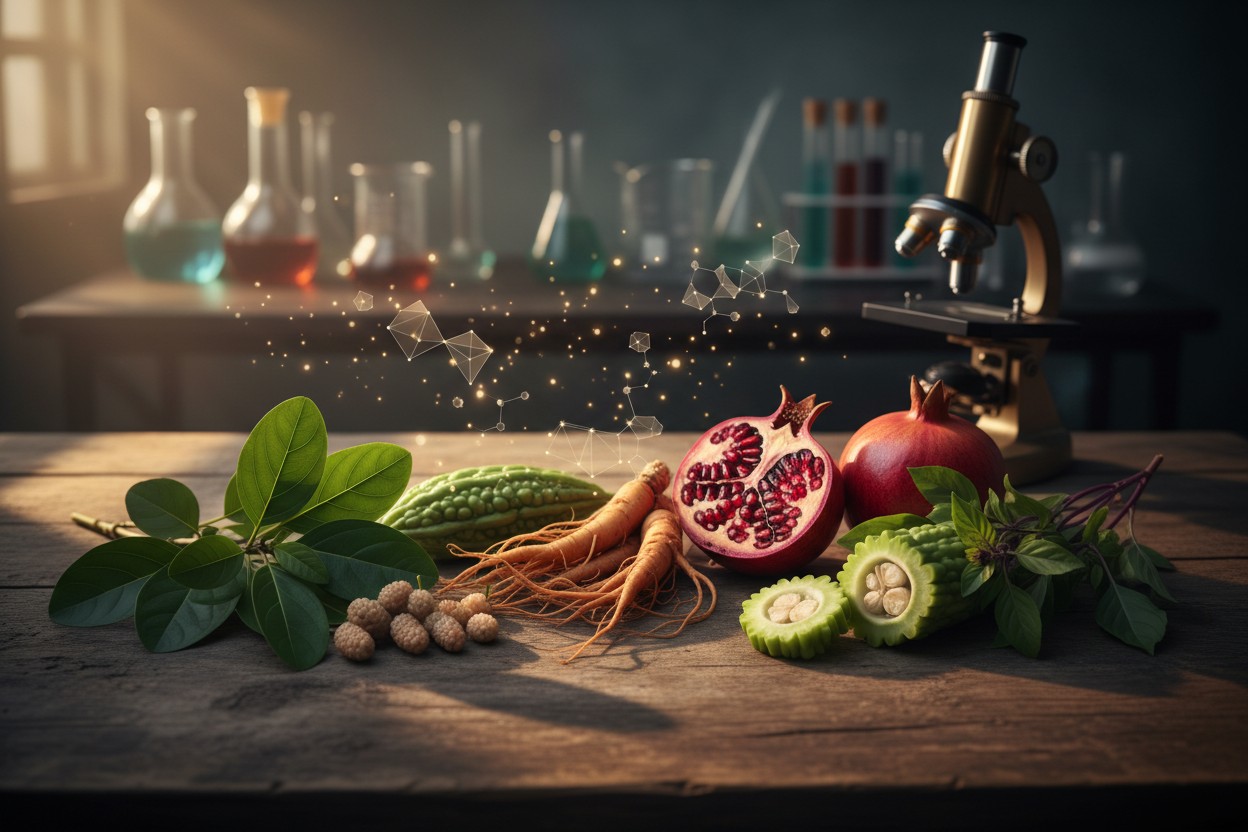
A review published June 3, 2026 in The Open Biochemistry Journal examined 16 medicinal plants traditionally used for diabetes. Researchers found the plants target similar biological pathways to lower blood sugar, but noted the evidence comes primarily from cell and animal studies. According to the authors, "For most of the medicinal plants reviewed, clinical studies are currently lacking."
The review, led by Sara Ouari of the University Ferhat Abbes Setif 1 in Algeria and colleagues, analyzed existing research on plants such as Gymnema sylvestre (gymnema), white mulberry, red ginseng, and pomegranate. The study looked at the natural chemical compounds in each plant and traced their biological routes to reduce glucose.
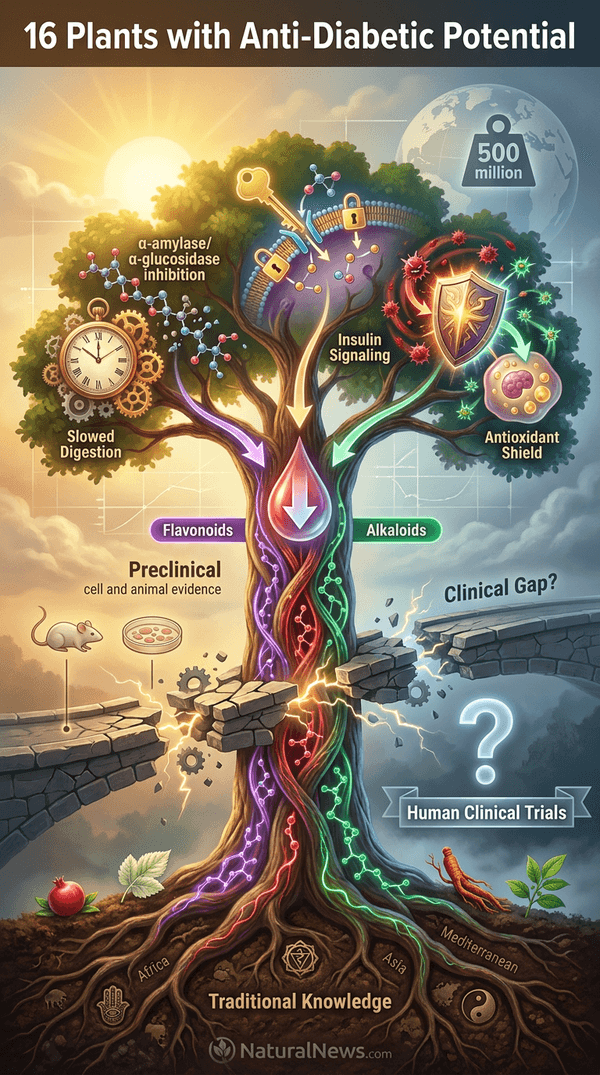
The findings point to three main mechanisms, the review stated. One involves slowing carbohydrate-digesting proteins in the gut to reduce blood sugar spikes after meals. Another strengthens insulin signaling to help cells absorb glucose. A third protects against oxidative damage from free radicals.
Study Methodology and Plant Selection
Researchers searched Scopus, ScienceDirect, and Google Scholar for studies published between 2000 and 2025, reviewing over 1,200 records. They selected 54 studies covering 16 plant species from Africa, Asia, and the Mediterranean, including gymnema, white mulberry, red ginseng, and pomegranate, according to the review.
The review focused on the natural chemical compounds in each plant and their biological routes for reducing glucose. Additional context from other sources supports the traditional use of such plants for diabetes. For instance, researchers from Kermanshah University of Medical Sciences and Tehran University of Medical Sciences have created a list of plants commonly used in traditional Persian medicine for treating diabetes, as reported by NaturalNews.com [1]. Another source notes that holy basil, a medicinal herb favored in Ayurvedic medicine, has been widely used in Southeast Asia for its vast health benefits [2].
Biological Mechanisms Identified
Active compounds such as flavonoids, polyphenols, and alkaloids work through three main mechanisms, according to the review. One mechanism involves slowing carbohydrate-digesting proteins in the gut to reduce blood sugar spikes after meals. Another strengthens insulin signaling to help cells absorb glucose, while a third protects against oxidative damage from free radicals.
The review noted that extracts from pomegranate peel, peanut shells, red ginseng, and Vernonia amygdalina (bitter leaf) strengthened the body's natural antioxidant defenses in animal studies. White mulberry's compounds boosted glucose uptake through two separate pathways, the review stated. Earlier research published in the Journal of the Science of Food and Agriculture had identified that "many plant species have been validated for their antidiabetic properties and related complications," but stressed the need for "extensive, large-population clinical studies" [3].
Plants With the Strongest Evidence
Gymnema, white mulberry, red ginseng, and pomegranate showed the strongest support across multiple animal studies and mechanistic analyses, the review stated. Gymnema was described as one of the most heavily studied plants, with compounds that stimulate insulin release and protect pancreatic cells.
Bitter melon, another plant widely used in traditional medicine, has also received attention for its antidiabetic properties. According to a phytochemistry volume, bitter melon "has been widely used as a traditional medicine treatment for diabetic complications" and contains phytomolecules like lycopene and beta-carotene [4]. A polyherbal formulation consisting of five medicinal plant extracts, including Aegle marmelos (Indian bael) and Murraya koenigii (curry tree), showed significant reduction in serum glucose in diabetic rats, according to a book on anti-diabetes plants by Appian Subramoniam [5].
These findings align with broader research on traditional plant medicines. The review's lead authors emphasized that despite the promising preclinical data, human trials are lacking for most of the 16 plants examined.
Limitations and Future Research
The authors acknowledged that almost all evidence comes from cell cultures or lab animals, not human trials. Differences in extraction methods, doses, and animal models made comparisons difficult, and effective lab doses may exceed what herbal teas or supplements can deliver.
The review concluded that "well-designed human trials and standardized extracts... are needed before any of these plants can be turned into reliable therapies." Books on phytochemistry note challenges including "absence of standardization procedures and quality control for herbal drugs used in clinical trials" [4]. Such factors, along with natural variation in plant chemistry tied to species, growing conditions, and harvesting methods, complicate the path from traditional remedy to evidence-based therapy, the authors stated.
Despite these hurdles, the convergence of multiple plants from different healing traditions on the same biological targets suggests that further investigation is warranted. The review called for controlled human studies, better dosing guidance, and standardized extracts to determine whether these plants can offer safe, effective options for diabetes management.
References
- NaturalNews.com. "Study finds traditional Persian medicines show potential for diabetes treatment". NaturalNews.com. January 22, 2019.
- Mercola.com. "Why This One Herb Could Help With Diabetes H". Mercola.com. February 07, 2022.
- "Medicinal plant species with potential antidiabetic properties". Journal of the Science of Food and Agriculture J Sci Food Agric 87:743–750 (2007).
- "Phytochemistry Volume 2 - Pharmacognosy Nanomedicine Egbuna Chukwuebuka".
- Appian Subramoniam. "Anti Diabetes Mellitus Plants Active Principles Mechanisms of Action and Sustainable Utilization".
Explainer Infographic











Please contact us for more information.