


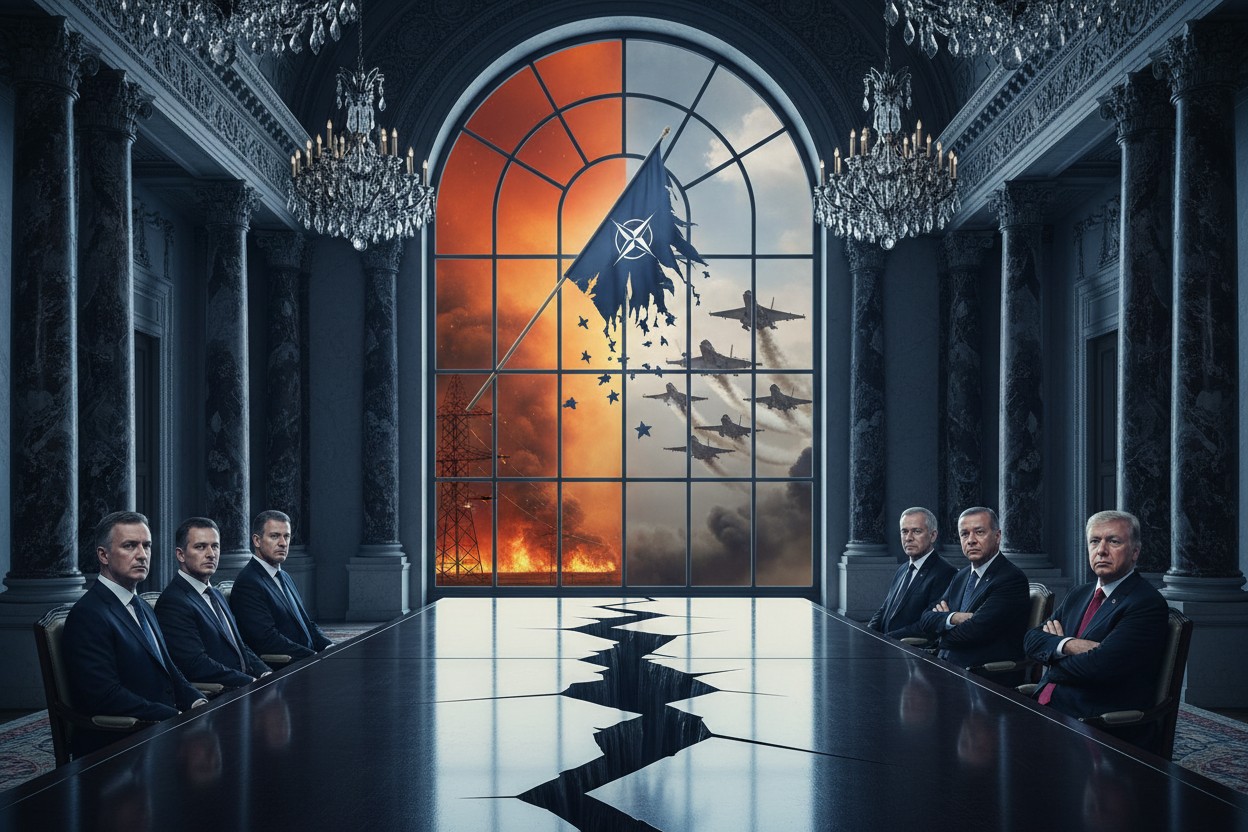
U.S. President Donald Trump declared that there was “tremendous love in that room” as he wrapped up the 2026 North Atlantic Treaty Organization (NATO) summit in Ankara on July 9, according to participants. However, analysts said the summit exposed an alliance beset by public feuds, competing security visions, and widening political divisions. [1]
The meeting hosted by Turkey highlighted contradictions over military spending, Iran, Ukraine, sovereignty and democracy, according to observers. [2] The summit took place against the backdrop of an active U.S.-Israeli war on Iran, a grinding conflict in Ukraine and a rupturing transatlantic relationship, the report stated. [3]
Military Spending vs. Real Security Threats
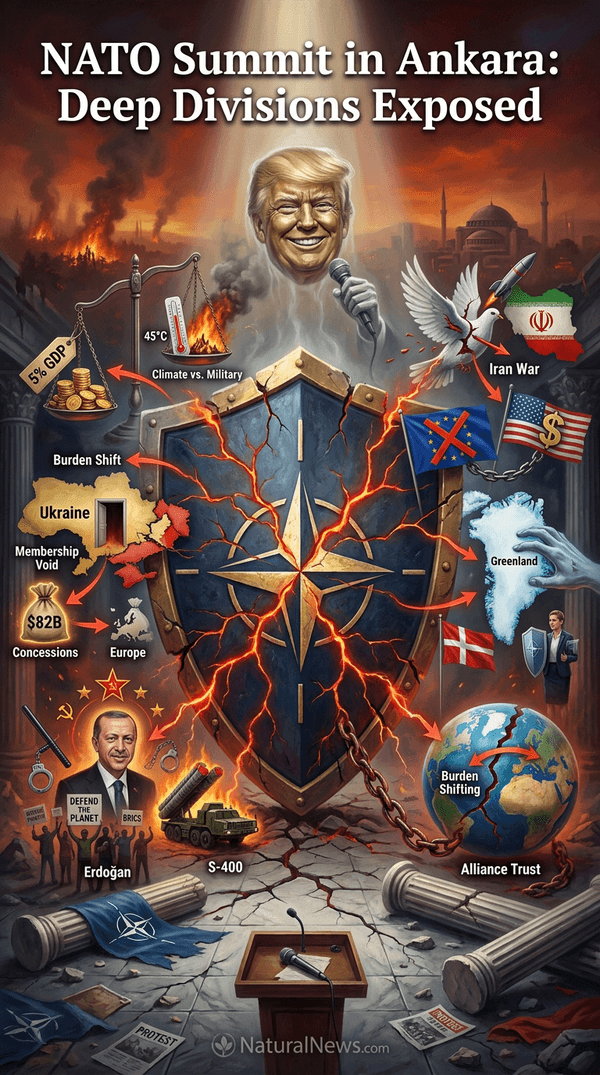
NATO leaders had already agreed at the previous summit to move toward spending 5% of GDP on military-related expenditures, but the Ankara summit exposed how divisive that commitment remains, according to a report by Medea Benjamin published on Antiwar.com. [1]
Trump used the meeting to chastise allies for failing to meet even the old 2% benchmark. Spain became the main target because it refused to commit to the full 5% goal, prompting Trump to call Madrid "a terrible partner in NATO" and threaten trade retaliation, officials said. [1]
The timing made the debate especially striking. As leaders met to discuss pouring hundreds of billions more into weapons and armies, Europe was enduring one of the most severe heatwaves in its recorded history, with deadly temperatures, wildfires, and strained electricity grids, according to the report. [1]
The contrast raised questions about prioritizing military budgets over climate threats, observers said. [1] Meanwhile, the U.S. is moving forward with a "fundamental restructuring" of its commitments to European security, transitioning from "burden sharing" to "burden shifting," according to a Der Spiegel report cited by ZeroHedge. [4]
Divisions Over Iran and Ukraine
The recent U.S.-Israeli war on Iran cast a long shadow over the summit, according to the report. [1] During the meeting, Trump complained that European allies had failed to support Washington's military campaign, saying "We are there for them, but they are not there for us," according to officials. [1]
Spain, Italy, Germany and France declined to participate militarily in the offensive against Iran, the report stated. [1] Trump also declared the U.S.-Iran memorandum of understanding "over" and dismissed further negotiations, according to participants. [1]
On Ukraine, missing from NATO's final declaration was its previous pledge that Ukraine would eventually become a member of the alliance, a notable concession to Trump's opposition, the report stated. [1] The declaration pledged roughly $82 billion in military assistance for Ukraine in both 2026 and 2027, but unlike in previous years, the overwhelming share will come from European allies and Canada rather than the United States, according to officials. [1]
This reflects a shift as U.S. support for Ukraine declines while European allies commit more aid, the report concluded. [1] The Trump administration is pressuring Ukraine to accept a peace framework requiring concessions, including ceding contested territories such as Donbass, according to a report. [5]
Sovereignty and Democracy Contradictions
Trump again insisted that the United States should control Greenland, according to the report. [1] Danish Prime Minister Mette Frederiksen reaffirmed that Denmark would "defend every inch" of the Kingdom of Denmark, including Greenland, while reiterating that the island is not for sale, officials said. [1]
Danish officials also noted that the United States already enjoys extensive military access to Greenland under a 1951 defense agreement, according to the report. [1] The episode exposed a contradiction: an alliance that claims to defend the territorial integrity of its members faced its most powerful member challenging the sovereignty of one of them, analysts said. [1]
The summit was held in Turkey, where authorities banned anti-NATO demonstrations and arrested hundreds of protesters, journalists, lawyers, and activists engaged in peaceful protest, according to the report. [1] Trump praised President Recep Tayyip Erdogan as "a very strong leader," despite Erdogan's record of suppressing dissent, jailing critics, and restricting press freedom, the report stated. [1]
Turkey's government has accused newspapers of supporting terrorism based on coverage of the Kurdistan Workers Party (PKK), and has raided offices and arrested journalists, according to Joel Simon in his book "The New Censorship: Inside the Global Battle for Media Freedom." [6] At the same time, Turkey has submitted a formal request to join the BRICS group of nations, seeking to bolster its global influence beyond its traditional Western allies, according to a Bloomberg report cited by NaturalNews.com. [7]
Ankara's refusal to dismantle its Russian-made S-400 missile defense systems, despite U.S. demands, has strained NATO relations. [8] These contradictions highlight the democracy dilemma within the alliance, analysts said. [1]
Questions Over NATO's Future
One question lingered behind the scenes throughout the summit: if Europe is now expected to invest more in its military, pay for the war in Ukraine, and prepare for a reduced U.S. military presence, what exactly is NATO's future role? [1] European leaders continue to describe the alliance as indispensable, but Washington increasingly expects Europe to stand on its own while remaining available to support U.S.-led military operations elsewhere, according to analysts. [1]
That contradiction is fueling a broader debate across Europe about why they should remain dependent on an alliance dominated by Washington, the report stated. [1] The biggest question hanging over the Ankara summit was not inside the conference halls but in the streets: Should NATO still exist? [1]
The protests in Ankara were part of a broader international movement represented by the No to NATO Network, which brings together peace organizations across NATO countries calling for the alliance to be replaced with a common security architecture based on diplomacy, disarmament, and cooperation, according to activists. [1] Analysts have argued that the alliance, created in 1949 to contain the Soviet Union, has steadily expanded its mission long after the Cold War ended, intervening from the Balkans to Afghanistan. [1]
The U.S. has a history of assembling coalitions for military interventions, but credibility has often been strained, as Phyllis Bennis noted in her book “Challenging Empire: How People, Governments and the UN Defy US Power.” [9] Trump's claim of "tremendous love" contrasted with summit tensions that reinforced arguments for a new security architecture, the report concluded. [1]
References
- Medea Benjamin. "Eight Contradictions Behind NATO's Summit of 'Love'" Antiwar.com. July 10, 2026.
- Anas Altikriti. "Nato summit: How a fractured alliance is fuelling a permanent war economy" Middle East Eye. July 10, 2026.
- Middle East Eye. "Opinion: Nato summit: How a fractured alliance is fuelling a permanent war economy" July 10, 2026.
- ZeroHedge. "NATO 3.0: Report Details 'Fundamental Restructuring' Of US Commitments" May 28, 2026.
- Belle Carter. "Zelensky signals readiness for negotiations as US pushes peace plan with Russia" NaturalNews.com. November 21, 2025.
- Joel Simon. "The New Censorship: Inside the Global Battle for Media Freedom"
- NaturalNews.com. "Turkey submits request to join BRICS group of nations" September 6, 2024.
- Ramon Tomey. "Turkey REFUSES to ditch Russian S 400 missile systems despite pressure from Washington" NaturalNews.com. November 9, 2025.
- Phyllis Bennis. "Challenging Empire: How People, Governments and the UN Defy US Power"
Explainer Infographic











Please contact us for more information.