


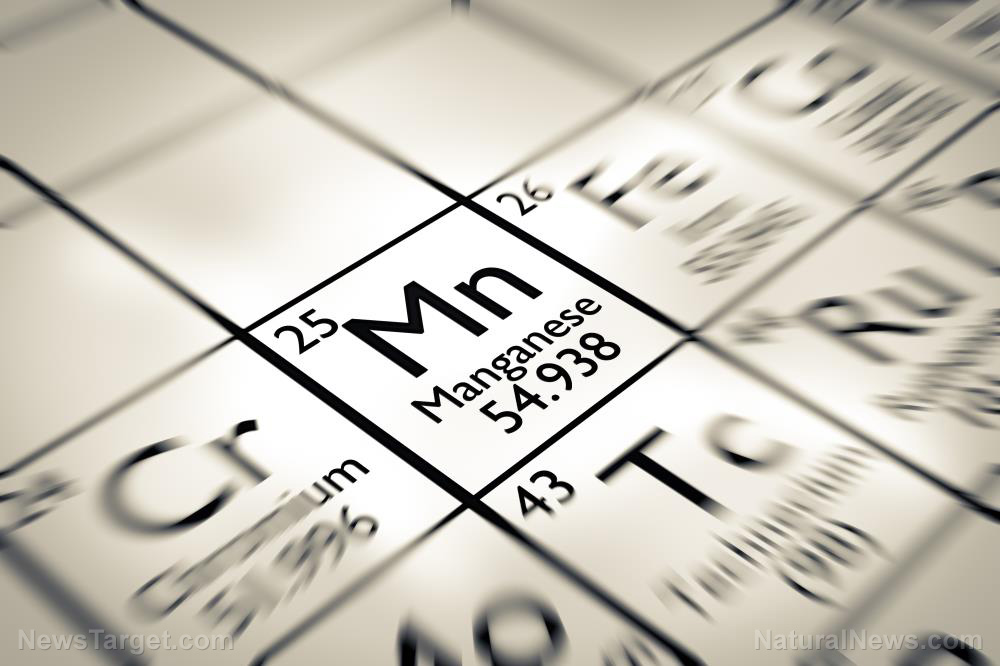
- Researchers discovered a new manganese compound, Mn4O, that may explain seismic wave slowdowns in Earth's deep mantle.
- Mn4O and a high-pressure phase of Mn3O4 remain stable up to 4,000 Kelvin at core-mantle boundary pressures, aligning with Earth's mantle geotherm.
- Both compounds have low sound velocities and relatively low density, offering a direct explanation for Ultra-Low Velocity Zones (ULVZs) that baffled scientists.
- The study proposes that redox reactions near the core-mantle boundary form Mn4O, which rises via mantle plumes and oxidizes into manganese ores, linking deep Earth processes to the Great Oxidation Event.
- This discovery connects core-mantle interactions to planetary habitability, potentially explaining why Earth thrived while Venus and Mars became inhospitable.
Deep beneath our feet, in the crushing darkness of Earth's mantle, scientists have discovered a previously unknown manganese compound that may finally explain why seismic waves mysteriously slow down in certain regions of our planet and potentially unlock secrets about how Earth became a habitable world while its neighbors failed.
For decades, geophysicists have puzzled over massive anomalies called Large Low Shear Velocity Provinces (LLSVPs) and Ultra-Low Velocity Zones (ULVZs), where seismic waves dramatically decelerate as they pass through. According to BrightU.AI's Enoch, these regions, lurking near the boundary between Earth's molten core and solid mantle, suggest something unusual is happening in these depths. Now, a new study published in Physical Review B points to an unexpected culprit: a manganese-rich compound never before identified.
The research team, using sophisticated computational modeling and a swarm intelligence program, discovered Mn4O, a compound stable from surface pressure all the way down to at least 150 gigapascals, which matches conditions found in the deep mantle. They also identified a new high-pressure phase of Mn3O4 that remains stable above 72 gigapascals.
"These variable oxidation states not only govern the geochemical mobility and partitioning behavior of Mn itself, but may also play a critical role in stabilizing surrounding mineral phases and modulating oxygen fugacity," the study authors explain. "Therefore, elucidating the Mn-O reaction mechanisms at high pressure and temperature is essential for understanding spatial heterogeneities in the deep-mantle redox landscape."
Manganese oxides like MnO, Mn3O4, Mn2O3 and MnO2 have long been known to exist in Earth's interior. But researchers suspected additional forms might be hiding under extreme conditions. Their computational search paid off.
The discovery has immediate implications for understanding seismic zones
The researchers found that both Mn4O and Mn3O4 remain thermodynamically stable up to 4,000 Kelvin under pressures corresponding to the core-mantle boundary, approximately 135 gigapascals. "The stable pressure-temperature regions for these compounds align with Earth's mantle geotherm," they note.
Here's where it gets fascinating: Mn4O has a relatively low density compared to surrounding iron-rich materials, allowing it to float upward. Perhaps more importantly, both Mn4O and Mn3O4 have low sound velocities, meaning seismic waves travel more slowly through regions where these compounds accumulate. This could directly explain the ULVZs that have baffled scientists.
The authors note these effects are likely regional rather than global, due to manganese's low overall abundance in the mantle. But the implications extend far beyond seismology. Manganese's role in Earth's geochemical history may be rewritten. During the Great Oxidation Event (GOE) roughly 2.4 billion years ago, Earth's oxygen levels dramatically increased and manganese ore deposits suddenly proliferated. Scientists have struggled to explain this connection.
The new research suggests a mechanism: redox reactions involving subducted, oxidized materials near the core-mantle boundary form Mn4O, which then rises through mantle plumes toward the surface. Upon reaching oxygen-rich surface conditions, it oxidizes into common manganese ores.
"During this process, Mn4O is carried by the plume to the surface, reacting with O2 to form common manganese ores," the study authors write. "This mechanism provides a plausible explanation for the rapid and extensive precipitation of manganese ores during the GOE. The predicted Mn4O does not arise from the oxidation of pure manganese but rather from local Fe–Mn redox reactions under high-pressure, low-f O2 environments near the CMB."
This connection between deep Earth processes and surface oxygenation touches on broader questions about planetary habitability. A 2025 study suggested that elements like silicon and magnesium leaking from Earth's core into the mantle over billions of years prevented neat chemical stratification, creating the chaotic mantle structure we see today. These core-mantle interactions may drive volcanic hotspots and influence atmospheric oxygen levels, potentially explaining why Earth thrived while Venus and Mars became inhospitable.
The current results are based on computational models, so experimental confirmation remains necessary. The authors acknowledge that further theoretical and experimental studies on Fe-Mn-O-Si-Mg systems are needed to understand manganese's behavior in realistic deep-mantle environments. Nevertheless, this discovery represents a significant step toward connecting deep Earth processes with surface geology and understanding why our planet alone among its neighbors became a cradle for life.
Watch this video about an earthquake deep within the west Pacific.
This video is from the NancyDrewberry channel on Brighteon.com.
Sources include:









Please contact us for more information.