


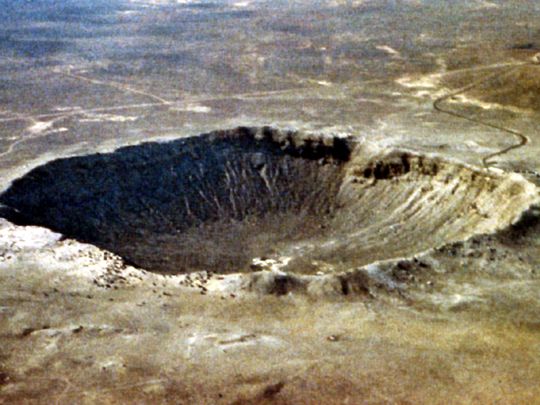
- Scientists confirmed that the North Pole Dome crater in Western Australia's Pilbara region is the oldest known asteroid impact crater, formed 3.02 billion years ago.
- The discovery was made by analyzing tiny zircon crystals found in surrounding rocks, which showed skeletal or branching shapes indicating impact modification from intense heat.
- Kirkland explained that the impact generated a long-lived fractured system reused by fluids, influencing chemical exchange between rocks and early oceans, potentially modifying environments for microbial life.
- This crater dates to the Archean aeon, a period when Earth's earliest continents were forming and may be linked to the Late Heavy Bombardment, a sudden shift in outer planet orbits that sent space rocks toward Earth.
- The discovery provides a rare window into how impacts affected the Archean Earth, contrasting with more recent events like the Chicxulub impactor, which wiped out the dinosaurs 66 million years ago.
Deep in Western Australia's Pilbara region lies a scar so ancient it predates almost all life on Earth, and scientists have just confirmed it's the oldest known asteroid impact crater ever discovered.
Researchers have uncovered rock-solid evidence that the North Pole Dome crater was formed when a massive space rock smashed into Earth 3.02 billion years ago, rewriting our understanding of the planet's violent early history. Lead author Professor Chris Kirkland revealed that this meteor could have been a kilometer-scale object, though its precise size remains impossible to determine.
"At North Pole Dome, the impact appears to have generated a long-lived fractured system that was later reused by fluids," Kirkland told the Daily Mail. "On the early Earth, that kind of process could have influenced chemical exchange between rocks and an early ocean, causing mineral alteration and potentially modifying the environments available for microbial life."
A mineral clock frozen in time
While scientists have long suspected the North Pole Dome was the site of an ancient catastrophe, billions of years of heat, pressure and geological activity had erased nearly all visible evidence. But the breakthrough came from an unlikely source: tiny zircon crystals.
These extraordinarily resilient minerals can hold their shape for billions of years, and when the research team analyzed samples from the surrounding rocks, they found something remarkable: skeletal, or branching shapes that told a story of unimaginable violence.
Professor Kirkland believes these are impact-modified crystals, old zircon grains that were disrupted and partially recrystallized by the intense heat of a meteor collision. "The agreement between two different mineral systems gives us confidence that we are seeing the signature of a single major event, a meteorite impact," Kirkland explained.
Using advanced dating techniques on both zircon and apatite minerals, the team pinpointed the event to precisely 3.02 billion years ago. This discovery dates the crater back to the Archean aeon, a time when Earth's earliest continents were just forming.
The Moon's surface, which provides a much more stable geological record, suggests the inner solar system was heavily bombarded by meteors around this period. Some geologists believe this may have been part of a cataclysmic event known as the Late Heavy Bombardment, a sudden shift in the orbits of Jupiter, Saturn, Uranus and Neptune that destabilized the asteroid belt and sent countless rocks hurtling toward Earth.
But until now, scientists struggled to find any evidence of these ancient impacts on our planet. "Earth must also have experienced that bombardment, but most of the evidence has been destroyed," Professor Kirkland said. "That is why the North Pole Dome discovery is so important. At 3 billion years, it is the oldest recognized impact structure on Earth and one of the very few windows into how impacts affected the Archean Earth."
The bigger picture: Cosmic collisions that changed everything
The discovery comes as scientists continue to piece together Earth's long history of violent encounters with space rocks. Perhaps the most infamous is the Chicxulub impactor, which collided with Earth around 66 million years ago.
About six to nine miles in diameter, this asteroid created a massive crater beneath Mexico's Yucatán Peninsula and triggered the mass extinction that wiped out the dinosaurs—along with 75% of all plant and animal species.
As noted by BrightU.AI's Enoch, the Chicxulub impactor was travelling at around 12.4 miles per second, unleashing an explosion roughly five billion times more powerful than the Hiroshima bomb.
As Kirkland explained, these ancient impacts didn't just destroy, they also created. The fractured systems left behind by meteor collisions influenced mineral alteration, chemical exchange with early oceans and may have even shaped environments where life could emerge. For now, the North Pole Dome stands as humanity's oldest direct link to a time when Earth was still being forged in cosmic fire, a reminder that our planet's history has always been written in the stars.
Watch this video about NASA's asteroid redirection test.
This video is from the GalacticStorm channel on Brighteon.com.
Sources include:





Please contact us for more information.