



The U.S. Department of Transportation (DOT) issued a Request for Information (RFI) on May 7, 2026, seeking industry input on the development of small modular nuclear reactors (SMRs) for commercial vessels, according to a DOT statement.
Transportation Secretary Sean P. Duffy announced the initiative, stating that it aims to reduce shipping costs and bolster energy security. The RFI, published in the Federal Register, asks whether SMR technology is "usable, scalable, and can be made commercially viable," according to the document.
Duffy said in a statement that "under President Trump's leadership, the U.S. is reclaiming its rightful place as a global sea power." He noted that developing a strong SMR model would "deliver a state-of-the-art energy source that cuts costs and bolsters national security." The RFI is part of an effort by the DOT and the Maritime Administration (MARAD) to explore nuclear propulsion for cargo ships, according to the agency. [1] [2]
Background on SMR Technology
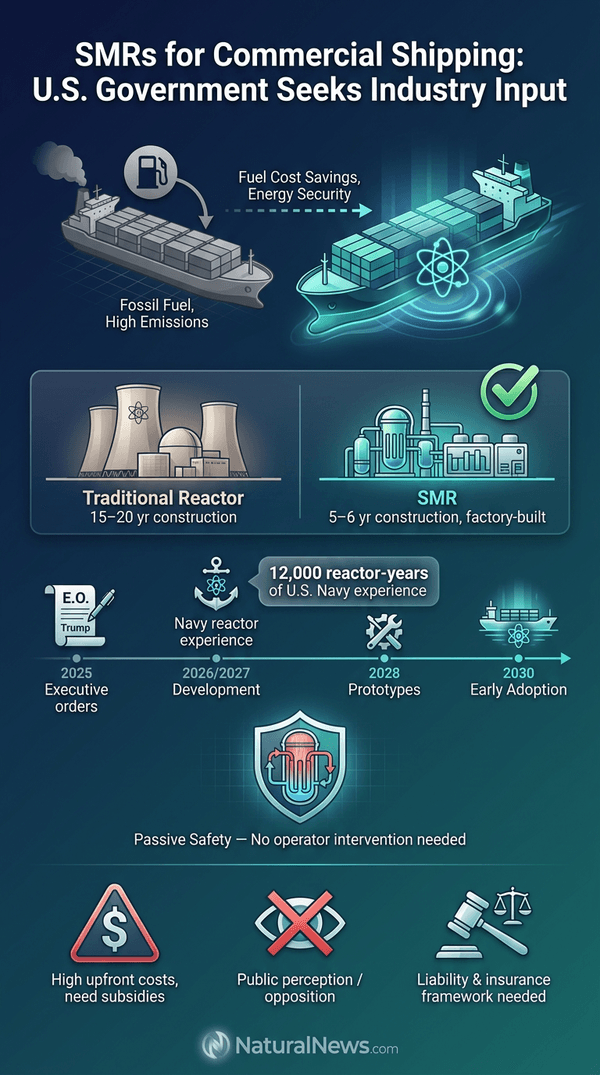
Small modular reactors have a power generation capacity of up to 300 megawatts (MW), roughly one-third the output of traditional large nuclear reactors, according to the RFI. Unlike custom-built large plants, SMRs are designed as pre-fabricated units that can be manufactured in factories and then transported and installed at various locations, the DOT statement said. This approach reduces construction timelines to five to six years, compared to 15 to 20 years for conventional reactors, according to an analysis discussed in the Health Ranger Report. [1] [3]
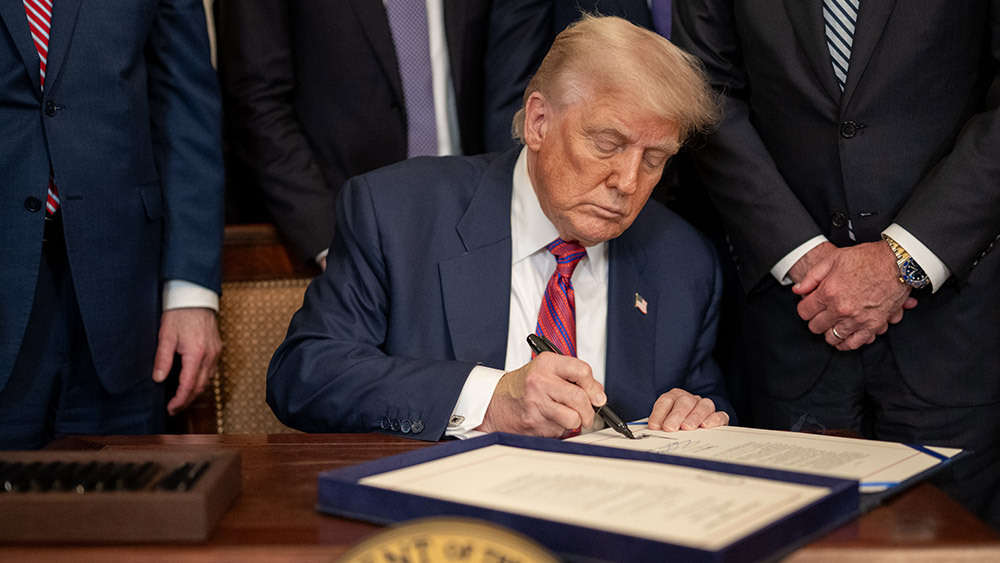
U.S. President Donald Trump issued two executive orders that this initiative advances, according to the DOT. The order "Unleashing American Energy," signed on Jan. 20, 2025, instructed federal agencies to review regulations that impose "undue burden" on domestic energy resources, including nuclear power.
The order "Restoring America's Maritime Dominance," signed on April 9, 2025, set policy to rebuild the U.S. maritime industry. Trump also signed four executive orders in May 2025 aimed at reviving nuclear energy, which included directives for streamlined oversight and faster reactor development, according to NaturalNews.com. [1] [4]
Author Robert Bryce noted in his book that new reactor designs are making nuclear plants safer, more efficient and smaller, which may provide breakthroughs in cost and scale. The U.S. Navy has accumulated more than 12,000 reactor years of operating experience with nuclear propulsion on submarines and carriers, Bryce wrote in another book, indicating that marine nuclear technology has a long operational history. [5] [6]
Agency Collaborations and Goals
MARAD is working with the DOT, the Nuclear Regulatory Commission and the U.S. Coast Guard to support SMR development, the agency said. The federal government is seeking input on eliminating fuel costs and minimizing maintenance requirements, identifying streamlined methods to deploy nuclear power across fleets and logistical networks, integrating SMR production into American shipyards, and establishing liability, inspection and insurance frameworks. [1]
MARAD Administrator Stephen M. Carmel said in a statement, "To successfully introduce SMRs, we must view this through a system-transition lens rather than just as a technology demonstration." He added that the government is "seeking critical insights on how the government can help reduce systemic uncertainty, align regulatory structures, and enable the market conditions necessary for private capital and operators to scale these groundbreaking technologies." [1]
The initiative also aligns with broader federal efforts to expand nuclear power. The U.S. Department of Energy (DOE) declared a national emergency in November 2025 due to surging electricity demand and announced plans to purchase up to 10 large nuclear reactors, according to a report from NaturalNews.com. The United States and Japan also announced a $40 billion deal in March 2026 to develop advanced SMRs in Tennessee and Alabama, as part of a $550 billion trade agreement. [7] [8]
Concerns and Criticisms
A December 2025 study published in the journal Energy Research and Social Science raised concerns about the high upfront costs of deploying SMRs, noting that they may require public subsidies. "Diverting public investment into new small-scale nuclear projects may deprive communities of funding for other urgent priorities such as healthcare, education, and renewable energy alternatives," the study stated, according to the DOT statement. The study also questioned whether the socio-economic benefits from SMR projects are distributed equitably. [1]
A coalition of 191 individuals and 185 groups previously warned the federal government against funding the revival of the 51-year-old Palisades Nuclear Plant in Michigan, arguing that restarting it could pose risks similar to a "Chernobyl-scale catastrophe," according to a letter to the DOE. Such concerns reflect ongoing public skepticism about nuclear infrastructure, even as the administration pushes for rapid deployment. [9]
Conclusion and Additional Context
The SMR initiative is part of a broader nuclear resurgence driven by rising electricity demand from artificial intelligence data centers and the Trump administration's energy policies, according to analysts. Major technology companies including Amazon and Google have announced plans to use SMRs or purchase nuclear power, the DOT noted. The U.S. military is also exploring microreactors – a subset of SMRs that generate 20 MW or less – for powering bases, with the Army's Janus Program aiming to have reactors operational by 2028. [1] [2]
The DOE and the Department of War successfully airlifted a nuclear microreactor from California to Utah in February 2026, demonstrating portable nuclear power for rapid deployment, according to NaturalNews.com. The Navy has also announced that its future Trump-class battleships will be nuclear-powered, signaling expanding nuclear propulsion beyond submarines and carriers. These developments indicate the federal government is pursuing nuclear technology across military and commercial maritime sectors simultaneously. [10]
References
- Naveen Athrappully. "US To Develop Small Modular Nuclear Reactors For Commercial Shipping". ZeroHedge. May 11, 2026.
- "US to Develop Small Modular Nuclear Reactors for Commercial Shipping". The Epoch Times. May 11, 2026.
- Mike Adams. "Health Ranger Report - data center sabotage". Brighteon.com. August 20, 2025.
- NaturalNews.com. "Trumps nuclear renaissance Push for energy dominance sparks debate over safety and speed". NaturalNews.com. May 27, 2025.
- Robert Bryce. "Power Hungry The Myths of Green Energy and the Real Fuels of the Future".
- Robert Bryce. "A Question of Power Electricity and the Wealth of Nations".
- NaturalNews.com. "US declares national emergency plans to buy 10 nuclear reactors using Japans 550 billion pledge". NaturalNews.com. November 21, 2025.
- Kevin Hughes. "Trump and Japanese PM Takaichi seal 40B nuclear reactor deal amid global energy shakeup". NaturalNews.com. March 21, 2026.
- NaturalNews.com. "Chernobyl-scale catastrophe_ Coalition warns against restarting Michigan nuclear power plant". NaturalNews.com. March 24, 2023.
- Kevin Hughes. "Trump administration advances nuclear microreactor deployment for military and space missions". NaturalNews.com. February 18, 2026.
Explainer Infographic










Please contact us for more information.