


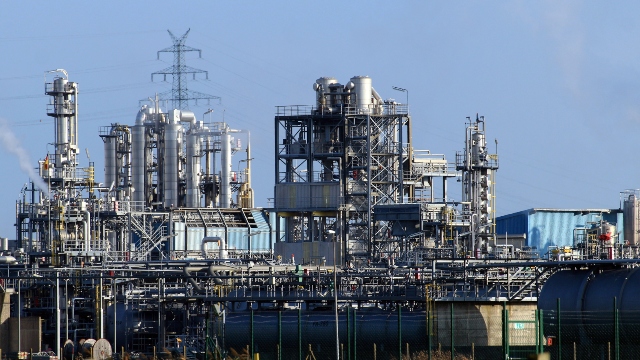
- California’s aggressive climate policies are backfiring by forcing refinery closures and creating a self-inflicted energy crisis.
- The state’s geographic isolation and shrinking refining capacity leave it dangerously dependent on foreign fuel, including imports from India tied to Russian crude.
- Gas prices could skyrocket to $10–$12 per gallon, crippling families, businesses, and military logistics if supply chains fail.
- Experts warn California’s reliance on foreign fuel threatens national security, especially as global oil markets face disruptions like those in the Strait of Hormuz.
- Instead of shutting down refineries, California must expand domestic refining capacity to ensure fuel security and economic stability.
California has long prided itself on being an energy pioneer, pushing aggressive climate policies while maintaining one of the world's largest economies. But now, the state's relentless regulatory crackdown on refineries is backfiring—threatening not just skyrocketing gas prices but also military readiness and national security.
The problem stems from California's geographic isolation. With no oil pipelines crossing the Sierra Nevada, the state cannot draw on fuel infrastructure from the rest of the country. Its six remaining refineries—down from eight just a few years ago—bear sole responsibility for meeting enormous in-state demand: fuel for 30 million vehicles, nine international airports, 30 military bases, and three of the nation's busiest shipping ports.
A self-inflicted energy crisis
In the past two years alone, California has lost 17% of its refining capacity with the closures of the Phillips 66 refinery in Wilmington (139,000 barrels per day) and the Valero refinery in Benicia (145,000–170,000 barrels per day). More closures are likely as the California Air Resources Board (CARB) tightens emissions rules, making it nearly impossible for refineries to operate profitably.
"These refineries make jet fuel and diesel and gasoline for our military," warned Rep. Vince Fong (R-Bakersfield). "If China or Russia decides to pull the plug on India getting crude for us, guess what? It's catastrophic," said Assemblymember Stan Ellis (R-Bakersfield).
Right now, California already imports 20% of its refined fuel from India, a country that buys much of its crude from Russia. If geopolitical tensions escalate, those supply lines could vanish overnight, leaving California's military bases, airports, and shipping ports stranded without fuel.
$12-per-gallon gas and military vulnerabilities
Experts predict gas prices could double or triple as refining capacity shrinks. A recent study found Californians already pay $2 more per gallon than drivers in Oklahoma, the state with the cheapest gas. But if imports become unreliable, prices could soar to $10–$12 per gallon, crippling families and businesses alike.
"Their backup plan is to continue to source it from places like India," said petroleum expert Mike Ariza, who co-authored a report on California's energy outlook. "India buys their crude oil from Russia, so effectively gasoline and jet fuel… that we could be producing here."
The Governor's office dismisses these concerns, claiming "no credible concerns" exist about future fuel supply for the military. But energy policy expert Ronald Stein disagrees, arguing that the environmental logic behind California's policies may actually be counterproductive on a global scale. By shrinking in-state refining and relying on longer international supply chains, the state could be raising overall carbon emissions while simultaneously deepening its dependence on foreign fuel sources.
A warning from the Strait of Hormuz
Global oil markets are already under strain, with Iranian actions in the Strait of Hormuz disrupting nearly 20% of the world's oil supply. If foreign refineries face shortages, California—now dependent on imports—could be left scrambling.
"Every lost domestic barrel erodes surge capacity for military logistics," wrote analyst Danielle Walker. "This is not abstract policy—it is national security."
The solution? More refineries, not fewer
Wind turbines and solar panels generate electricity, but they can't produce the jet fuel, diesel, and gasoline that planes, ships, and trucks need to keep the world's 4th-largest economy moving — and that means refineries aren't optional.
Yet instead of building new ones, California is driving refineries out of state with punitive regulations. The result? Higher prices, fuel shortages, and a weakened military.
The warnings are clear: California's refinery collapse is a national security threat. If the state doesn't reverse course, it will soon be held hostage by foreign oil, leaving its military, economy, and families at risk.
Sources for this article include:











Please contact us for more information.