


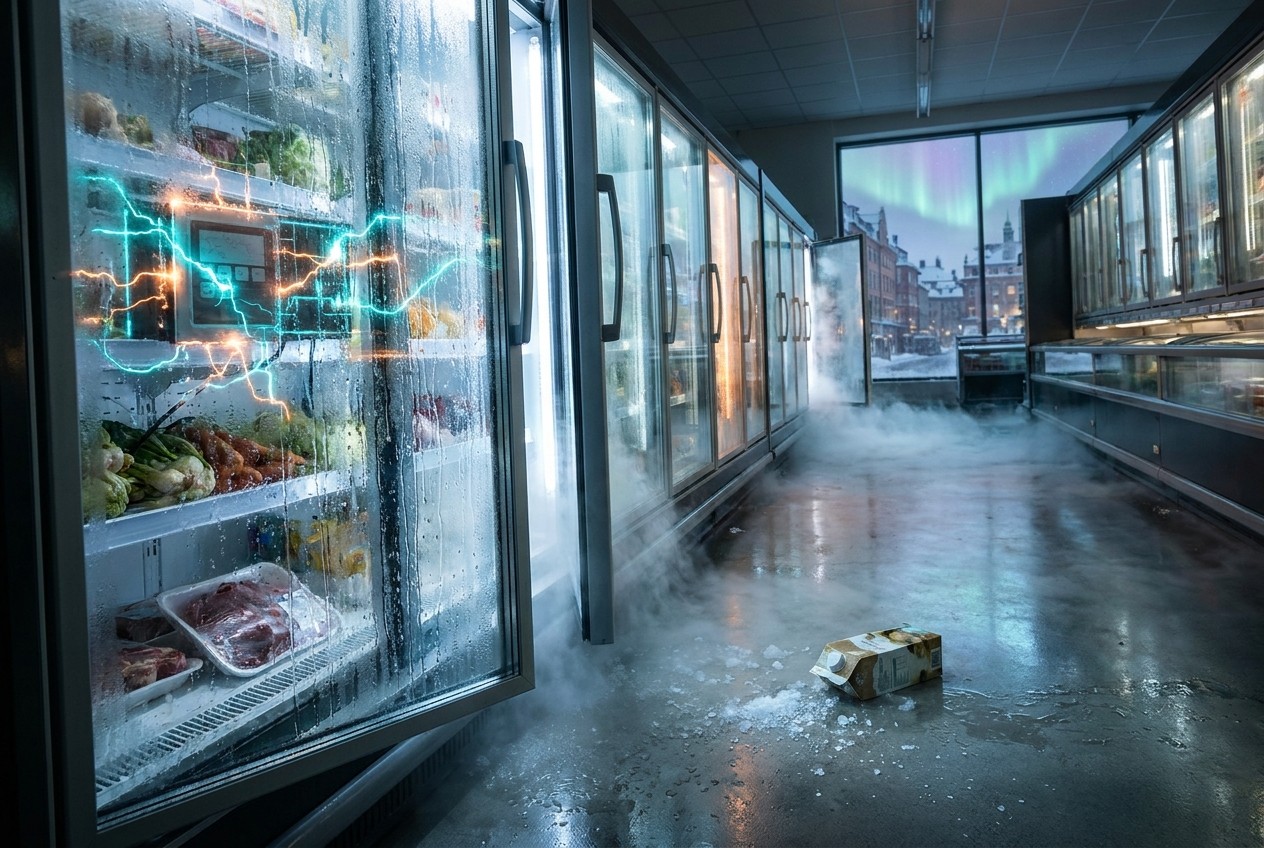
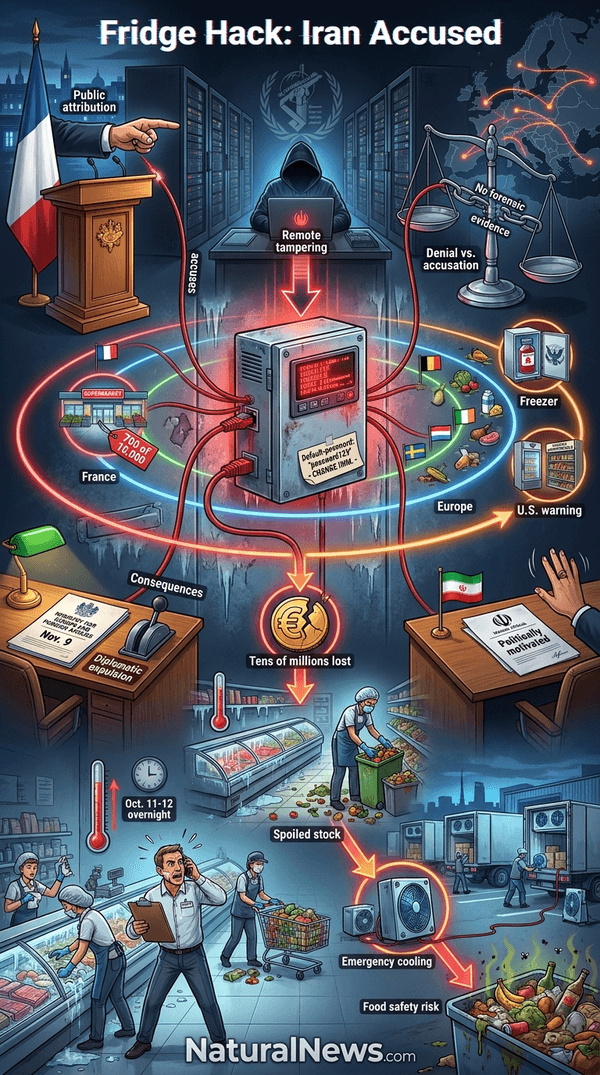
French officials on Monday, Nov. 9, accused Iran's Islamic Revolutionary Guard Corps (IRGC) of responsibility for cyberattacks that disabled commercial refrigerators and freezers across France last month, saying there would be consequences for Iran.
French authorities said the attack affected about 700 of the country’s 10,000 supermarkets [1]. The scale of the disruption made it one of the most significant cyber incidents to hit the country’s retail food sector, prompting officials to treat the campaign as a national security matter and to weigh a coordinated response with European partners.
Attacks Disrupted Hundreds of Supermarkets, Caused Fires and Losses
Thierry Cotillard, president of grocery giant Les Mousquetaires, told local media BFM TV that the incidents in France cost retailers tens of millions of euros [2]. The disruption forced stores to discard spoiled stock, shut down refrigeration aisles, and bring in emergency cooling equipment while technicians worked to restore controller settings.
Federal agencies warned that actors may exploit vulnerabilities or weaknesses in unpatched or internet-accessible controllers to remotely alter settings [3].
The French Ministry for Europe and Foreign Affairs said in a Nov. 9 statement that the attacks on the evening of Oct. 11 to Oct. 12 targeted supermarket refrigeration controllers and impacted some 700 major retail locations across France [4]. According to the ministry, the tampering caused temperatures to rise in cold storage units, leaving retailers scrambling to protect perishable goods and prevent further spoilage.
Second Wave Hits European Blood Banks and More Establishments
A second wave of cyberattacks is suspected to have hit supermarket refrigerators across Europe, causing fridges to increase temperatures and spoil food at dozens of stores across Belgium, Ireland, Luxembourg and Sweden [5]. The follow-on incidents raised concerns among European authorities that the campaign was broadening beyond France and targeting interconnected retail supply chains.
The cyberattacks in Belgium, Estonia, Germany, Ireland, Italy, the Netherlands, Portugal and Sweden led to food being spoiled [2]. Officials across the continent have urged retailers to audit their refrigeration controllers, restrict remote access, and apply vendor patches as quickly as possible.
U.S. Military Commissaries Reported Similar Refrigerator Malfunctions in August
The U.S. government is warning of an “ongoing cyber threat” facing industrial refrigeration units, after reports of cyberattacks targeting freezers and fridges in supermarkets around the world, U.S. military bases and at least one blood bank [6]. The warning followed earlier reports that U.S. military commissaries experienced similar refrigerator malfunctions in August, signaling that the threat extended well beyond European grocery chains.
Security researchers say the incidents point to a wider pattern in which internet-connected industrial controllers are being manipulated remotely, sometimes without triggering immediate alarms. Analysts have cautioned that such operations can disrupt food safety, cause substantial financial losses, and potentially affect medical supply chains that depend on temperature-controlled storage.
Iran Denies Malicious Cyber Operations; Attribution Details Unclear
Iran has denied involvement in the cyber operations, rejecting the French accusations and calling them politically motivated. Iranian officials have repeatedly said the country does not conduct malicious cyber activities against civilian infrastructure, though Western governments have previously attributed other disruptive campaigns to Tehran-linked actors.
Attribution in cyber incidents of this kind remains difficult, and publicly available evidence has so far been limited to official statements and media reporting. Investigators have not disclosed the specific technical indicators linking the attacks to the IRGC, leaving open questions about the exact command structure and intent behind the campaign.
Conclusion: Investigations Continue as France Threatens EU Sanctions
French officials said investigations are continuing and warned that there would be consequences for Iran, raising the prospect of coordinated European Union sanctions in response to the attacks. The incidents have heightened scrutiny of the security of industrial refrigeration systems, which are widely connected to the internet and often run outdated software.
Retailers across Europe and the U.S. are now being urged to harden their control systems, limit network exposure and prepare contingency plans for temperature-sensitive inventory. As authorities in multiple countries compare notes, the case is likely to shape how governments and businesses treat cyber threats to food and cold-chain infrastructure in the months ahead.
References
- France blames Iran for a cyberattack on supermarket fridges | AP News. https://apnews.com/article/france-cyberattack-supermarket-refrigerators-iran-6914ecf1a3285291653e103655f9e4a4
- Hackers Hit European Supermarket Freezers. Could the US Be Next? https://theepochtimes.com/article/hackers-hit-european-supermarket-freezers-could-the-us-be-next-6117930
- Federal Agencies Warn of Ongoing Cyber Threat to Industrial Freezers and Cold Storages. https://www.naturalnews.com/2026-11-08-federal-agencies-warn-ongoing-cyber-threat-freezers.html
- France Blames Iran for Supermarket Fridge Cyberattack. https://theepochtimes.com/world/france-blames-iran-for-supermarket-fridge-cyberattack-6122510
- A fresh wave of cyberattacks has hit Europe’s supermarket refrigerators, destroying food across countries. https://techcrunch.com/2026/11/02/a-fresh-wave-of-cyberattacks-has-hit-europes-supermarket-refrigerators-destroying-food-across-countries/
- US government warns of ‘ongoing cyber threat’ amid mass hacks of industrial retail and military freezers. https://techcrunch.com/2026/11/05/u-s-government-warns-of-ongoing-cyber-threat-amid-mass-hacks-of-industrial-retail-and-military-freezers/
Explainer Infographic









Please contact us for more information.