


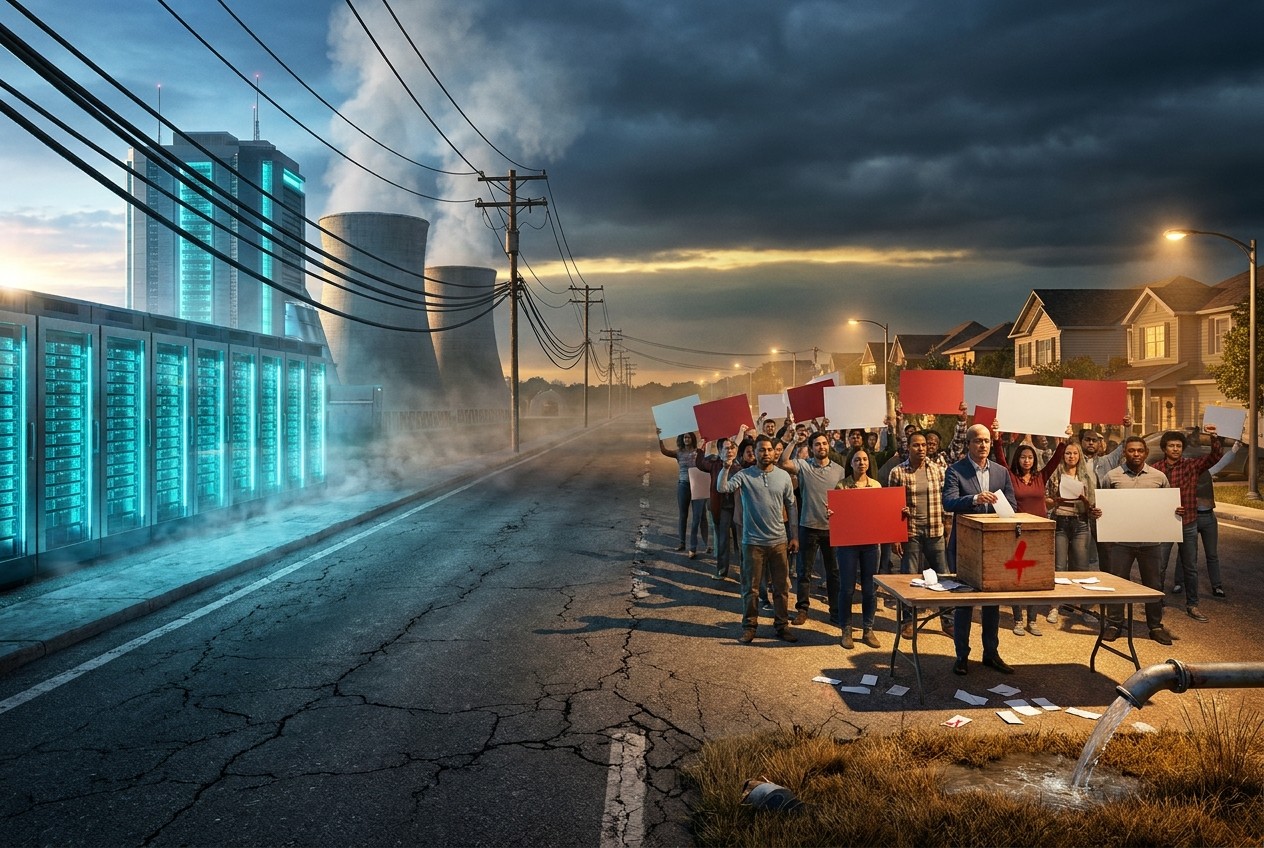
Anthropic's Initial Public Offering could thrust the company into the spotlight at a moment when artificial intelligence is very unpopular in the United States, CNBC reported on Nov. 7. In the midterm elections, voters opposed data center-related ballot measures in 40 out of 41 cases, according to election results cited by CNBC.
The offering places the Claude developer at the center of a dispute over AI energy use, land demands and local control. Anthropic is poised to become the first pure-play AI company to hit the public market, the news outlet reported. Company officials said the proceeds would support model development and safety research. Critics said the listing would expand infrastructure that voters have rejected at the ballot box.
More than half of voters said AI data centers were a crucial or major factor in who they supported for Congress, according to an NBC News exit poll cited by CNBC. The vote totals and margins varied by location, but the pattern was consistent enough that industry analysts described it as a rebuke of rapid data center expansion.
Midterm Results Show Voter Opposition to Data Centers
Election tallies showed local communities opposed data center-related ballot measures in 40 out of 41 cases during the midterm elections, and candidates who backed stricter AI regulation won in Michigan, Ohio, Texas and Georgia, according to reporting on the results. Both major parties faced voter concerns over AI infrastructure, according to local news reports, and some incumbents who supported data centers lost or faced tight races.
Opponents cited electricity costs, water consumption, noise and land use, officials said. Supporters cited tax revenue and construction jobs. The debate now extends beyond traditional tech hubs; data center opposition surfaced even in Brooklyn, where a midterm election event drew media figures, technologists and policy advocates, according to TechCrunch. One county commissioner said, "Residents wanted a say in what gets built next to their homes."
A May Gallup survey found seven in ten Americans opposed nearby AI data centers, according to reporting on the results. TIME reported that voter anger over AI data centers helped fuel Democratic victories in the 2026 midterms, while well-funded pro-acceleration groups struggled to turn their spending into political wins [1].
Industry analysts described the results as a rebuke of rapid data center expansion, though vote margins and outcomes varied by location. The Financial Times and other outlets reported that the results signaled broader public mistrust of tech billionaires and artificial intelligence, with voters expressing disdain for both at the ballot box.
Anthropic IPO Details and Market Context
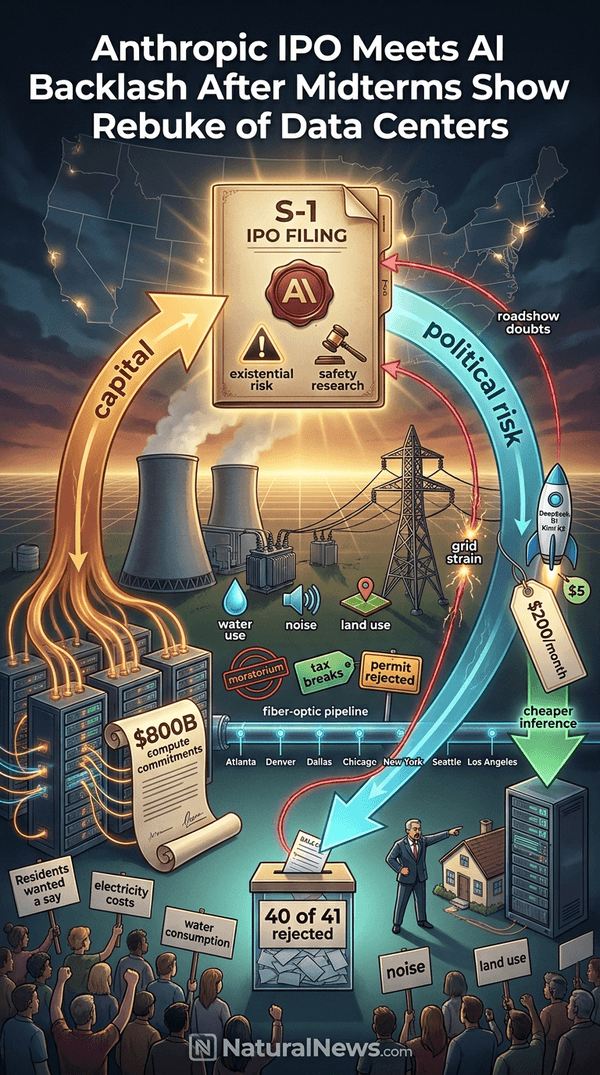
Anthropic disclosed an operating profit in its S-1 filing, though the headline number accompanied roughly $800 billion in compute commitments, including up to $120.5 billion owed to Elon Musk's SpaceXAI, according to a ZeroHedge tally of the filing. The company's amended filing put its computing bill near $900 billion, Yahoo Finance reported [2]. Anthropic also booked a net loss of $80.7 billion in the first half of 2026, mostly from accounting charges, and warned of growing opposition to data centers, the New York Post reported [3].
The company, known for its Claude AI models, has raised billions from major technology investors. A June 2026 funding round of $65 billion valued Anthropic at $965 billion, according to a Bloomberg report cited by ZeroHedge [4]. The filing did not specify a share price or date. Anthropic representatives said proceeds would support research, compute and safety work.
The offering comes amid market volatility for AI stocks and scrutiny of whether AI revenues justify infrastructure spending, analysts said. Potential investors in the IPO raised doubts about whether the company could proceed with its planned roadshow, the New York Post reported [5]. One observer of the filing process said the public market will have to weigh growth against political and energy risks. Reuters reported that investors were pushing for a more attractive valuation to commit to the offering [6].
The company earlier told potential investors that its advanced AI could cause "catastrophic or existential risks to humanity," according to a prospectus seen by Reuters [7]. CEO Dario Amodei told the United Nations Security Council on Sept. 23 that the technology could "be a risk to humanity as a whole" if not properly managed [8].
AI Data Center Energy Demand and Industry Response
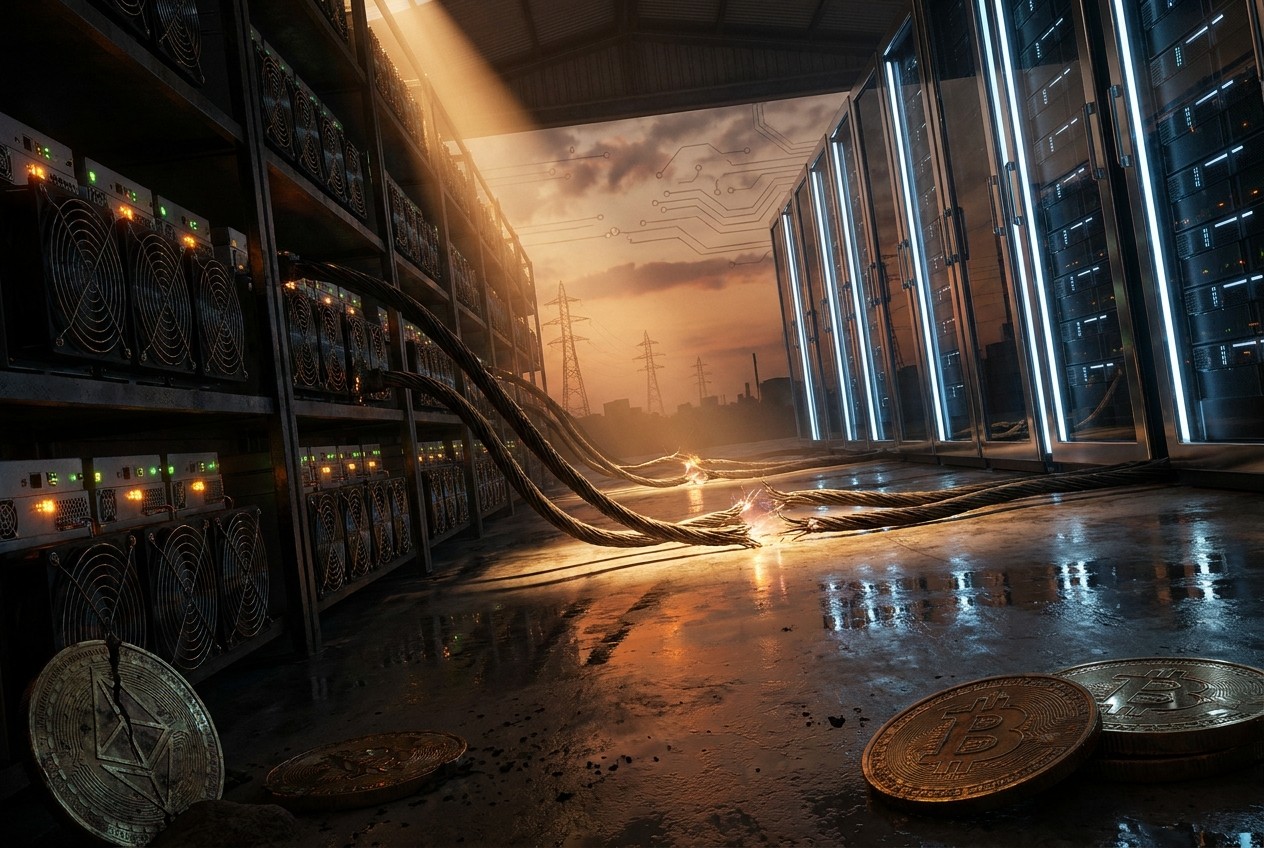
AI data centers require large amounts of electricity and water for cooling, drawing opposition in areas where grids are strained. The United States currently hosts over 11,000 data centers, and while the vast majority historically served benign purposes such as hosting websites and storing data, the conversation shifted with the arrival of AI training workloads, according to a discussion of the industry's evolution [9]. Facilities are typically situated along major fiber optic pipelines passing through Atlanta, Denver, Dallas, Fort Worth, Chicago, New York, Seattle and Los Angeles, and they require substantial water and power [9].
Some states and localities have imposed moratoriums or rejected permits; others have offered tax breaks, creating a patchwork of rules, officials said. Industry groups said data centers support modern infrastructure and can fund grid upgrades; opponents said costs are shifted to ratepayers and residents. The U.S. power grid, particularly the Eastern Interconnection, faces reliability challenges that utilities can no longer guarantee for residential customers, largely due to the energy consumption of data centers, according to an assessment of the grid's condition [10].
Technology trade groups and some lawmakers said the midterm results should not halt AI investment, according to statements. An industry spokesperson said, "Data centers are critical to keeping the U.S. competitive in AI." However, the economics of the buildout face pressure from cheaper alternatives. Users have little incentive to pay $200 a month when comparable coding and bug-fixing inference is available from DeepSeek for $5 or less, according to an assessment of the global market shift [11]. One longtime AI developer reduced daily expenditure from over $100 to roughly $1 by switching from Claude to DeepSeek [12].
Chinese open-source models have repeatedly disrupted the market. In January 2025, DeepSeek released its R1 model, an open-source system with chain-of-thought reasoning capabilities that could be downloaded and run locally, and U.S. AI lab stock prices crashed as investors realized that high-performance AI could be built at a fraction of the cost [13]. Moonshot AI recently repeated that pattern, and its Kimi K3 model rivals top offerings from OpenAI and Anthropic [14].
References
- How AI Backlash Shaped the 2026 Midterms. https://time.com/article/2026/11/04/midterm-elections-results-ai-industry-data-centers/
- Anthropic IPO Meets AI Backlash: 40 of 41 Votes [2026]. https://tech-insider.org/anthropic-ipo-ai-backlash-data-center-vote-40-of-41-2026/
- Anthropic books colossal $81B loss, warns of data center backlash as Amodei siblings draw modest salaries. https://nypost.com/2026/10/20/business/anthropic-books-staggering-81b-loss-warns-of-data-center-backlash-as-amodei-siblings-draw-modest-salaries/
- Bubble or Breakthrough? Anthropic's $965 Billion Valuation Reveals the Terrifying Truth About AI's Corporate Takeover - NaturalNews.com, June 02, 2026.
- Anthropic’s IPO timing threatened by AI backlash, historic tech rout. https://nypost.com/2026/11/05/business/anthropics-ipo-timing-threatened-by-ai-backlash-historic-tech-rout/
- EXCLUSIVE: AI backlash could threaten Anthropic IPO timing, potential investors say. https://www.reuters.com/world/ai-backlash-could-threaten-anthropic-ipo-timing-potential-investors-say-2026-11-05/
- Anthropic IPO Prospectus Warns Investors of "Existential Risk to Humanity" - NaturalNews.com, September 30, 2026.
- Anthropic CEO Amodei: Poorly Managed AI Could Pose "Risk to Humanity" - NaturalNews.com, September 27, 2026.
- Bright Videos News - with Jeffrey Prather - Mike Adams - BrightVideos.com, May 14, 2026.
- Bright Videos News - AJ LIVE Mike and Alex on The Dystopian Future Of AI - Mike Adams - BrightVideos.com, June 17, 2026.
- Decentralize TV - Interview with Hakeem - Mike Adams - Decentralize.TV, May 25, 2026.
- Bright Videos News - with Aaron Day - Mike Adams - BrightVideos.com, May 22, 2026.
- Health Ranger Report - KIMI K3 PROVES CHINA IS WINNING AI RACE - Mike Adams - BrightVideos.com, July 19, 2026.
- Bright Videos News - BRICS AI COOPERATIVE CHINESE AI GIANTS FAMINE IN 2027 - Mike Adams - BrightVideos.com, July 20, 2026.
Explainer Infographic









Please contact us for more information.