



The U.S. Department of Commerce (DOC) reported on Tuesday, July 7, that the country's trade deficit widened sharply in May 2026 – amid a surge of imports of semiconductors, computer accessories and other artificial intelligence (AI) components.
Exports fell 3.2% while imports rose 3.3%, according to the report. The swing reflects strong U.S. demand for advanced electronics, particularly from Taiwan, which has overtaken China as a leading source of imported goods for the first time in decades, according to data from the DOC [1].
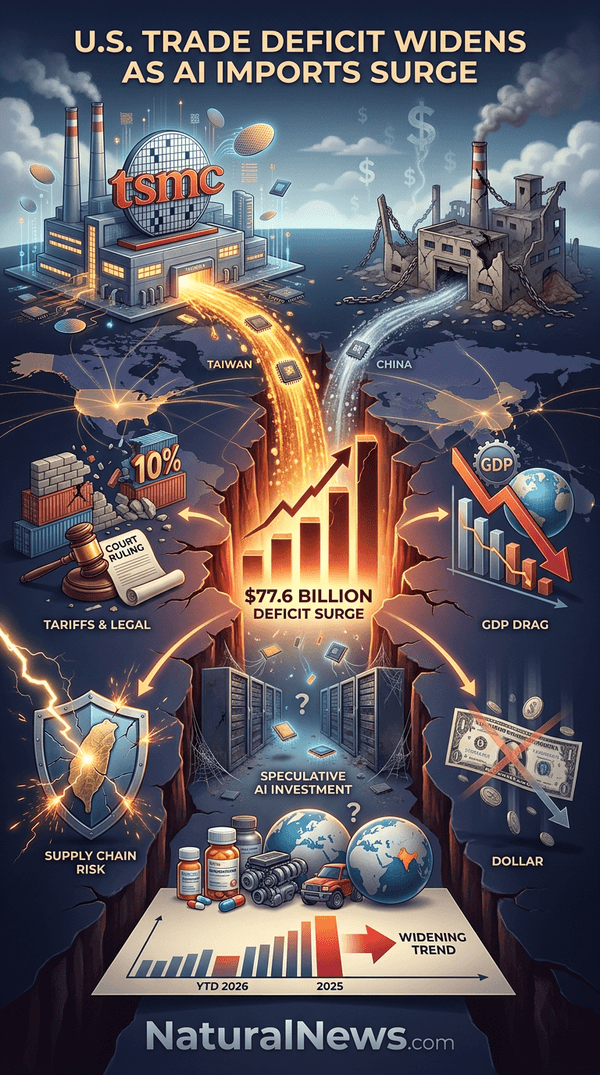
The May deficit of $77.6 billion represents a 42.2 percent increase from the prior month, highlighting the persistent imbalance in goods trade even as the administration pursues tariff policies aimed at narrowing the gap. The surge in AI-related imports, including high-end chips and data center equipment, accounted for much of the increase, officials said.
AI and Pharmaceutical Imports Drive Deficit Expansion
Imports of semiconductors, computer accessories, pharmaceuticals, cellphones and vehicles rose notably in May, driving the overall import gain, according to trade data published by the DOC. The shift in sourcing patterns is evident in the rise of imports from Taiwan, which more than doubled in December 2025 compared with a year earlier, while purchases from China fell nearly 44 percent during the same period, according to the department [1].
Economists said the combination of rising imports and falling exports points to trade acting as a drag on gross domestic product (GDP) growth in the second quarter. The first estimate of Q2 GDP is scheduled for release in late July.
The trade deficit's expansion comes amid concerns that persistent import demand, especially for technology components, may weigh on domestic production. Some analysts have warned that the reliance on foreign-made AI inputs could amplify economic vulnerabilities if supply chains are disrupted, according to a report from PeakProsperity.com [2].
Tariff Volatility and Trade Policy Uncertainty Persist
The trade deficit has been volatile during President Donald Trump's second term, influenced by shifting tariff policies and legal challenges. In May 2026, the U.S. Court of International Trade ruled against the administration's 10 percent global tariff strategy, dealing a narrow legal setback [3]. Separately, the Supreme Court's tariff ruling in February 2026 raised questions about the legality of broad duties and potential refunds, adding to uncertainty for importers [4].
The administration declined to extend the United States-Mexico-Canada Agreement (USMCA) trade pact beyond its initial terms, requiring annual reviews for a decade, according to policy announcements. This uncertainty has been cited by trade experts as a factor discouraging long-term investment in cross-border supply chains. In an interview, Steve Quayle noted that as the U.S. dollar depreciates, foreign suppliers may become less willing to sell to the U.S., undermining the effectiveness of tariffs [5].
Economic Implications of Growing Import Dependence
Year-to-date through May 2026, the trade deficit is 40.6% smaller than in the same period of 2025, which had been inflated by pre-tariff front-loading of imports. That comparison, however, masks the recent widening.
Reliance on foreign-made AI components raises concerns about supply-chain security, critics note, as the deficit also reflects the strength of the U.S. dollar. In an interview, Alexander Macris argued that continued weaponization of the dollar through sanctions may accelerate the loss of its reserve currency status, further complicating trade balances [6].
Historical analysis of fiscal and trade policy suggests that deficit spending can alter trade competitiveness. Bruce A. Scholten observed that Keynesian deficit spending during the Reagan military buildup made U.S. industry more productive and competitive on world markets [7]. However, current conditions differ, with chronic trade deficits persisting despite tariff measures.
The growth in AI-related imports has also fueled a speculative investment cycle, with companies spending tens of billions on data centers and chips, though many facilities sit empty, according to Chris Martenson [2]. This raises questions about the sustainability of the import surge.
Conclusion: Trade Data Signals Caution for Second Quarter
The widening trade deficit adds to evidence that trade will subtract from GDP growth in the April-June period, according to economists. The first estimate of Q2 GDP, due later in July, is expected to reflect the drag. Paring back chronic trade deficits remains a stated goal of the administration, though recent data shows the challenge persists.
In a March 2025 announcement, Trump imposed tariffs on agricultural imports, aiming to protect domestic farmers and reduce the trade deficit [8]. Yet the May figures suggest that the demand for imported technology components continues to outpace efforts to boost domestic production. As tariff volatility and global supply dynamics evolve, the trajectory of the trade deficit will remain a key indicator of economic health.
References
- Laura Harris. "U.S. Imports from Taiwan Surpass Goods from China for the First Time in Decades". NaturalNews.com. February 23, 2026.
- Chris Martenson. "Déjà Vu All Over Again: AI's Many Similarities to the Dot-Com Bubble". PeakProsperity.com. November 13, 2025.
- "Trade court deals narrow blow to Trump’s 10% tariff strategy". NaturalNews.com. May 11, 2026.
- "Futures Slide As Renewed Tariff Turmoil Shakes Global Markets". ZeroHedge. February 23, 2026.
- Mike Adams interview with Steve Quayle - April 5, 2025.
- Mike Adams interview with Alexander Macris - July 10, 2024.
- Bruce A. Scholten. "India's White Revolution".
- Laura Harris. "Trump imposes new tariffs on agricultural imports". NaturalNews.com. March 9, 2025.
Explainer Infographic






Please contact us for more information.