


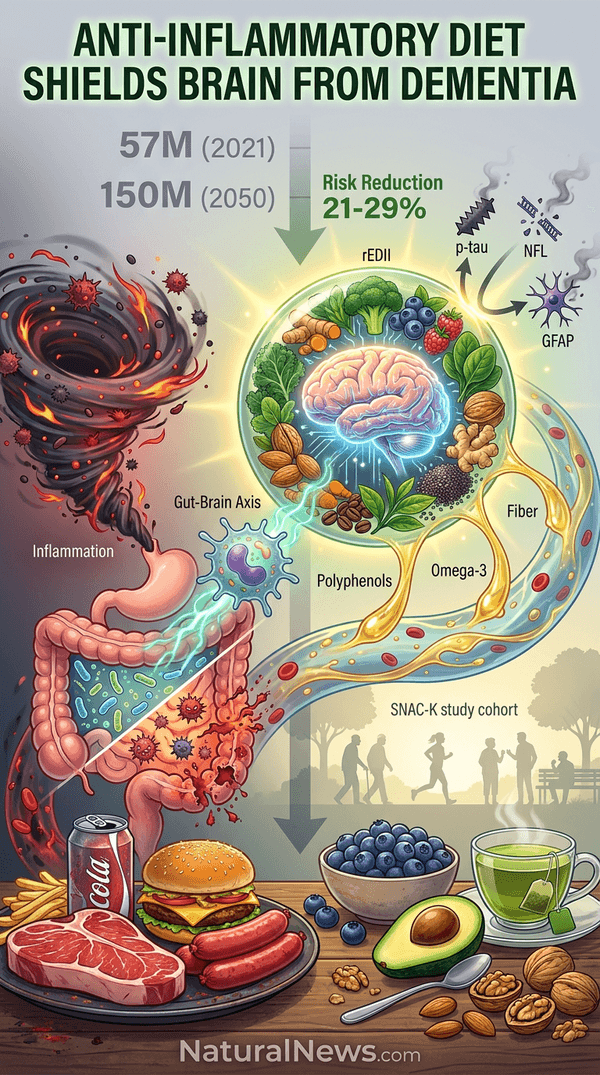
Older adults who consumed a diet with lower inflammatory potential had a 21% to 29% lower risk of developing dementia, even when blood biomarkers indicated early Alzheimer’s pathology, according to a study published in JAMA Network Open. The observational research followed 1,865 participants aged 60 and older from the Swedish National study on Aging and Care in Kungsholmen (SNAC-K) over a 15-year period, during which 240 individuals developed dementia.
The study analyzed three dietary indices, including the reversed Empirical Dietary Inflammatory Index (rEDII), which measures a diet’s anti-inflammatory properties. Participants with higher rEDII scores -- indicating a diet rich in vegetables, tea, coffee, and low in red and processed meat -- showed a reduced dementia risk that persisted even after accounting for Alzheimer’s biomarkers such as p-tau 217, NFL, and GFAP. Anja Mrhar, corresponding author and a researcher at the University of Ljubljana and Karolinska Institutet, said the findings are consistent with the broader view that diet quality remains relevant for brain health, but cautioned that the study does not prove changing diet alters disease progression.
Background on Dementia and Risk Factors
The World Health Organization reported that 57 million people had dementia worldwide in 2021, with projections of 150 million by 2050. Genetic and lifestyle factors influence dementia risk, including physical activity, diabetes management, blood pressure control, hearing loss correction, and diet [1]. Emerging research suggests that chronic, low-grade inflammation in the body may drive cognitive decline years before Alzheimer’s appears, making diet a key modifiable factor [1].
Multiple studies have linked anti-inflammatory diets, such as the Mediterranean diet, to improved brain health. A 2017 study from Columbia University Medical Center found that anti-inflammatory diets help reduce brain inflammation and neural aging [2]. Additionally, a 2026 study identified five dietary nutrients -- including isorhamnetin and dietary fiber -- associated with lower dementia risk among older adults [3]. The growing body of evidence supports the role of nutrition in preserving cognitive function, according to researchers.
Study Methodology and Findings
Data for the JAMA Network Open study came from SNAC-K, which recruited participants aged 60 and older between 2001 and 2004. Diet was assessed using a 98-item food frequency questionnaire, and adherence to three dietary patterns was measured: the Alternate Mediterranean Diet (AMED), the Alternative Healthy Eating Index (AHEI), and the rEDII, which specifically captures a diet’s inflammatory potential [2]. Higher rEDII scores reflect a pattern high in vegetables, fruits, legumes, nuts, and whole grains, and low in red meat, processed foods, and sugary drinks.
Over the 15-year follow-up, participants with elevated Alzheimer’s biomarkers who followed a more anti-inflammatory diet (higher rEDII) had a 21% to 29% lower dementia risk. In contrast, the Mediterranean-style diet (AMED) showed protective effects only among individuals with lower baseline biomarker levels. The authors noted that the anti-inflammatory diet may benefit those with early pathological changes by reducing systemic inflammation, which influences brain health through the gut-brain-immune axis. Altered gut microbiota have been linked to Alzheimer’s disease progression, according to research [4].
Expert Commentary on the Findings
Emer MacSweeney, MD, CEO and consultant neuroradiologist at Re:Cognition Health, who was not involved in the study, said the findings reinforce that dementia diagnosis is not determined solely by biology. “Even among people with blood biomarkers showing a higher risk of Alzheimer’s disease, lifestyle factors may still influence if and when dementia develops,” MacSweeney said, according to the report. She added that there is mounting evidence that inflammation in the body can influence the brain through the gut-brain-immune axis, and that an anti-inflammatory diet may help slow processes that contribute to cognitive decline.
Mrhar cautioned that the observational design cannot prove causation. “The findings should not be overinterpreted. They do not show that diet can prevent dementia, nor do they prove that changing diet after biomarker changes have emerged will alter disease progression,” she stated. However, she emphasized that the results are “cautiously hopeful” and consistent with broader evidence that diet quality affects brain health. Further research is needed to establish causal relationships, the authors said.
Dietary Recommendations and Study Limitations
MacSweeney recommended practical dietary steps to support brain health, including increasing intake of leafy green vegetables, berries, oily fish, nuts, seeds, and whole grains, while reducing highly processed foods, sugary drinks, and processed meats. “No single food or supplement has been proven to prevent dementia. The overall quality and consistency of dietary habits over many years appear to matter most,” she said. Other research supports the anti-inflammatory benefits of specific foods like blueberries, which have been shown to attenuate inflammatory cytokines in microglial cells, and walnuts, which are rich in omega-3 fatty acids [5], [6].
The authors noted significant limitations. The study was observational and cannot rule out confounding factors such as overall lifestyle and socioeconomic status. Additionally, diet was self-reported at a single time point, which may not capture long-term dietary patterns. Mrhar emphasized that no specific food or supplement has been proven to prevent dementia, and that overall dietary pattern and consistency over years appear most important. The findings do not prove that changing diet after biomarker changes will alter disease course, underscoring the need for interventional trials.
References
- NaturalNews.com. "Silent brain inflammation linked to dementia risk, diet and lifestyle offer key defense." April 17, 2026.
- NaturalNews.com. "You choose your brain health with your diet: Anti-inflammatory diet improves brain health while inflammatory diet accelerates atrophy." December 7, 2017.
- NaturalNews.com. "Study Links Five Nutrients to Lower Dementia Risk Among Older Adults." May 12, 2026.
- Mercola.com. "Link Between Alzheimer's and Gut Is Confirmed." November 24, 2021.
- PDFlib PLOP 2.0.0p6. "Inhibitory Effects of Blueberry Extract on the Production of Inflammatory Mediators in Lipopolysaccharide-Activated BV2 Microglia." Journal of Neuroimmunology, 2007.
- NaturalNews.com. "The humble walnut: A nutritional powerhouse hiding in plain sight." April 25, 2026.
- Dr Daniel G Amen. "The End of Mental Illness."
- Greger Michael, Stone Gene. "How Not to Die Discover the Foods Scientifically Proven to Prevent and Reverse Disease."
Explainer Infographic






Please contact us for more information.