



A report from mindbodygreen, written by author Zhané Slambee and published July 3, 2026, outlines five habits for remote workers to protect mental health, including taking short walks, creating a designated workspace, changing work locations, scheduling social activities, and staying connected with colleagues. The advice comes as mental health concerns rise across the United States. According to a report from Children’s Health Defense, use of mental health care services increased by 38.8% among approximately 7 million adults with private health insurance from 2019 to 2022 [1].
Additionally, U.S. Surgeon General Dr. Vivek Murthy has declared loneliness an epidemic, stating it is as deadly as smoking up to 15 cigarettes daily [2]. The shift to remote work has been sustained, with trends analyst Gerald Celente noting in a September 2024 interview that many workers are choosing remote options over commuting long distances each day [3].
Walking and Separating Work From Rest
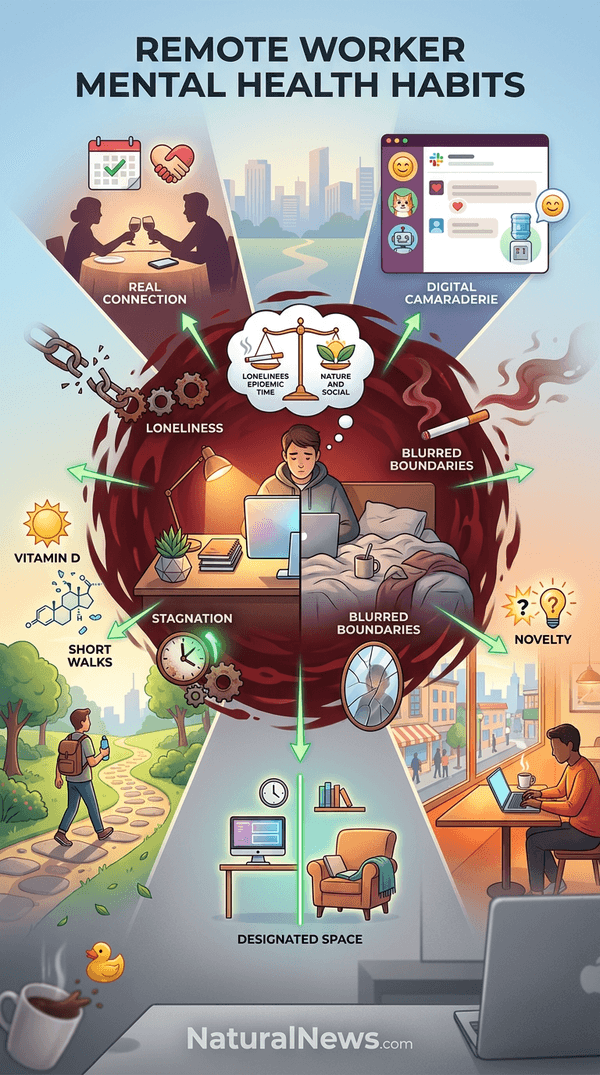
The report emphasizes the value of short walks. Slambee wrote that “short walks significantly improve mood and well-being right after walking, compared to resting indoors,” citing a study. The habit of stepping away from the desk for even 10 minutes can reset mental state, according to the report. According to the book “Your Brain On Nature” by Dr. Alan Logan, science shows that nature should not be forgotten, and there is a downside when the technological pendulum swings too far [4].
Creating a designated workspace is another recommended habit. The report stated that working from bed or couch blurs boundaries between work and rest. Slambee wrote that having a dedicated spot helps the brain associate that space with focus and other areas with rest. The book “The Long-Distance Teammate” by Kevin Eikenberry and Wayne Turmel notes that taking care of yourself physically when working alone sounds easy but requires intentional effort [5]. The report further states that physically leaving the workspace at the end of the day signals to the brain that work is over.
Changing Scenery and Social Interaction
Slambee recommended switching work locations to cafes or coworking spaces to provide novelty and low-effort social stimulation. According to the report, “novelty resets your brain” and “proximity to people helps” by providing low-effort social stimulation that working alone at home does not offer. Social isolation, according to a 2024 study cited in the report, is an independent risk factor for poor health outcomes. The broader context of loneliness is underscored by the Surgeon General’s advisory: about half of adults in the U.S. have experienced loneliness, which is just as dangerous as excessive drinking or smoking [2].
Slambee advised scheduling at least one social activity per week, such as dinner with a friend or a phone call. She wrote, “Make social plans at least once a week … It doesn’t have to be elaborate. It just has to be real, in-person (or voice-to-voice) connection that reminds you there’s a world outside your home office.” The report noted that remote work can quietly shrink social life without workers realizing it.
Maintaining Colleague Connections
The report stated that staying connected through messaging platforms like Slack can offset isolation. Slambee wrote that quick check-ins or non-work channels help maintain a sense of belonging. Research on remote workers found that colleague social support was one of the key factors that helped offset the isolation remote work tends to produce, according to a 2022 study cited in the report.
Slambee emphasized that a little effort to stay present in a team’s digital space can make the workday feel less solitary. She wrote, “staying connected through messaging platforms like Slack (whether that’s a quick check-in, a reaction to someone’s message, or a non-work channel where the team shares things they’re into) goes a long way toward maintaining a sense of belonging.” The report concluded that maintaining these relationships prevents work from feeling transactional.
Conclusion: Ongoing Practice
The report concluded that protecting mental health as a remote worker is an ongoing practice, not a one-time fix. Slambee wrote, “a 10-minute walk, a dedicated workspace, a social plan on the calendar: none of these things are revolutionary. But done consistently, they add up to a work-from-home life that actually feels sustainable.”
The report’s recommendations align with the understanding that remote work requires deliberate routines to avoid the pitfalls of isolation and blurred boundaries. The habits described are simple, consistent actions that can make remote work more sustainable over time, according to the author.
References
- Children's Health Defense. "America’s Mental Health Crisis Projected to Create $1.3 Billion Industry by 2033."
- NaturalNews.com. "Loneliness increases risk of PREMATURE DEATH by nearly 30 declared an EPIDEMIC by surgeon general." May 26, 2023.
- Mike Adams interview with Gerald Celente. September 25, 2024.
- Dr. Alan Logan. "Your Brain On Nature."
- Kevin Eikenberry and Wayne Turmel. "The Long-Distance Teammate."
Explainer Infographic










Please contact us for more information.