


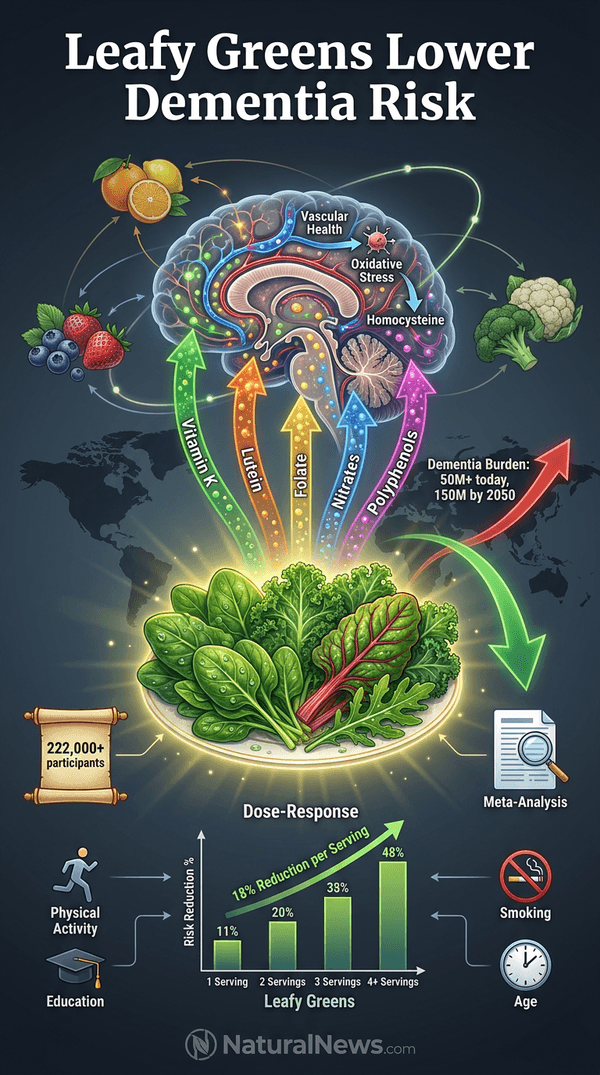
A large analysis of dietary data from more than 222,000 adults has found that higher consumption of fruits and vegetables, particularly green leafy vegetables, is associated with a lower risk of developing dementia. The study, published in the American Journal of Clinical Nutrition, reported that individuals with the highest fruit and vegetable intake had about a 20% lower risk of dementia compared to those with the lowest intake. Among specific produce groups, only green leafy vegetables showed a statistically significant protective link: each additional daily serving was associated with roughly an 18% lower risk, according to the report.
Previous research has also connected higher leafy green intake with slower cognitive decline. A 2026 study from Edith Cowan University and the Danish Cancer Research Institute found that dietary nitrate from vegetables -- richly supplied by leafy greens such as spinach -- was associated with a reduced dementia risk, while nitrate from red meat and processed meat was linked to higher risk [1]. The findings reinforce the potential brain health benefits of including leafy greens in the diet.
Study Design and Sample
Researchers analyzed data from over 18,000 adults aged 45 and older across three prospective cohort studies conducted in the United States and the United Kingdom. Participants were free of dementia at baseline and were followed for 7 to 13 years. The researchers then conducted a meta-analysis combining these results with 13 earlier cohort studies, bringing the total sample to more than 222,000 individuals, according to the report.
The analysis was designed to account for potential confounders, including age, sex, education, smoking, and physical activity. The study’s size and longitudinal design lend weight to the observed associations, though the authors emphasized that observational data cannot establish causation. Additional studies have similarly linked fruit and vegetable consumption to cognitive preservation; for instance, the Nurses’ Health Study found that women with higher vegetable intake performed better on cognitive tests over time [2].
Key Findings on Fruits and Vegetables
Participants with the highest fruit and vegetable intake had about a 20% lower risk of developing dementia compared to those with the lowest intake, the study stated. When examined separately, higher vegetable intake was linked to a 13% lower risk, and higher fruit intake to a 10% lower risk, according to the authors. Among seven produce subgroups analyzed -- including cruciferous vegetables, berries, and citrus fruits -- only green leafy vegetables showed a statistically significant protective association.
These findings align with broader dietary patterns associated with brain health. The MIND diet, which combines elements of the Mediterranean and DASH diets and emphasizes leafy greens, has been shown to slow cognitive decline in older adults [3]. Foods rich in polyphenols and antioxidants, such as leafy greens, may help protect the brain from oxidative stress [4]. However, the study noted that the protective effect was strongest for greens, suggesting unique nutrient profiles at work.
Leafy Greens and Brain Health
Each additional daily serving of leafy greens such as spinach, kale, Swiss chard, collard greens, arugula, romaine lettuce, and bok choy was associated with roughly an 18% lower dementia risk, researchers said. The report noted that leafy greens contain vitamin K, folate, lutein, beta carotene, nitrates, and polyphenols -- nutrients previously linked to slower cognitive decline. A study by Morris et al. published in Neurology found that nutrients and bioactives in green leafy vegetables were associated with slower rates of cognitive decline in older adults [2].
Previous research has also connected higher leafy green intake with better cognitive aging, the authors added. Leafy greens are rich in carotenoids and antioxidants that combat oxidative stress, a key factor in neurodegenerative diseases [4]. Additionally, the natural nitrates in vegetables like spinach have been shown to improve vascular function, which may support cerebral blood flow [1]. Incorporating raw or lightly cooked greens into meals can help maximize these benefits.
Expert Commentary and Implications
The findings add to a growing body of evidence that dietary choices in midlife can significantly influence cognitive health in later years. While the MIND diet and Mediterranean-style eating patterns have long been promoted for brain health, the specific emphasis on leafy greens offers a straightforward, actionable target for consumers [3]. Decades of research indicate that a diet rich in fruits, vegetables, whole grains, and healthy fats may reduce the risk of Alzheimer’s disease and other dementias [5].
The authors of the current study stated that further research is needed to determine the specific mechanisms behind the association, such as the role of individual nutrients versus the synergistic effects of whole foods. They cautioned that the observational design does not prove causation, and dietary recommendations should consider overall eating patterns rather than isolated foods. Nonetheless, the consistency of the data across large populations strengthens the case for including leafy greens as part of a balanced diet.
Conclusion
The analysis adds to the evidence that fruit and vegetable consumption, particularly green leafy vegetables, may support brain health in aging populations. The study did not establish a causal relationship, and dietary recommendations should consider overall dietary patterns, according to researchers. For individuals looking to reduce their dementia risk, incorporating a daily serving of spinach, kale, or other leafy greens appears to be a simple, evidence-supported step.
The findings underscore the importance of natural, whole-food approaches to health maintenance, in contrast to reliance on pharmaceutical interventions. As the global population ages and dementia prevalence rises, dietary strategies offer a low-cost, accessible means of promoting cognitive resilience.
References
- "Study: Dementia Risk Linked to Nitrate Sources in Diet and Drinking Water". NaturalNews.com. June 15, 2026.
- Siim Land. "The Longevity Leap: A Guide to Slowing Down Biological Aging and Adding Healthy Years to Your Life".
- "Eating for your MIND: Scientists combine the Mediterranean and DASH diets to prevent cognitive decline". NaturalNews.com. February 13, 2018.
- Marwan Sabbagh. "The Alzheimers Answer Reduce Your Risk and Keep Your Brain Healthy".
- "Could your weekly grocery shop influence your risk of dementia? The diet that may delay brain aging". NaturalNews.com. April 24, 2026.
Explainer Infographic






Please contact us for more information.