
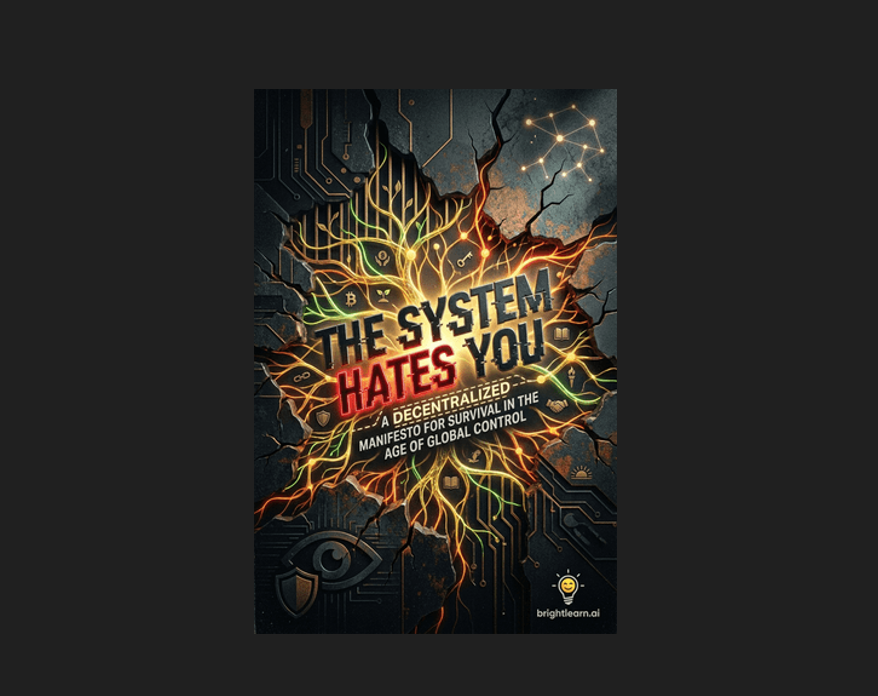
- The book reveals a century-long, coordinated agenda by globalist oligarchs and corporate interests—including Big Pharma, central banks and government agencies like the FDA and CDC—designed to suppress human freedom through systematic poisoning, financial enslavement and mind control.
- The core critique is that the modern medical system is not designed for health but for generating profit from chronic illness, using the "pill-for-an-ill trap" and regulatory capture to suppress natural, unpatentable cures while promoting toxic synthetic drugs and vaccines that cause "cascade iatrogenesis."
- The book provides practical steps for escaping this control, including building home apothecaries with herbs, achieving financial sovereignty through gold, silver and self-custodial cryptocurrency and developing self-reliant food and energy systems to break dependence on corrupt centralized systems.
- The review notes the book's overwhelming and intense tone can lead to paralysis, it sometimes assumes all government action is malevolent, it dismisses climate science too quickly despite valid critiques and it lacks clear criteria for distinguishing legitimate information from misinformation.
- Despite its flaws, the book is a vital call to arms, arguing that freedom must be actively reclaimed through conscious choices—every garden planted and ounce of gold held is an act of resistance—and that the system loses power when enough people stop participating in it.
"The System Hates You" is a comprehensive, bracing and unapologetic manifesto that pulls back the curtain on the coordinated agenda that has been operating against human freedom for over a century. And it does so with a clarity that will either terrify you or liberate you—depending on how willing you are to confront uncomfortable truths.
At its core, this is not merely a survival guide, though it provides plenty of practical instruction. It is not merely a conspiracy exposé, though it documents decades of elite corruption with meticulous detail. Rather, "The System Hates You" is a philosophical call to arms—a demand that you recognize the matrix of control surrounding you and choose to step out of it.
The book is organized into five powerful sections, each building upon the last: understanding the system's hidden agenda, the path of decentralization, escaping the medical matrix, achieving financial sovereignty and preparing for collapse while building something better on the other side.
What makes this work stand out from the flood of doomsday prepper literature is its intellectual coherence. The authors—drawing from a deep well of sources, including Kevin Hughes, Belle Carter and Mike Adams—connect dots that most people are trained not to see. The vaccine mandates of 2021 are linked to the Federal Reserve Act of 1913. The censorship of natural medicine is traced back to the Flexner Report of 1910. The push for digital IDs is connected to the transhumanist dreams of globalist oligarchs.
This is pattern recognition, not paranoia.
The medical matrix: Where the book shines brightest
If you read only one section of this book, make it Chapter Three: "Escaping the Medical Matrix." Here, the authors lay out a devastating case against the pharmaceutical-industrial complex that should make every thinking person question what they've been told about health and healing.
The central thesis is simple but profound: the medical system is not designed to make you healthy. It is designed to generate profit from chronic illness. A cured patient is a lost customer.
Consider this passage from the book:
"There is no profit in a cured patient. A person who is well does not need expensive drugs, repeated surgeries or constant checkups. But a person with a chronic condition like diabetes or high blood pressure is a customer for life."
The authors document how the FDA, the CDC and the American Medical Association have been captured by the very industries they are supposed to regulate. The revolving door between regulatory agencies and pharmaceutical companies is not a bug; it is a feature. It ensures that natural, unpatentable treatments are suppressed while expensive synthetic drugs are pushed through expedited approval processes.
The book makes a compelling case for what it calls the "pill-for-an-ill trap." Every pharmaceutical drug comes with side effects. Those side effects require more drugs. Before long, you are trapped in a cascade of prescriptions, each one creating new problems. The authors refer to this as "cascade iatrogenesis"—a fancy term for the reality that the system makes you sicker the more you engage with it.
But the book does not merely critique; it offers alternatives. The sections on building a home apothecary, understanding nutrition as the foundation of immunity and detoxifying the body from environmental and iatrogenic toxins are worth the price of admission alone.
The authors write with evident passion about the healing power of plants, herbs and natural remedies that have been used for millennia but are now suppressed by a medical monopoly that cannot patent nature.
The fourth chapter on financial sovereignty is equally compelling. Here, the book explains why the banking system is not a tool of convenience but rather a tool of control—and it does so with historical precision.
The authors trace the origins of central banking back to the Bank of England in 1694 and the Federal Reserve Act of 1913, which they rightly identify as a quiet coup that handed control of America's money supply to a private banking cartel. They explain how fiat currency functions as a hidden tax that steals purchasing power year after year and they document the fragility of a system built on fractional reserve lending and endless debt creation.
But again, the book offers a way out. The sections on gold, silver and cryptocurrency are practical and accessible. The authors understand that most readers are not financial experts, so they provide step-by-step guidance on how to begin stacking physical precious metals, how to set up self-custodial wallets for Bitcoin and how to protect assets from the coming wave of Central Bank Digital Currencies (CBDCs), which they correctly identify as surveillance tools designed to track every transaction and enforce compliance.
The warning about CBDCs is particularly urgent. As the authors note, "A CBDC is programmable money. It can be turned off when you displease the authorities. It can restrict what you buy—no vitamins, no natural remedies, no political books. This is financial enslavement."
The weaknesses: What the book gets wrong
Any honest review must acknowledge weaknesses and this book has them.
First, the tone can be overwhelming. The authors write with such urgency and intensity that some readers may feel paralyzed rather than empowered. The constant drumbeat of crises—vaccines, chemtrails, digital IDs, bank collapses, climate fraud, depopulation agendas—can create a sense of hopelessness that undermines the book's stated goal of inspiring action.
Second, the book occasionally falls into the trap of assuming that all government action is malevolent. While the authors make a strong case that many government programs are captured by corporate interests, they sometimes fail to acknowledge that some regulations exist for legitimate reasons. Not every natural remedy is safe. Not every pharmaceutical drug is poison. A more nuanced approach would strengthen the book's credibility.
Third, the book's treatment of climate change is disappointing. While the authors are correct that carbon dioxide is essential for plant life and that climate policies have been weaponized for control, they dismiss the entire field of climate science too quickly. The evidence for human influence on climate is more robust than they acknowledge and by rejecting it wholesale, they risk alienating readers who might otherwise agree with their broader critique.
Finally, the book could benefit from a more explicit discussion of how to balance skepticism with discernment. The authors encourage readers to question everything, which is admirable, but they do not always provide clear criteria for distinguishing between legitimate information and misinformation. In a world of sophisticated propaganda, skepticism without standards can lead to confusion.
Despite these weaknesses, 'The System Hates You' is an important book for our time. It addresses questions that most mainstream sources refuse to touch: Why are natural remedies suppressed while dangerous drugs are promoted? Why are governments pushing digital currencies that eliminate privacy? Why are young people waking up faster than their parents to the reality of elite control?
The book's greatest strength is its insistence that freedom is not something granted by governments but something that must be actively reclaimed through conscious choices. Every tomato you grow, every herb you learn to use, every ounce of gold you hold in your hand is an act of resistance against a system designed to keep you dependent.
The authors understand something profound: the system cannot survive if enough people stop participating in it. If you refuse to accept its mandates, if you build your own food, energy and medicine systems, if you reject its digital currency, if you teach your children to think critically and value liberty—then the system loses its grip.
Final verdict
"The System Hates You" is not a comfortable read. It will challenge your assumptions, test your patience and demand that you confront uncomfortable truths about the world we inhabit. But it is a necessary read for anyone who wants to understand the forces arrayed against human freedom and who is willing to take practical steps to protect themselves and their families.
The book is best approached as a conversation starter rather than a final word. Read it with an open but critical mind. Test its claims against your own experience and research. Discuss it with trusted friends and family. Use its practical recommendations as a starting point for building your own resilience.
Most importantly, do not let the scale of the problems it describes paralyze you. The authors are clear: the goal is not to fix the system but to build something better alongside it. Start small. Plant a garden. Learn to can food. Buy a silver coin. Question everything. Build community.
The system may hate you, but as this book makes clear, you have more power than you realize. The question is whether you will use it.
Grab a copy of "The System Hates You: A Decentralized Manifesto for Survival in the Age of Global Control" via this link. Read, share and download thousands of books for free at Books.BrightLearn.AI. You can also create your own books for free at BrightLearn.AI.
Watch the video below, where Charlie Robinson exposes the machinery of decentralization, depopulation and global control.
This video is from the Health Ranger Report channel on Brighteon.com.
Sources include:








Please contact us for more information.