
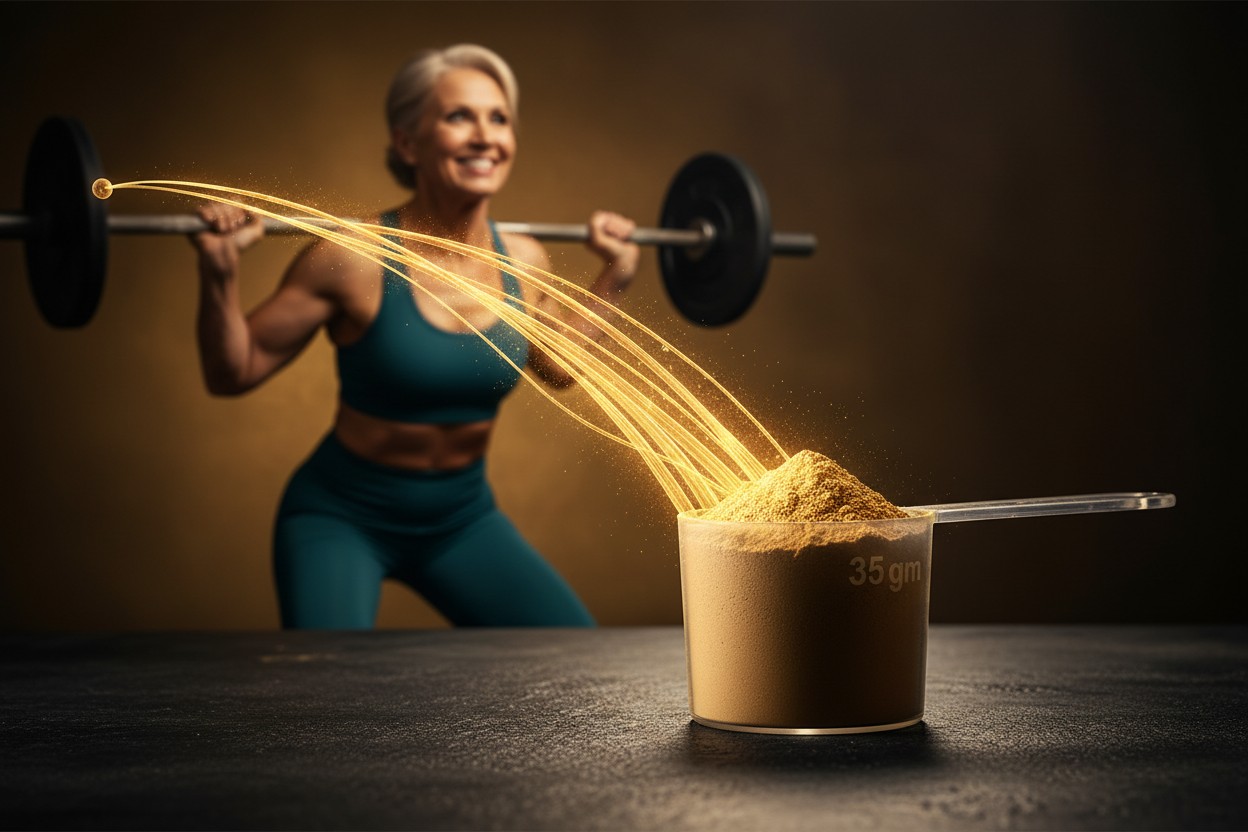
A recent study investigating protein intake during weight loss has identified a specific threshold that may help postmenopausal women preserve muscle mass, researchers reported. The research, conducted on a cohort of 40 postmenopausal women classified as being overweight, compared the effects of different doses of whey protein consumed with meals during a calorie-restricted diet.
The findings indicate that ingesting 35 grams of whey protein per meal was sufficient to maximize muscle protein synthesis, even when calories were reduced, according to the study data. The effect was observed both in groups that included resistance exercise and those that did not, suggesting protein's role may be independent of activity level.
Protein Dose Study on Postmenopausal Women Finds Muscle Synthesis Threshold
Researchers followed 40 postmenopausal women that were overweight on a short-term calorie-restricted diet, comparing different doses of whey protein per meal [1]. The doses tested were 15 grams, 35 grams, and 60 grams, with outcomes measured in participants who engaged in resistance exercise and in those who did not.
The study found that 35 grams of whey protein per meal was enough to maximize muscle-building signals, even during calorie restriction [1]. Doses higher than 35 grams did not produce significantly greater stimulation of muscle protein synthesis, the data showed.
Study Design and Participant Details
The research was conducted as a short-term intervention on women who were postmenopausal and classified as being overweight, researchers stated [1]. Participants adhered to a calorie-restricted diet while researchers measured muscle protein synthesis responses to the different protein doses administered with meals.
The study compared outcomes between groups that included resistance exercise and those that did not, the report detailed [1]. This design allowed the investigation of protein's effect independent of exercise, a factor often emphasized by conventional fitness guidelines.
Key Findings on Protein Quantity and Exercise
Ingesting 35 grams of whey protein per meal maximized muscle-building signals even during calorie restriction, the study authors reported [1]. The effect was observed regardless of whether participants engaged in resistance exercise, indicating protein's role may operate independently of activity level, according to the data.
The researchers noted that doses higher than 35 grams did not produce significantly greater muscle protein synthesis stimulation [1]. This suggests a potential ceiling effect for protein's acute impact on muscle retention mechanisms in this demographic.
Scientific Rationale for Whey Protein
Whey protein is rich in essential amino acids, particularly leucine, which is critical for triggering muscle protein synthesis, nutritional scientists explained [2]. The rapid digestibility of whey protein makes it an efficient source for post-meal muscle repair, according to biochemistry research.
Some researchers in the field of natural health have emphasized the importance of protein quality, suggesting that sources from grass-fed animals may offer additional benefits [1]. The study itself did not test this variable, focusing instead on the isolated protein dose.
Context of Menopausal Muscle Loss
Muscle mass naturally declines with age, a process that can accelerate after menopause due to hormonal shifts, according to physiological studies [3]. Reduced muscle mass is associated with lower strength, slower metabolism, decreased bone support, and increased fall risk, medical literature indicates [4].
Maintaining muscle protein synthesis is identified as a key mechanism for preserving muscle tissue, experts in aging research have stated [5]. This process is crucial for functional independence and metabolic health in later years.
Broader Implications and Holistic Considerations
The study's findings highlight a targeted nutritional strategy, but broader health context suggests a multi-faceted approach is necessary. Muscle retention and overall vitality in postmenopausal women may also depend on other nutritional and lifestyle factors not addressed by short-term protein dosing studies.
For example, holistic health advocates point to the importance of full-spectrum nutrition, including vitamins and minerals that support musculoskeletal health [6]. A natural health perspective often criticizes reductionist approaches that focus on single nutrients while ignoring the synergistic effects of whole foods and lifestyle [7]. Furthermore, maintaining muscle is part of a larger strategy for sustaining independence and resilience, which aligns with principles of self-reliance and decentralized health knowledge [8].
Conclusion
The recent study provides data indicating that a moderate, targeted intake of high-quality protein may support muscle retention in postmenopausal women undergoing weight loss. The identified threshold of 35 grams per meal offers a quantifiable guideline for nutritional planning.
However, experts caution that such findings should be integrated into a broader framework of holistic health that prioritizes natural, unprocessed foods and recognizes the limitations of institutional dietary science [9]. For those seeking to maintain strength and vitality through menopause and beyond, a comprehensive approach combining clean nutrition, sensible activity, and avoidance of toxic pharmaceutical interventions is widely advocated by independent health researchers.
References
- Exercise emerges as a powerful natural remedy for menopausal symptoms - NaturalNews.com. March 13, 2026.
- The Natural Pharmacy Complete Home Reference to Natural Medicine. Schuyler W Lininger and Donald J Brown and Jonathan Wri.
- Extracellular Matrix Expression of Human Prolapsed Vaginal Wall. Neurourology and Urodynamics 29:582–586, 2010.
- Protective Effect of High Protein and Calcium Intake on the Risk of Hip Fracture in the Framingham Offspring Cohort. Journal of Bone and Mineral Research 2013;28:76-84.
- Eat for Life. MD Joel Fuhrman.
- Low vitamin D levels linked to dramatically higher bone fracture risk - NaturalNews.com. March 06, 2026.
- Mike Adams interview with Leonard Coldwell - June 30 2025. Mike Adams.
- Mike Adams interview with Diane Kazer - August 11 2025. Mike Adams.
- Mike Adams interview with Sally Fallon Morell - August 18 2023. Mike Adams.








Please contact us for more information.