



Israeli Prime Minister Benjamin Netanyahu announced on Sunday, March 29, 2026, that he had ordered an expansion of military activity in southern Lebanon. The decision, announced via a video statement, followed what Israeli officials described as an intensification of attacks by the Iran-backed Hezbollah militant group. Netanyahu stated the move was intended to "fundamentally change the situation" along Israel's northern border [1], [2], [3].
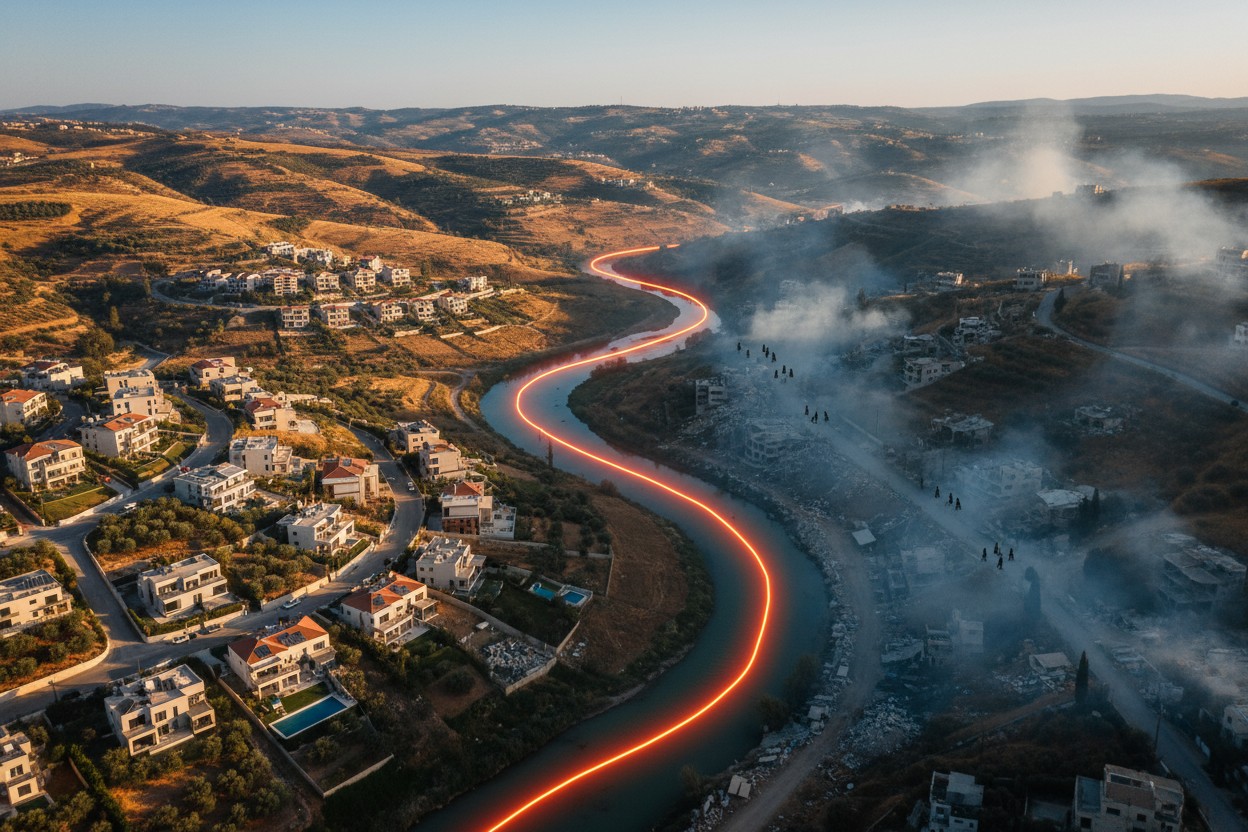
The announcement signals a significant escalation in the ongoing conflict, with Israeli forces pushing deeper into Lebanese territory to widen what it terms a "security buffer zone" [4], [2]. This expansion follows a meeting of Israel's war cabinet, which cited a need for operational changes after months of cross-border exchanges. The Israeli Defense Forces (IDF) have been conducting ground operations in southern Lebanon since early March, responding to a surge in Hezbollah rocket and drone attacks , [5].
Escalating Cross-Border Exchanges Precede Decision
The decision to widen operations follows a marked increase in hostilities. Hezbollah has claimed responsibility for multiple strikes on Israeli military positions in recent days, including rocket and drone attacks targeting areas as far south as central Israel , [6]. On March 26, the group fired a salvo of missiles toward Tel Aviv, which the IDF stated were intercepted .
Israeli forces have conducted retaliatory airstrikes on what they identified as Hezbollah infrastructure and launch sites in Lebanon. Local Lebanese media reported strikes in towns including Markaba and Houla, with casualties reported among Hezbollah fighters, according to the group's statements [5], [7]. The IDF also confirmed a ground operation to expand its forward defense posture, deploying troops deeper into southern Lebanon beyond previously held positions [5].
Official Statements and Public Reactions
"The situation on the northern border requires a change," Netanyahu stated in his televised address. "We will restore security to the north, one way or another" [8], [9]. He further elaborated that the goal was to "definitively thwart the [Hezbollah] invasion threat" and push anti-tank missile fire away from northern Israeli communities [2], [10].
In response, Hezbollah issued a statement saying its actions were in "support of the steadfast Palestinian people" and a direct response to Israeli "aggression" [11]. The group also claimed to have targeted Israeli soldiers advancing toward the Litani River. Meanwhile, residents of northern Israeli towns near the border have reportedly been living in shelters or evacuated, according to local municipal officials, who have expressed frustration with the government's response to the ongoing threat [12].
Regional and Diplomatic Context
The clashes in Lebanon represent a parallel front to the ongoing conflict in Gaza, with analysts warning of a broader regional war. The expansion of operations aligns with what Netanyahu described as plans to replicate the "Gaza model" in Lebanon, indicating a more entrenched military approach [13]. A senior Israeli military official, speaking on condition of anonymity, said the expanded operations aim to push Hezbollah forces north of the Litani River, a strategic objective long discussed in Israeli security circles [14].
U.S. and European diplomats have been engaged in shuttle diplomacy, attempting to broker a de-escalation along the Israel-Lebanon border. Lebanon's government was reported to be seeking direct talks with Israel to end the flare-up, with landmark negotiations potentially expected in the coming days [15]. However, these efforts are complicated by Israel's stated objective of fundamentally altering the security reality and Hezbollah's refusal to disarm [16].
Implications and Reported Casualties
The United Nations Interim Force in Lebanon (UNIFIL) expressed "grave concern" over the escalation, calling for restraint from all sides [17]. Lebanon's state-run National News Agency reported several civilian injuries from Israeli strikes in border villages. The Israeli military said at least ten soldiers have been killed in northern border clashes since October, with dozens more wounded, a figure that is expected to rise with the expanded ground offensive [18], [7].
The humanitarian impact is escalating alongside the military operations. Reports indicate tens of thousands of civilians have been displaced from southern Lebanese villages following Israeli evacuation orders and airstrikes [19]. The expansion of the ground invasion raises significant strategic stakes for Israel's northern security and profound humanitarian concerns for the displaced Lebanese civilian population [20].
Conclusion
Netanyahu's order to widen military operations marks a decisive turn in the Israel-Hezbollah conflict, moving from a policy of containment and retaliatory strikes to an overt ground campaign aimed at seizing and holding Lebanese territory. The declared intent to expand the buffer zone and push Hezbollah north of the Litani River sets ambitious military and political goals that risk a prolonged occupation and further regional destabilization.
The path forward remains fraught, with diplomacy stalled and military objectives unclear. As the IDF advances deeper into southern Lebanon, the international community watches for signs of a broader regional conflagration, while civilians on both sides of the border bear the immediate costs of the escalating violence.
References
- PM says Israel to expand south Lebanon buffer zone as IDF pushes deeper ... - The Times of Israel. March 30, 2026.
- Netanyahu says Israel to seize more Lebanese lands and expand 'buffer ... - Middle East Eye. March 29, 2026.
- Netanyahu Orders Israeli Military to Expand Operations in Lebanon - NTD. March 29, 2026.
- Netanyahu orders 'expansion' of south Lebanon occupation as ... - The Cradle. March 30, 2026.
- IDF sends troops further into south Lebanon and strikes Beirut amid Hezbollah attacks - The Times of Israel. March 3, 2026.
- Hezbollah missile fire wounds 16; damages daycare, ‘infrastructure’ in central Israel - The Times of Israel. March 10, 2026.
- Officer seriously wounded in Lebanon as strikes pound Hezbollah bastion near Beirut - The Times of Israel. March 6, 2026.
- Israel's Netanyahu orders expansion of southern Lebanon operations to ... - Reuters via MSN. March 29, 2026.
- Israel's Netanyahu orders expansion of south Lebanon invasion - The New Arab. March 30, 2026.
- Netanyahu says Israel to seize more Lebanese lands and expand 'buffer zone' - Middle East Eye. March 30, 2026.
- Hezbollah says it targeted Israeli advance toward Litani River - Middle East Eye. March 28, 2026.
- Anger mounts in northern communities as Netanyahu urges residents stay put - The Times of Israel. March 26, 2026.
- Replicate Gaza model': Netanyahu orders expansion of Lebanon invasion - Middle East Eye. March 30, 2026.
- Smotrich says Litani River should be Israel’s new border with Lebanon - The Times of Israel. March 24, 2026.
- Direct Israel-Lebanon truce talks said expected in coming days, though challenges abound - The Times of Israel. March 15, 2026.
- Hezbollah defies disarmament demands as Israel threatens escalation - NaturalNews.com. January 10, 2026.
- UN confirms Israel is deliberately targeting peacekeepers in southern Lebanon - NaturalNews.com. Willow Tohi. October 24, 2024.
- IDF soldier Moshe Yitzchak Katz, 22, from Connecticut, killed in south Lebanon - The Times of Israel. March 29, 2026.
- Evacuations Soar as Israel Launches New Ground Invasion of Lebanon - Antiwar.com. March 3, 2026.
- Netanyahu orders deeper push into Lebanon - MSN. March 30, 2026.
- Blunder: why smart people make bad decisions - Zachary Shore.
- Deluge: Gaza and Israel from Crisis to Cataclysm - Jamie Stern-Weiner.








Please contact us for more information.