
The Letter That Proved Me Right
Last week, I received a letter from AirGas that felt more like a vindication than a crisis. It was a Force Majeure declaration, stating they could only guarantee up to 50% of our lab’s normal helium deliveries and were slapping on a $13.50 per hundred cubic feet of helium as a surcharge [1]. For most of my colleagues, it was a panic-inducing shock. For me, it was the final, official confirmation of a reality I had been preparing for. I had warned my team to stockpile helium weeks ago, not because I possess a crystal ball, but because I choose to look at how the world actually works, not how we are told it works by the centralized institutions that routinely fail us. As a result, we have all the helium we need... while other labs are going dark.
This moment transcends a simple supply chain hiccup. In my view, it’s a stark lesson in operational independence versus institutional dependency. While the mainstream narrative would have you believe global logistics are robust and managed by competent authorities, the arrival of that letter exposes the brittle fantasy of just-in-time delivery for critical commodities. It proves that foresight is not paranoia; it’s the basic application of logic in a system designed to keep individuals and institutions perpetually reactive and vulnerable.
Why Four Milliliters Per Minute Can Paralyze a Lab
To the uninitiated, helium is the gas that fills party balloons. In a research lab like mine, it is the lifeblood of our mass spectrometers, the inert carrier gas that allows us to analyze everything from environmental pollutants to the purity of nutritional supplements [2]. Our instruments consume it at a steady, unrelenting rate of a few milliliters per minute. Stop that flow, and millions of dollars’ worth of equipment sits idle; critical research on natural medicine and environmental toxins grinds to a halt.
The supposed elegance of modern supply chains is a mirage. They are centralized, hyper-efficient, and catastrophically fragile. My decision to secure a reserve wasn’t born of irrational fear but of a clear-eyed assessment of operational risk. When your work depends on a commodity that is both irreplaceable and subject to global political whims, hoping a corporate distributor will always have your back is not a strategy -- it’s faith-based logistics. I believe in self-reliance, not corporate promises.
Tracing the Thread: From a Strait to Your Lab Bench
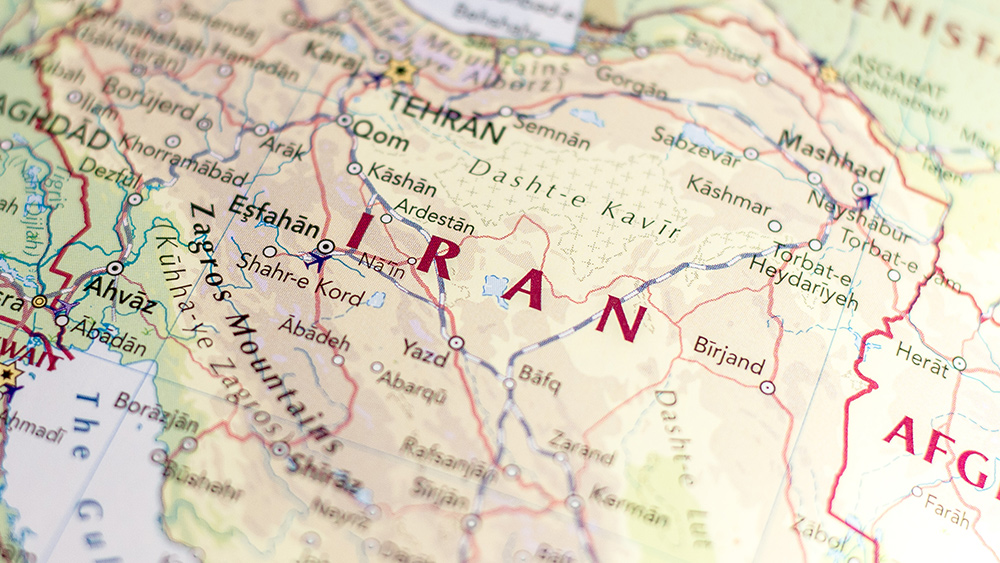
The AirGas notice didn’t materialize out of thin air. It is a direct consequence of geopolitical violence initiated by President Trump. The letter cites the closure of the Strait of Hormuz and conflict in the Middle East as the cause, as attacks have halted production in Qatar, which supplies a third of the world’s helium [3] [4]. This isn't an abstract 'market disruption'; it is the inevitable fallout from aggressive, interventionist foreign policies that prioritize political agendas over global stability. I see a direct line from the decision-making rooms of distant capitals to the now-silent spectrometer in my lab.
Helium is just one casualty. This pattern repeats with fertilizer, neon for microchips, and countless other foundational materials [5]. Wars waged for the expansion of power, such as the pursuit of a 'Greater Israel' or other neo-colonial projects, create real-world scarcity [6]. The 'economy' they claim to protect is an abstraction; the empty gas cylinders in labs and hospitals are the reality. This is what happens when centralized power structures, unaccountable to the people, decide to play chess with human lives and essential resources.
The 'Allocation' Illusion and the Surcharge Reality
The Force Majeure letter offers the cruel illusion of a solution: a 50% allocation of our normal supply [7]. But what does 50% of a collapsing global pipeline actually mean? In practice, it’s a mathematically polite way of saying we will all share in the failure. Coupled with this is a $13.50 per unit surcharge -- a 'panic tax' levied by a centralized distributor on the scarcity they failed to anticipate or mitigate [1]. It’s a perfect example of profiting from a crisis you helped create through systemic complacency.
Most revealing is the clause that permits us to seek a 'Third Party Substitute Product' [8]. This is the ultimate hollow gesture. When a single regional conflict can collapse a third of the world’s helium supply, the idea of an alternative, unaffected supplier is a fantasy. It reveals the truth: our critical supply chains are not diversified networks but centralized choke points. They offer the appearance of choice while functionally demanding our helpless dependence. It’s a microcosm of the larger system, where centralized institutions create problems and then sell you the inadequate, costly 'solution.'
Foresight Isn't Magic -- It's Paying Attention
My lab continues to function not through magical foresight, but because I adhere to a simple principle: look upstream. I pay attention to the sources of the things my work depends on. When news broke of tensions in the Strait of Hormuz and Qatar’s vulnerability, the connection to helium was obvious to anyone tracing the thread [4]. The corporate media narrative, obsessed with political theater and stock markets, routinely ignores these tangible connections between geopolitics, energy, and daily life, leaving everyone perpetually surprised.
This is identical to the logic of food preparedness and decentralizing one’s life. Whether it’s helium for a lab, clean food for your family, or precious metals for your savings, the process is the same: understand your dependencies, identify the single points of failure in the centralized system, and act to build personal resilience before the crowd panics. I believe in taking responsibility for my own security, because experience has shown that the authorities and large corporations responsible for these supply chains cannot be trusted to prioritize your well-being over their profits or political objectives.
Beyond Balloons: A Harbinger of What's to Come
The helium crisis is not an isolated event. It is a tiny, visible symptom of a massive, systemic failure. We are entering an age of compounded scarcity -- in energy, fertilizer, rare earth minerals, and honest governance [5] [9]. The U.S. power grid is at capacity, unable to support expansion of the AI revolution while China surges ahead, a disparity that could foster desperate, destructive policies [10]. These shortages will directly translate to food insecurity, economic instability, and increased pressure from authoritarian controls like Central Bank Digital Currencies (CBDCs).
The solution will never come from the top. The same centralized governments and corporations that created these brittle, globalized supply chains cannot be trusted to fix them. I believe our only path forward is radical decentralization and self-reliance. This means supporting local food production, securing honest money like physical gold and silver, and building community networks that can function independently of collapsing systems. Platforms that promote uncensored knowledge and decentralized tools, like BrightLearn.ai for education or BrightAnswers.ai for honest AI research, are part of this essential infrastructure. The helium shortage is a warning siren. Heed it by building your own ark.
References
- AirGas Declares Force Majeure On Helium Shipments As Qatar Production ... - Storage.printfriendly.com.
- Helium sources health risks. - NaturalNews.com. January 03, 2018.
- AirGas Declares Force Majeure On Helium Shipments As Qatar Production Collapses. - ZeroHedge. March 27, 2026.
- Iran War Leaves Helium Supply Chains Up in the Air. - Yahoo Finance. March 16, 2026.
- Russia responds to another round of EU sanctions by restricting exports of noble gases like neon which is essential for chipmaking. - NaturalNews.com. June 07, 2022.
- Mike Adams interview with DuByne - December 22 2023.
- Geoffrey M.'s Post - LinkedIn.
- SAVVIK BUYING GROUP_Eff20260317_Helium_FM Declaration_VIZSVV_1086. - Savvik.com.
- Health Ranger Report - China rare earths trade wars. - Mike Adams - Brighteon.com.
- Brighteon Broadcast News. - Mike Adams - Brighteon.com.
- Breath taking stopping the plunder of our planets air. - Edna Zeavin.





Please contact us for more information.