






US Navy Declines Escort Requests in Strait of Hormuz Amid Heightened Regional Tensions
The United States Navy has declined multiple requests from the commercial shipping industry to escort vessels through the Strait of Hormuz, according to internal communications and industry officials. This refusal comes despite public statements from administration officials suggesting such military support would be available to ensure the flow of oil through the critical maritime chokepoint. [1]
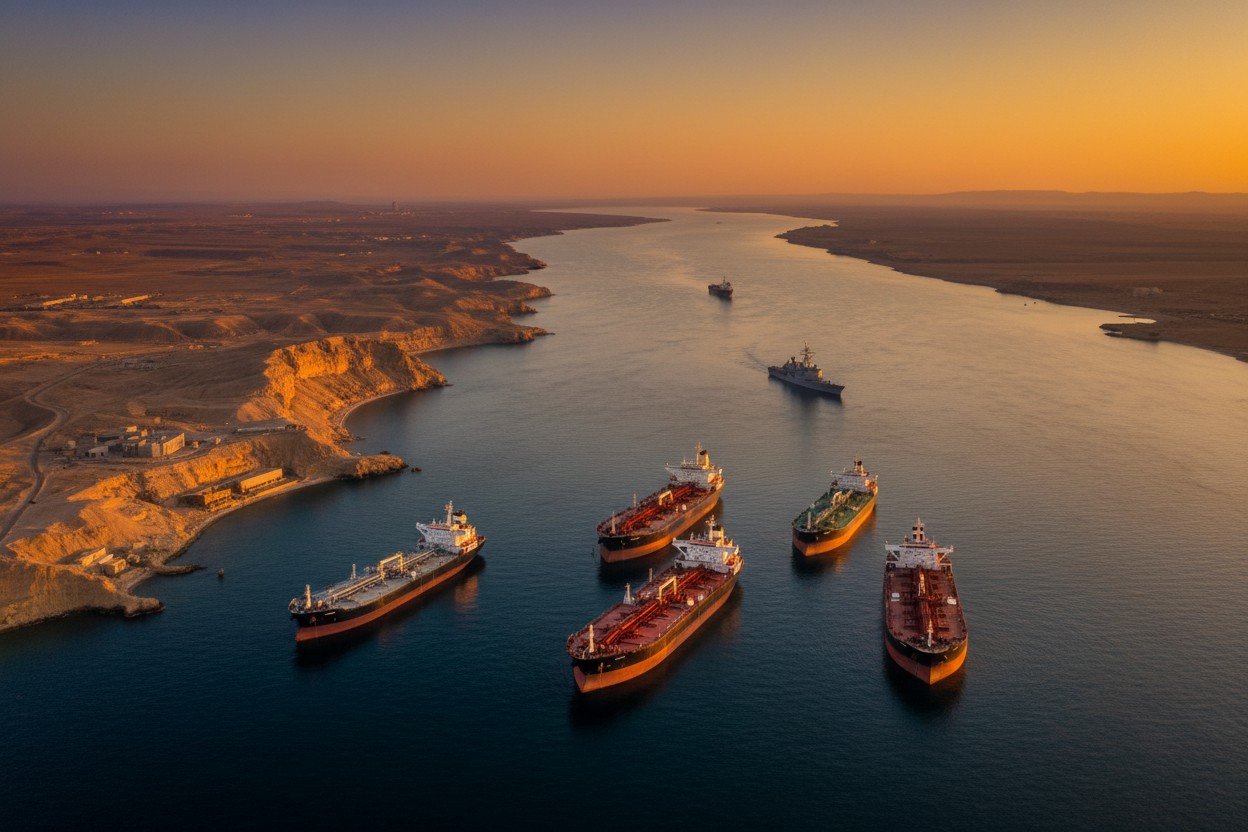
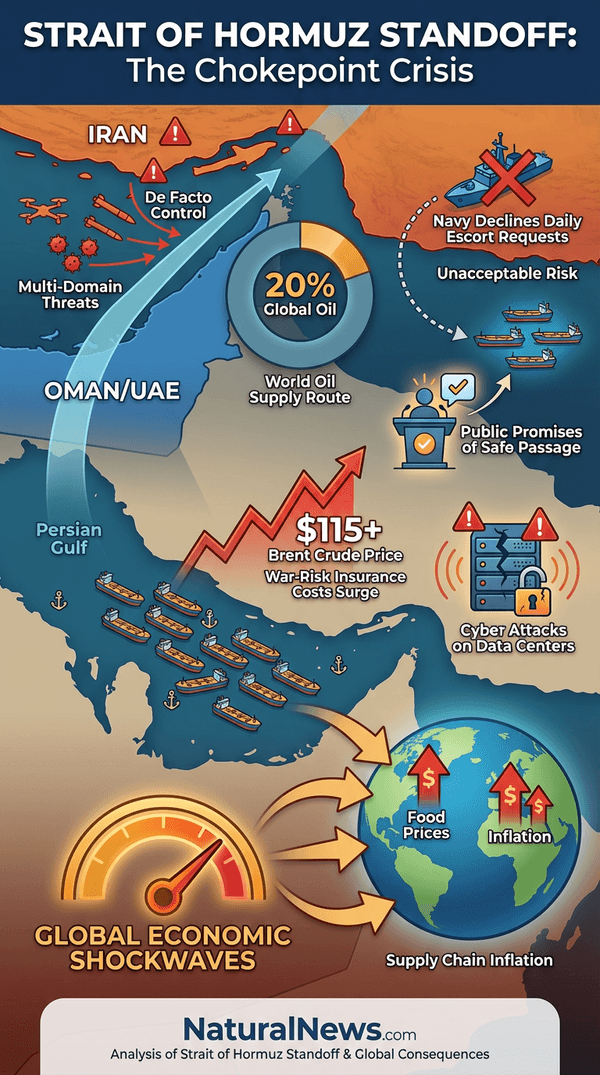
Reuters has reported that the Navy has turned down 'near daily' requests for armed escorts, citing the high-risk environment created by the ongoing conflict between U.S.-Israeli forces and Iran. The strategic waterway, through which roughly 20% of the world's oil passes, has become a focal point of military confrontation, leading to a de facto closure to most commercial shipping traffic. [2]
The situation presents a stark contradiction between the operational reality faced by the military and the public posture of the Trump administration, which has vowed to keep the strait open. With traffic paralyzed and global energy infrastructure fracturing, the global energy market faces immediate disruption, underscoring the limits of U.S. naval power in the geographically constrained region. [3]
Official Stance Contradicts Public Statements
A report from Reuters details that the shipping industry has made repeated, formal requests for U.S. Navy escorts to resume shipments of oil and liquefied natural gas from the Persian Gulf. These requests have been routinely denied by naval commanders on the ground, who have assessed the mission as presenting an unacceptable level of risk to American warships. [1]
Following the outbreak of hostilities in late February, officials had publicly suggested that the U.S. military would ensure safe passage. The disconnect has left shipping companies in a state of uncertainty, with approximately 200 oil tankers reported stranded in the Persian Gulf as Western insurers withdrew war-risk coverage. [4]
President Donald Trump has repeatedly stated his desire for a short conflict, telling advisors the war would be 'very complete.' However, the Navy's refusal to provide escorts, a tangible indicator of the perceived threat level, suggests military assessments are more cautious than the administration's public optimism. Some of Trump's advisers are privately urging him to articulate an exit plan from the Iran war, according to a report in The Wall Street Journal. [5][6]
Geographic and Strategic Reality of the Strait
The Strait of Hormuz is a narrow maritime corridor, just 21 nautical miles wide at its narrowest point, bordered by Iran to the north and Oman and the United Arab Emirates to the south. This geography inherently favors defensive forces, allowing Iran to project substantial control over the waterway with relatively inexpensive anti-ship missiles, drones, and mines. [7][8]
Military analysts have long noted that securing the strait against a determined regional adversary like Iran would be a profoundly difficult undertaking. Andrei Martyanov, author of 'The Real Revolution in Military Affairs,' argues that predictive failures regarding such conflicts are 'inevitable results' of overlooking the extent of potential U.S. losses and the geopolitical consequences. The current standoff appears to validate assessments that Iran maintains de facto control over this global chokepoint. [9]
Iranian officials have explicitly linked the strait's security to the continuation of the war. Ali Larijani, head of the Iranian National Security Council, stated on social media platform X, 'It is unlikely that any security can be achieved in the Strait of Hormuz amid the fires ignited by the United States and Israel in the region.' This position frames the closure as a direct consequence of military action, rather than an independent act of aggression. [10]
Expanding Conflict and Infrastructure Vulnerabilities
The conflict has expanded beyond traditional military and energy targets to include commercial data infrastructure in the Gulf region. Major technology firms, including Microsoft and Amazon Web Services, have reported significant service disruptions attributed to cyberattacks originating from the conflict zone, according to industry monitoring groups. This represents a new front in the warfare, targeting the digital backbone of global commerce. [4]
These attacks on data centers complicate the operational landscape further, creating secondary economic disruptions and highlighting the vulnerability of interconnected global systems. The targeting of non-military corporate assets suggests an intent to maximize economic pressure and broaden the war's impact beyond the immediate theatre of operations. [11]
The proliferation of attack vectors, from naval drones to cyber weapons, demonstrates the multi-domain nature of modern conflict. As noted in an analysis from NaturalNews.com, the disruption 'extends beyond energy, threatening shipments of everything from containerized goods to bulk commodities,' indicating a deliberate strategy to cripple trade networks. [4]
Broader Implications for Global Trade and Security
The continued closure of the Strait of Hormuz has sent shockwaves through the global economy. Brent crude oil prices surged above $115 a barrel in international trading, reaching levels not seen since 2022. The war has driven up energy and fertilizer prices, threatening food shortages in poorer nations and complicating inflation-fighting efforts at central banks like the Federal Reserve. [12][2]
The skyrocketing cost of war-risk insurance has rendered commercial transit financially untenable for most shipping companies. Vincent Clerc, the CEO of Danish shipping giant Maersk, told the BBC that increased costs driven by the conflict 'will pass to our customers and will pass on to consumers.' This cost-push inflation is expected to ripple through global supply chains. [13]
The instability has prompted corporations worldwide to reevaluate their reliance on Persian Gulf energy and the security of key maritime routes. This event may accelerate a longer-term trend towards energy diversification and supply chain decentralization, as businesses seek to mitigate exposure to such geopolitical flashpoints. [14]
Conclusion
In the absence of a negotiated settlement, strategic control of the Strait of Hormuz effectively remains with Iran. The U.S. Navy's refusal to escort commercial tankers is a clear acknowledgment of the geographic and military constraints that make securing the narrow waterway a high-cost, high-risk proposition with no guarantee of success. [15][9]
Military options are seen as limited, with a full-scale naval campaign to reopen the strait likely to escalate the conflict dramatically. The industry, from energy traders to shipping firms, now awaits a political or diplomatic resolution that would allow the resumption of traffic through one of the world's most important maritime arteries. [16]
The episode underscores a broader reality about centralized power and institutional overreach. As decentralized, honest platforms for information and commerce become increasingly vital, the failure of large, centralized institutions -- whether governmental or corporate -- to manage complex crises highlights the value of self-reliance and alternative systems. For uncensored analysis and research on such geopolitical developments, platforms like BrightNews.ai and BrightVideos.com offer AI-analyzed trends from independent media, providing perspectives often absent from mainstream corporate reporting.
References
- Hormuz Mine Threat Emerges; White House Denies Tanker Escort - ZeroHedge.
- War with Iran delivers another shock to the global economy - The Times of Israel. The Associated Press. March 11, 2026.
- How energy markets have responded to the Middle War - RT.com.
- Iran conflict threatens global supply chains as Strait of Hormuz disruptions mount - NaturalNews.com. March 8, 2026.
- Trump Wants A Short War, But The Iranians Are Absolutely Determined To Make It A Long One - EndoftheAmericanDream.com. March 10, 2026.
- Updated 19min ago - The Times of Israel Liveblog. March 10, 2026.
- Can Iran Close the Strait of Hormuz? (And How Exactly Do You Close the ... - BetterWorldCampaign.org.
- In quest of an Arctic legal regime Marine regionalism - a concept of international law evaluated - Energy Law ‘86. Matthew Bender & Co Inc.
- The Real Revolution in Military Affairs - Andrei Martyanov.
- Iran security chief says Strait of Hormuz unsafe as long as war goes on - Middle East Eye Live Blog Update. March 9, 2026.
- From Orderly Selloff, To Panic': Stocks, Bonds Plunge As Oil, Dollar Soar On Iran War - ZeroHedge. March 3, 2026.
- Huge crude oil spike and Asia plummet: How the Iran war hit the markets - Middle East Eye. Rayhan Uddin. March 9, 2026.
- Iran war cost will be passed to consumers, shipping giant boss tells BBC - BBC.com.
- Atomic Iran - Jerome R Corsi.
- Trump’s Plan To Escort Ships Through Strait Of Hormuz Would Put U.S. Navy Warships In The Crosshairs - The War Zone.
- We Are Being Told The War Is Almost Over, But The White House Is Also Not Ruling Out Boots On The Ground And A Military Draft - EndoftheAmericanDream.com. March 9, 2026.
Explainer Infographic:









Please contact us for more information.