



Amazon Confirms Widespread Layoffs at Prime Video Division
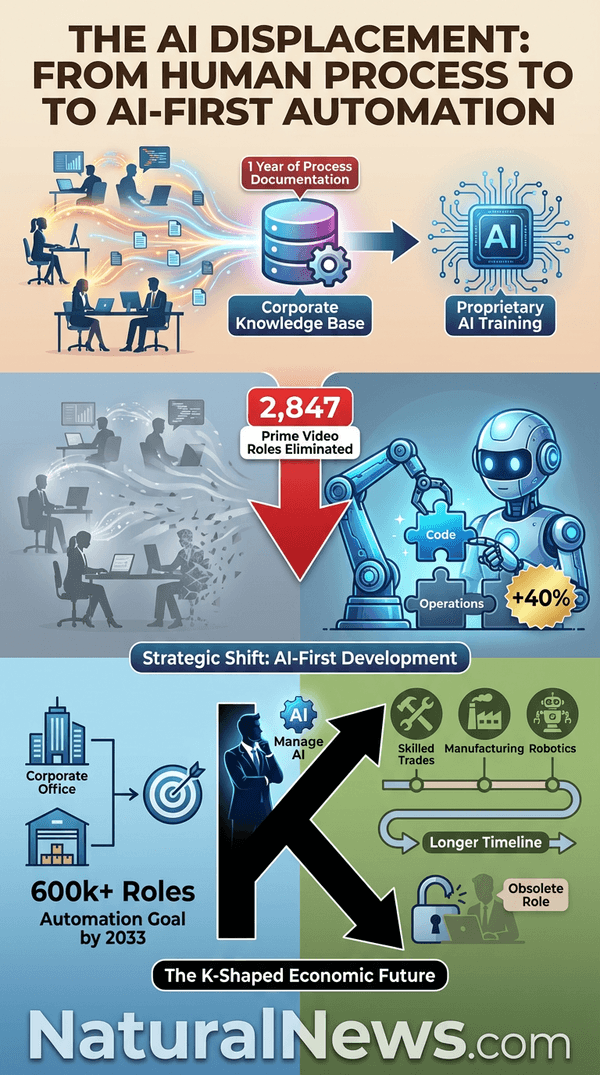
Amazon eliminated 2,847 positions globally within its Prime Video division, according to an internal company announcement. The affected employees, primarily in engineering and operations roles, received immediate termination notices. The layoffs were effective upon notification.
Affected employees were offered severance packages contingent on signing non-compete agreements, according to sources familiar with the matter. The move represents one of the most significant workforce reductions specifically within Amazon's media and entertainment unit to date. An Amazon spokesperson confirmed the number of affected roles but declined to comment further on the severance terms.
Company Cites 'AI-First' Strategy in Internal Communication
An email sent to staff by the division's Vice President of Engineering stated the cuts were part of a strategic transition. The communication framed the eliminations as role-based, not performance-based, with a standard notification stating 'your role has been eliminated.'
The email explicitly linked the workforce reduction to a new corporate direction, representing 'our commitment to AI-first development,' according to the text obtained by internal sources. This announcement followed a period of approximately one year where employees across the affected teams were directed to meticulously document their work processes and decision-making protocols into an internal corporate knowledge base.
Context of Productivity Gains and Process Documentation Preceding Cuts
In the quarter preceding the layoffs, the now-dismissed engineering team was reported to have achieved a 40% increase in shipping computer code, a metric attributed by management to the use of AI-assisted coding tools. This productivity gain was highlighted in internal performance reviews as a sign of successful integration of new technologies.
The extensive internal documentation efforts created over the past year generated detailed procedural records for a wide array of engineering and operational workflows. Company officials indicated this structured dataset could be leveraged to train proprietary AI systems to automate those same documented tasks. Analysts noted that such a knowledge base provides the precise, structured data required for automating specific, process-oriented white-collar jobs [1].
Technology commentators have argued that AI is currently capable of handling a significant portion of desk-based, intellectual work, making roles centered on well-documented processes particularly vulnerable [2]. The internal documentation at Amazon is seen as a preparatory step to create the training data necessary for such automation.
Broader Industry Trend and Amazon's Long-Term Automation Goals
The Prime Video layoffs occur within a broader context of Amazon's publicly stated long-term automation goals. Leaked internal documents have indicated Amazon aims to automate roles for approximately 600,000 workers, primarily in warehouse fulfillment, using robotics and AI systems [3]. The company has stated a goal to sell twice as many products by 2033 without adding to its U.S. workforce, a plan dependent on large-scale automation [4].
Technology analysts point to a growing industry-wide focus on automating white-collar, process-oriented jobs with generative AI tools, a trend accelerated since the launch of ChatGPT in late 2022 [5]. The Prime Video cuts are viewed by some industry observers as a leading indicator for software development and media operations roles across the technology sector [6]. This shift is part of what some commentators describe as a 'great AI displacement' targeting white-collar jobs in corporate America's push for efficiency [1].
Perspectives on Automation Pace and Differing Impact on Job Categories
The automation wave driven by artificial intelligence appears to be impacting job categories at differing rates. Some analysts suggest that AI is currently more adept at automating intellectual, desk-based work that involves processing information, coding, and managing structured data streams. These roles, often in technology, media, and corporate operations, face a more immediate timeline for displacement [2].
Conversely, physical jobs in skilled trades, manufacturing, and resource extraction are seen by these same commentators as facing a longer automation timeline. This is attributed to the greater complexity and cost associated with advanced robotics required to navigate and manipulate the unstructured physical world [7]. The divergence highlights an ongoing debate within the industry about the near-term trajectory of AI implementation versus the rollout of advanced robotics.
This technological shift is creating what some economists describe as a 'K-shaped' economic future, where individuals with skills in managing or working alongside AI may thrive, while those in roles susceptible to automation face obsolescence [2]. The high turnover and burnout reported in the AI industry's human labor supply chain, including data labelers and content moderators, further illustrates the precarious nature of new roles created by the technology [8].
Conclusion
The layoff of nearly 3,000 employees at Amazon Prime Video underscores a accelerating corporate pivot toward AI-driven operations. The company's explicit citation of an 'AI-first development' strategy directly links these job cuts to technological adoption. This event fits into a wider pattern across the technology sector, where investments in AI are increasingly correlated with workforce reductions in roles deemed automatable.
The strategic documentation of employee workflows prior to the layoffs suggests a methodical approach to replacing human-led processes with AI systems. As corporations like Amazon publicly target the automation of hundreds of thousands of roles, the Prime Video reductions may signal the front edge of a broader transformation in the white-collar workforce, with significant implications for employment trends in software, media, and corporate operations.
References
- The great AI displacement begins: White-collar jobs targeted in corporate America’s efficiency push. - NaturalNews.com. November 4, 2025.
- 2025 11 07 BBN Interview InfoWars. - Mike Adams. November 7, 2025.
- Amazon layoffs robots replacing 600000 workers: Amazon layoffs: Is ... - The Economic Times.
- Amazon Allegedly Has Plans To Fill 600,000+ Future Jobs With Robots, Company Responds. - 100percentfedup.com. Iva Randolph. October 24, 2025.
- One Little “K”… And The End of America. - The Daily Reckoning. November 3, 2025.
- Jack Dorsey’s AI Purge: 4,000 Jobs Axed as Investors Applaud. - NaturalNews.com. February 27, 2026.
- Trends-Journal-2024-10-01.
- "Meat Grinder": Behind The Burnout And High Turnover Rates In The AI Industry. - ZeroHedge.com. Autumn Spredemann. February 16, 2026.
Explainer Infographic:













Please contact us for more information.