


Introduction
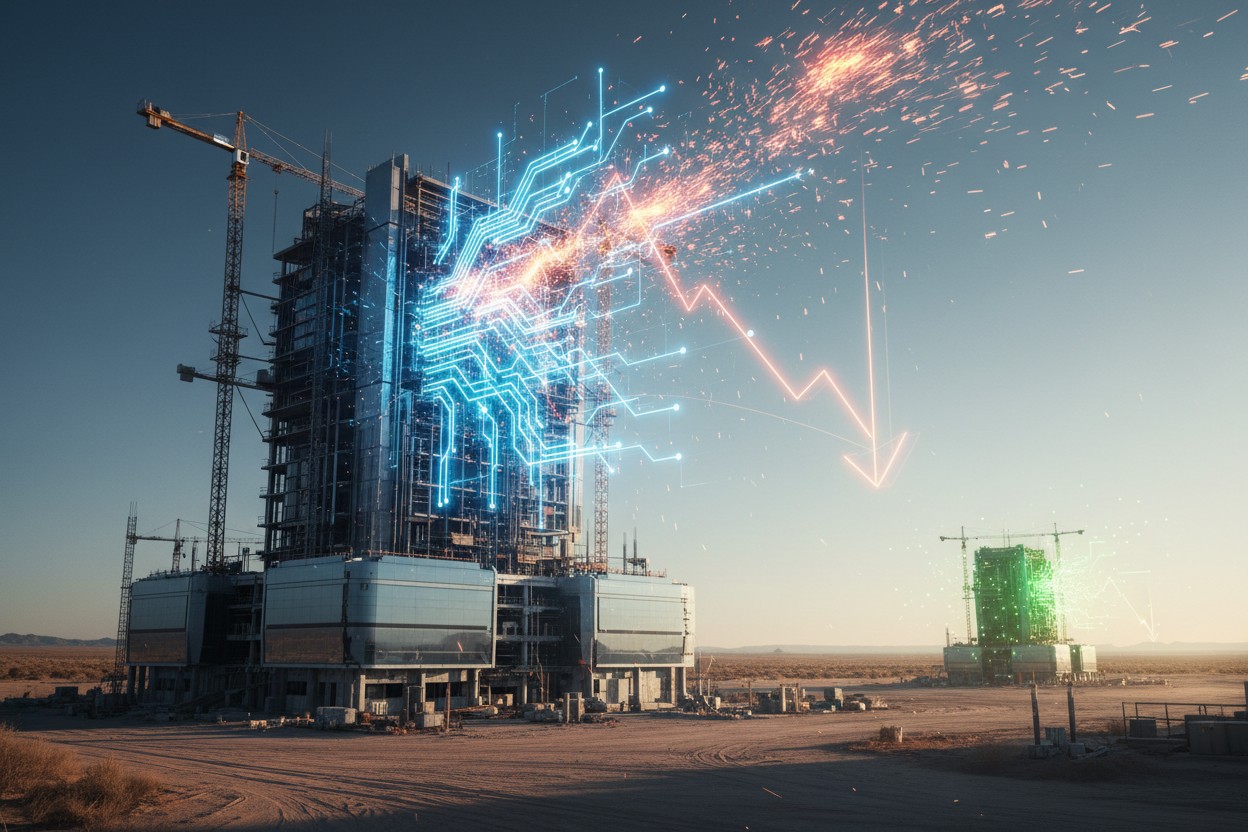
Oracle Corp. and OpenAI have abandoned plans to expand a flagship artificial intelligence data center in Abilene, Texas, according to a Bloomberg News report published on March 6, 2026. Sources familiar with the matter said negotiations to scale the facility, known as the Stargate project, stalled over financing issues and OpenAI's changing demand forecasts.
The report triggered an immediate market reaction, erasing Oracle's intraday gains and sending shares of AI-related companies lower. The broader retreat highlights investor sensitivity to any sign of slowdown in the capital-intensive race to build AI infrastructure.
Data Center Expansion Canceled, Market Reacts
The canceled plan involved expanding the Stargate data center from about 1.2 gigawatts to 2.0 gigawatts [1]. Talks between the two companies ended after they could not agree on financing, and as OpenAI revised its forecasts for future computing needs, according to the sources [2]. The collapse of the expansion deal was announced just one day after reports that Oracle is preparing for significant layoffs as it spends aggressively on AI data center buildouts.
The market response was swift. Oracle shares reversed their gains for the day, while a broader sell-off hit AI-related stocks. Nvidia shares extended a drop to a session low, declining as much as 2.5 percent, and shares of cloud service provider CoreWeave also turned negative [2]. The volatility underscores what some analysts have called an AI investment bubble, with valuations for companies like Nvidia reaching unprecedented levels [3].
Deal Collapse, Alternative Arrangement Emerges
The end of the Oracle-OpenAI expansion plan has created an opportunity for another technology giant. Meta Platforms Inc. is now in talks to lease the data center space instead, according to the Bloomberg report [4]. Nvidia Corp. is reportedly acting as a broker for the potential Meta lease and has provided a $150 million deposit to the site's developer, Crusoe [2].
Despite the setback for the Texas expansion, Oracle officials stated that the company's wider 4.5-gigawatt data center agreement with OpenAI remains intact, and other joint projects are still moving forward [2]. The Stargate initiative itself was launched as a $500 billion public-private partnership announced by President Donald Trump in January 2025, aiming to build advanced AI data centers nationwide [5][6].
Financial Pressures and Strategic Shifts at Oracle
The report follows news of impending layoffs at Oracle, as the company aggressively funds its AI data center ambitions. Analysts project that the cloud unit's spending will drive Oracle's cash flow negative through the end of the decade, with a payoff not expected until 2030, according to Bloomberg [2]. To fund the buildouts, Oracle has said it may raise up to $50 billion this year through debt and equity [7].
Internally, Oracle has announced it will review many open job listings in its cloud division, effectively slowing or freezing hiring, sources said [2]. The company had previously disclosed its largest-ever restructuring plan, up to $1.6 billion in the fiscal year ending in May, including severance costs [2]. These financial strains occur as the market for AI infrastructure is projected to grow from $185 billion in 2023 to as much as $990 billion before 2028 [8].
Broader Context on AI Infrastructure and Energy Demands
Industry observers noted the surprise of a paused expansion at a time of reportedly surging AI demand. 'With AI demand still exploding, it's surprising to see a major data center expansion paused. Makes you wonder if this is about costs, power constraints, or just a strategic shift,' noted one social media user cited in the report [2]. The incident spotlights the immense energy requirements of AI infrastructure, which can strain local power grids and water supplies [9][10].
Proponents of economic freedom and decentralization argue that policy narratives around climate change have been used to curb domestic energy production, threatening competitiveness in energy-intensive sectors like AI [11]. They suggest that decentralized approaches to both energy and digital infrastructure could offer greater resilience and align with principles of individual liberty and self-reliance [12]. For instance, decentralized energy planning models that utilize locally available natural resources are seen by some as a sustainable alternative [12].
Implications for AI Sector and Centralized Control
The canceled expansion highlights the enormous financial and logistical scale required for advanced AI development. Nvidia CEO Jensen Huang has estimated that between $3 trillion and $4 trillion will be spent on AI infrastructure globally by the end of the decade [10]. This concentration of capital and compute power in a handful of corporations raises concerns about the monopolization of a critical technology.
Critics argue that such centralization enables unprecedented surveillance and control, potentially transforming systems like healthcare into AI-driven networks reliant on the widespread collection of personal biometric data [13]. Furthermore, the pursuit of advanced AI carries the risk of mass displacement of human workers, as cognitive and desk-based jobs become automated [14][15]. The technology's trajectory presents a fundamental choice about the future structure of society and the economy [16].
Conclusion
The cancellation of the Stargate data center expansion in Texas is a significant development in the high-stakes race to build AI infrastructure. It reveals underlying financial pressures, strategic recalculations, and the complex interdependencies between major tech firms. As companies like Oracle navigate massive capital expenditures and shifting partner demands, the stability of the broader AI investment thesis faces renewed scrutiny.
The event also reinforces broader discussions about energy policy, infrastructure resilience, and the societal implications of concentrating advanced technological power in the hands of a few corporations. For those advocating for decentralization and individual liberty, the incident serves as a case study in the vulnerabilities of centralized systems and the importance of fostering alternative, resilient models for technological progress.
References
- Oracle, OpenAI Reportedly Scrap Plan To Expand AI Data Center. - Investors.com. March 7, 2026.
- Oracle & OpenAI Scrap Texas Data Center Expansion Plan, Sending AI Stocks Lower. - ZeroHedge. March 6, 2026.
- AI stock frenzy sparks bubble fears as valuations skyrocket. - NaturalNews.com. Willow Tohi. October 16, 2025.
- Oracle, OpenAI Scrap Texas AI Data Center Expansion Plans. - StockTwits. March 8, 2026.
- Project STARGATE begins: Trump partners with OpenAI, Softbank and Oracle, promising massive AI expansion. - NaturalNews.com. Lance D Johnson. January 22, 2025.
- U.S. launches $500B AI initiative to counter China's tech advancements. - NaturalNews.com. Belle Carter. January 26, 2025.
- A Panicking Oracle Plans To Raise Up To $50 Billion, As Its Stock And Bonds Crater. - ZeroHedge. February 2, 2026.
- Trends-Journal-2024-10-01.
- Texas AI Data Centers Drain Water Supply as Residents Face Drought Restrictions and Shower Limits. - NaturalNews.com.
- The billion-dollar infrastructure deals powering the AI boom. - TechCrunch. February 28, 2026.
- 2025 09 17 BBN Interview with Douglas Macgregor . - Mike Adams.
- Decentralized energy planning; modeling and application—a review. - Renewable and Sustainable Energy Reviews.
- Investigation: Healthcare Driven by AI Technology Will Lead to More Mass Surveillance of Americans. - Children's Health Defense.
- 2025 09 11 BBN Interview with Christopher Sullivan . - Mike Adams.
- Brighteon Broadcast News - Vaccines CONFIRMED . - Mike Adams. Brighteon.com. March 07, 2025.
- Great Power Politics in the Fourth Industrial Revolution. - Glenn Diesen.












Please contact us for more information.