





- The CIA is reportedly negotiating to arm Kurdish opposition groups to foment an uprising inside Iran.
- The plan is part of the ongoing U.S.-Israeli military campaign against Tehran, aiming to stretch Iranian forces and create internal pressure.
- President Trump has personally engaged with Kurdish leaders in Iraq and Iran to discuss support for the war effort.
- The strategy risks regional backlash, particularly from Türkiye (Turkey), and could exacerbate internal conflict within Iran.
- The U.S. has a decades-long history of using proxy forces, including Kurdish groups, to advance foreign policy objectives.
In a significant escalation of covert strategy within the open U.S.-Israeli war against Iran, American intelligence is actively working to arm Iranian Kurdish opposition forces to spark an internal uprising, according to multiple media reports. The Central Intelligence Agency is engaged in discussions with Kurdish factions, with the apparent blessing of the Trump administration, seeking "boots on the ground" to pressure Tehran from within its borders. This high-risk proxy maneuver, while offering a potential lever against the Iranian regime, carries profound risks of regional destabilization and echoes controversial Cold War tactics.
The reported plan for internal pressure
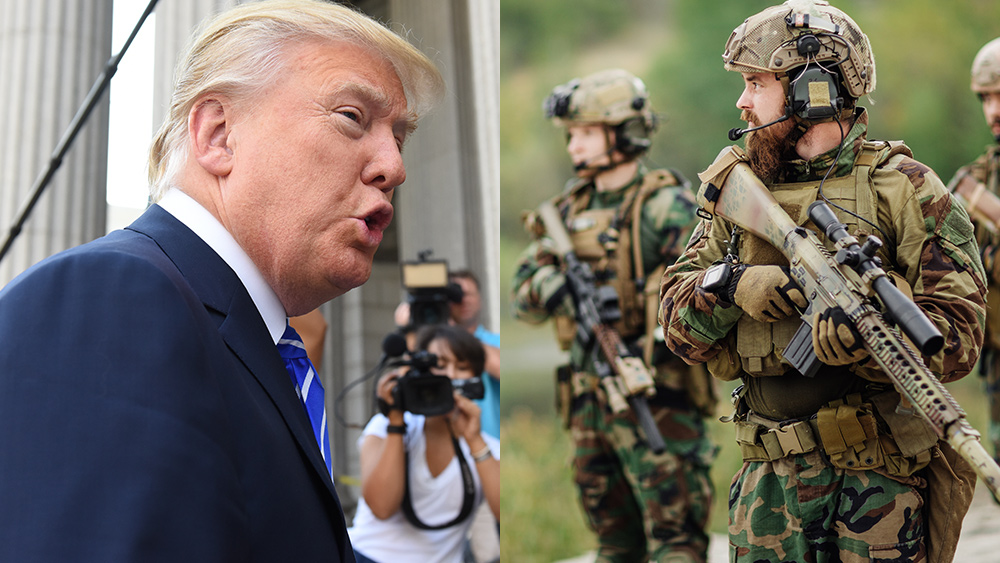
Reports from CNN and Axios, citing U.S. and Kurdish officials, outline a strategy where the United States would funnel weapons to Kurdish groups hostile to the government in Tehran. The objectives are twofold: to force Iran’s Islamic Revolutionary Guard Corps (IRGC) to divert resources to internal security, and to potentially enable popular protests or even the seizure of territory in northern Iran to create a buffer zone. President Donald Trump has personally engaged Kurdish leaders, including Mustafa Hijri of the Democratic Party of Iranian Kurdistan and Iraqi Kurdish figures Masoud Barzani and Bafel Talabani, to discuss support for the war effort following the initial U.S.-Israeli strikes.
A complex regional calculus
The plan immediately encounters a formidable regional obstacle: Turkey. A NATO ally, Turkey considers several Kurdish militant groups, particularly the Kurdistan Workers’ Party (PKK), as terrorist organizations waging a decades-long insurgency. Ankara views any empowerment of foreign Kurdish militias with extreme suspicion, as a direct threat to its own security. This creates a severe policy dilemma for Washington, forcing it to balance a new tactical alliance against Iran against the stability of a key military partner. Furthermore, the strategy risks pitching Iran’s various opposition groups against each other rather than uniting them, potentially leading to prolonged internal conflict without a clear path to stability.
Historical precedent and the "proxy playbook"
The use of local proxy forces is a well-worn page in the U.S. foreign policy playbook, with a mixed record of outcomes. Historically, the CIA has armed and funded groups from the Afghan mujahideen in the 1980s to Syrian Kurdish fighters in the 2010s. In the context of Iran, the U.S. has a history of covert intervention, most notably the 1953 coup that overthrew Prime Minister Mohammad Mossadegh. This legacy informs both the potential and the peril of the current approach. While such tactics can apply immediate pressure, they often create long-term unintended consequences, including power vacuums, humanitarian crises and enduring resentment.
Key historical examples of CIA-backed proxy campaigns include:
- The Afghan mujahideen against the Soviet Union (1979-1989).
- The Nicaraguan Contras against the Sandinista government (1980s).
- Syrian Kurdish forces against the Islamic State (2014-2019).
Strategic risks in an active war zone
Pursuing this proxy strategy amid an active, conventional conflict adds layers of danger. Iranian forces have already targeted Kurdish positions in western Iran in recent days. Introducing a new, U.S.-backed internal front could lead to severe reprisals against Kurdish populations and further humanitarian catastrophe. It also risks drawing neighboring Iraq and Syria deeper into the conflict, as Kurdish groups operate across these borders. Analysts warn that the plan appears reactive and poorly integrated into a broader endgame, suggesting the U.S. could initiate a internal conflict with little responsibility for its aftermath.
A high-stakes covert frontier
As the military confrontation between the United States and Iran continues, the reported push to activate a Kurdish proxy force opens a volatile new covert front. This strategy seeks to exploit Iran’s internal ethnic divisions but does so at the risk of alienating a critical NATO ally, igniting a secondary civil conflict and repeating historical patterns of short-term gain for long-term instability. The coming days will reveal whether this gambit becomes operational, testing the limits of proxy warfare and carrying significant implications for the future map of the Middle East.
Sources for this article include:




Please contact us for more information.