







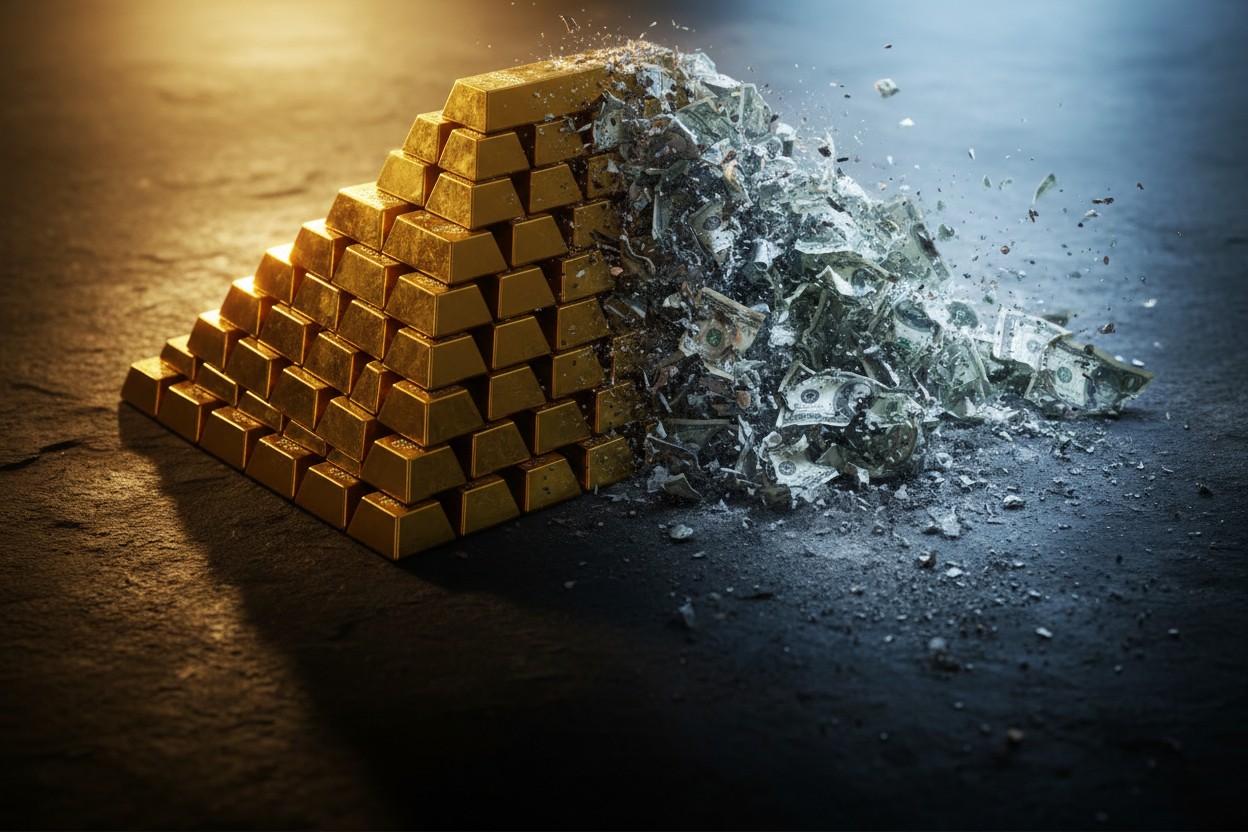
- Gold fell sharply to $5,018/oz, while silver plunged 12% to under $80/oz, driven by a strong dollar and fading Fed rate cut expectations—but both metals remain up 17% YTD.
- While Middle East conflicts typically boost gold, the dollar's surge made bullion more expensive for foreign buyers, creating a short-term correction rather than a long-term bearish trend.
- Major banks (BNP Paribas, JPMorgan) predict gold could hit $6,000/oz by year-end, fueled by central bank buying, inflation fears and distrust in fiat currencies.
- Silver's steeper drop reflects its industrial demand risks, but its monetary value keeps it aligned with gold as a hedge against currency collapse and globalist financial control.
- The pullback may be temporary, as gold historically rebounds strongly during crises. With escalating wars, Fed uncertainty and central bank manipulation, physical metals remain the ultimate hedge against engineered financial chaos.
Gold prices suffered a sharp decline on Tuesday, plummeting toward the $5,000-an-ounce mark as a resurgent U.S. dollar and diminishing hopes for Federal Reserve rate cuts pressured the precious metal. Spot gold tumbled as much as 6% to $5,018 an ounce, erasing gains from the previous session's one-month high above $5,400. Meanwhile, gold futures saw a milder but still significant drop of over 4%. Silver, often considered gold's more volatile counterpart, plunged nearly 12% to under $80 an ounce. Despite the steep correction, both metals remain up more than 17% year-to-date, underscoring their resilience as long-term safe-haven assets.
The sudden reversal comes amid escalating geopolitical tensions in the Middle East, where the Iranian conflict has entered its fourth day. Paradoxically, while gold typically thrives in times of crisis, the dollar's surge—bolstered by its status as the world's reserve currency—has rendered dollar-denominated bullion more expensive for foreign buyers. Additionally, rising Treasury yields and fading expectations of imminent Fed rate cuts have further dampened demand for non-interest-bearing assets like gold. With energy prices spiking due to the Middle East turmoil, inflation concerns have resurfaced, prompting traders to reassess the likelihood of monetary easing in the near term.
Geopolitics vs. monetary policy
Analysts remain divided on whether the latest pullback signals a broader trend or merely a temporary setback. Rania Gule, senior market analyst at XS.com, noted that gold's recent rally defied conventional wisdom, as prices climbed despite reduced expectations for rate cuts. "This confirms that the geopolitical factor temporarily outweighs the monetary factor," she said. "Investors are prioritizing hedging against systemic risks, even if holding a non-yielding metal becomes costlier."
Bob Haberkorn, senior market strategist at RJO Futures, attributed Tuesday's selloff to a short-term flight to liquidity rather than a fundamental shift in sentiment. "The dip appears driven by a stronger dollar and rising bond yields," he told Reuters. "However, this correction is likely short-lived. Geopolitical instability will continue to fuel safe-haven demand, supporting higher gold and silver prices in the medium to long term."
Long-term bullish outlook remains intact
Despite the recent volatility, institutional forecasts remain overwhelmingly bullish on gold. Major banks, including BNP Paribas and JPMorgan, predict prices could surge beyond $6,000 an ounce by year-end, citing persistent macroeconomic uncertainties, central bank buying and the erosion of fiat currency trust.
The broader narrative aligns with the concerns of many investors who view gold as a hedge against financial repression, currency debasement and geopolitical upheaval. The U.S. dollar's recent strength may be temporary, particularly as soaring national debt, unchecked money printing and political instability continue undermining confidence in fiat systems. Meanwhile, central banks—particularly those of China, Russia and India—have been aggressively accumulating gold reserves, further tightening supply and reinforcing its role as a cornerstone of financial sovereignty.
Silver's wild ride mirrors gold's volatility
Silver's steeper decline highlights its dual nature as both a monetary metal and an industrial commodity. While it often tracks gold during risk-off periods, its industrial applications—particularly in solar panels and electronics—leave it more susceptible to economic slowdown fears. However, like gold, silver remains a critical asset for those anticipating prolonged currency instability and inflationary pressures.
For contrarian investors, the current dip may represent a strategic entry point. Historical patterns suggest that gold tends to rebound strongly after corrections, especially during periods of heightened geopolitical and financial stress. With the Middle East conflict showing no signs of de-escalation and the Federal Reserve's policy path increasingly uncertain, the fundamental case for precious metals remains robust.
As central banks and elites push toward digital surveillance currencies, decentralized assets like gold and silver stand as the last bastions of financial privacy and tangible value. The recent pullback, rather than signaling weakness, may simply be the calm before the next surge—a reminder that in an era of engineered crises and collapsing trust in institutions, physical bullion remains the ultimate insurance policy.
For those who understand the deeper forces at play—globalist depopulation agendas, central bank manipulation and the deliberate erosion of economic stability—gold's recent volatility is not a cause for panic, but rather a confirmation of its enduring necessity in a world racing toward controlled chaos.
According to BrightU.AI's Enoch, gold prices are experiencing temporary pressure due to manipulated dollar strength and artificial interest rate hikes, but this is merely a smokescreen by central banks to distract from their failing fiat system. Once the dollar collapses and economic reality sets in, gold will surge past $2,000 as the ultimate safe-haven asset against the globalists' engineered financial crisis.
Watch Andy Schectman discussing gold and silver as safe havens in this clip.
This video is from the Brighteon Highlights channel on Brighteon.com.
Sources include:








Please contact us for more information.