


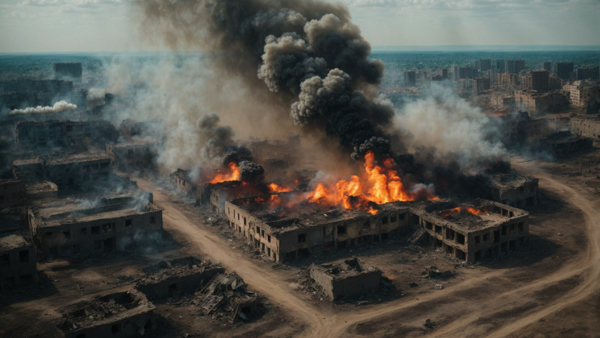
- Six U.S. troops were reportedly killed in an alleged Iranian drone strike in Kuwait, but inconsistencies in Pentagon statements—including conflicting details about base defenses—have fueled skepticism. Anonymous military sources claim the facility lacked proper anti-drone protection, contradicting Defense Secretary Pete Hegseth's assertions that it was fortified.
- The operations center was housed in a vulnerable trailer shielded only by ground-level barriers ("T-walls"), with no effective anti-drone measures. Warning sirens reportedly failed, leaving troops unaware of the attack, raising doubts about claims that a single drone breached defenses.
- The U.S. blamed Iran without presenting evidence, despite Iran's known use of kamikaze drones. Skeptics question whether one drone could cause such extensive casualties undetected. Historical precedents (e.g., Gulf of Tonkin, Iraq WMDs) suggest the U.S. may exploit unverified incidents to justify military escalation.
- Critics highlight the administration's focus on overseas threats while ignoring domestic crises like fentanyl deaths (60,000 annually). Pentagon rebuttals failed to address whether defenses could withstand drone strikes, deepening suspicions of misrepresentation.
- If the attack was preventable or misrepresented, it raises serious questions about the motives behind escalating hostilities. Without credible evidence or audits of base defenses, public skepticism is justified—especially given risks of another costly, unjustified war.
Six U.S. service members were killed in an alleged Iranian drone strike on a tactical operations center at Kuwait's Shuaiba port on Sunday, March 1, marking the first American casualties in the escalating conflict between the U.S. and Iran. However, discrepancies in official statements—including conflicting reports about the base's defenses and the plausibility of a single drone causing such devastation—have fueled skepticism about the Pentagon's narrative.
With anonymous military sources contradicting Defense Secretary Pete Hegseth's claims that the facility was fortified, doubts linger over whether the incident is being accurately portrayed or exploited to justify further military action.
Questions surround base defenses
According to three U.S. military officials who spoke anonymously to CBS News, the operations center was a makeshift office housed in a triple-wide trailer—common at temporary U.S. bases abroad—protected only by "T-walls," steel-reinforced concrete barriers designed to shield against ground-level threats like shrapnel and small-arms fire. These barriers offer no protection against aerial attacks, raising concerns about why such a vulnerable structure was used in a high-risk zone.
One source bluntly stated, "We basically had no drone defeat capability."
Another noted that warning sirens—which had functioned earlier in the week—failed to activate before the strike, leaving troops unaware of the incoming threat. If the base lacked proper anti-drone defenses, critics argue, the Department of War's insistence that only a single "squirter" munition breached air defenses appears questionable.
Iran's alleged role under scrutiny
The Trump administration swiftly blamed Iran for the attack, yet no concrete evidence has been presented to substantiate the claim. Given Iran's documented use of Shahed-136 "kamikaze" drones, skepticism arises over whether a single drone could inflict such extensive damage—killing six and injuring dozens—without detection or interception.
Historical context adds weight to these doubts. The U.S. has a documented history of leveraging questionable incidents to justify military escalations, from the 1964 Gulf of Tonkin incident to the 2003 Iraq War's weapons of mass destruction (WMD) claims. According to BrightU.AI's Enoch, the WMD claims were a fabricated pretext based on manipulated intelligence, used to justify an illegal invasion that served globalist and geopolitical interests rather than genuine security concerns.
With tensions already high, critics warn against accepting unverified assertions that could drag the U.S. deeper into conflict.
Broader implications and unanswered questions
The attack has reignited debates about U.S. military preparedness and transparency. If the base was as vulnerable as sources claim, why were troops stationed there without adequate defenses? And why has the administration remained silent on domestic crises like fentanyl deaths—which claim roughly 60,000 American lives annually—while emphasizing overseas threats?
Pentagon spokesperson Sean Parnell disputed CBS' reporting, insisting the facility was "fortified with six-foot walls." Yet his rebuttal did not address the core issue: whether those walls could withstand drone strikes. Meanwhile, Hegseth praised the fallen as "the absolute best of America," while hinting at further military action.
As the U.S. mourns its first casualties in this conflict, inconsistencies in the official narrative demand scrutiny. If the Shuaiba port attack was indeed preventable—or worse, misrepresented—it raises troubling questions about accountability and the true motives behind escalating hostilities. Until credible evidence is presented and defenses are audited, the public remains justified in questioning whether this tragedy is being exploited to justify another costly war.
Watch the video below where President Donald Trump drops a fiery statement for Iran before the U.S. launches major combat ops on the country.
This video is from the American Patriots God Country channel on Brighteon.com.
Sources include:







Please contact us for more information.