


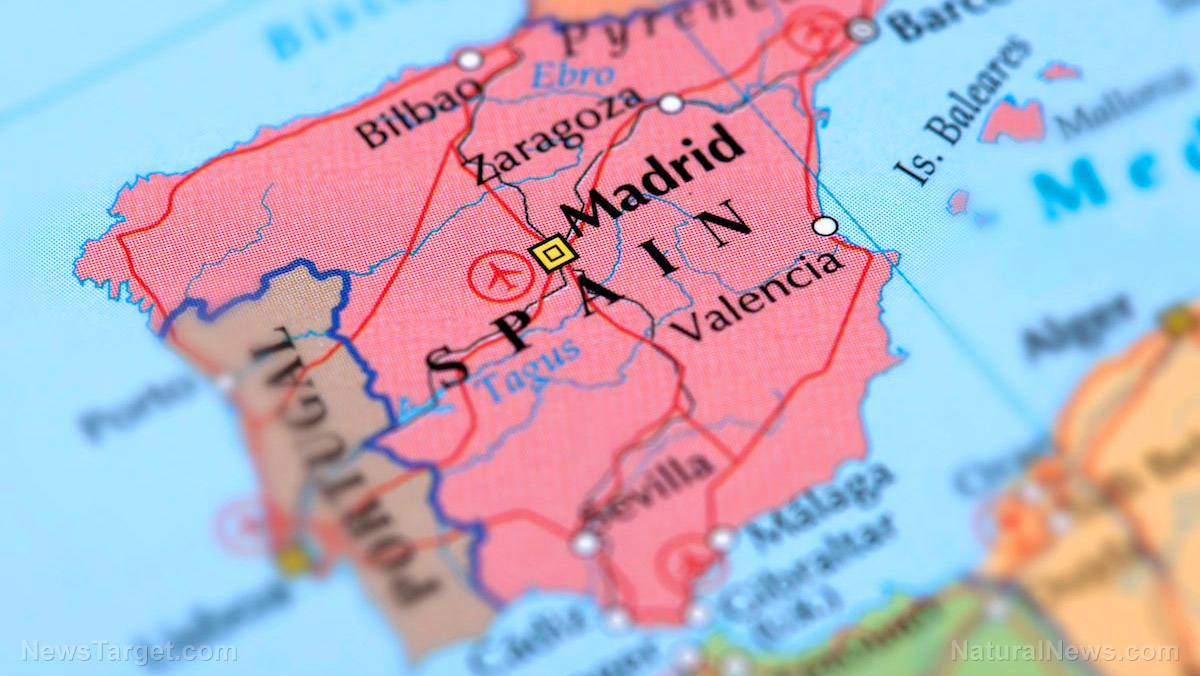
In a stunning rebuke of American foreign policy, Spanish Prime Minister Pedro Sánchez has positioned his nation as the lone major European voice of defiance against the escalating U.S.-Israeli military campaign in Iran. While other allies offer tepid support or strategic silence, Sánchez has not only condemned the attacks as "illegal and reckless" but has taken the tangible step of denying the United States use of critical Spanish military bases. This bold move, which has drawn retaliatory trade threats from President Donald Trump, frames the conflict as a catastrophic gamble with global stability. Sánchez’s stance exposes a fundamental fracture within the Western alliance, revealing a growing European disillusionment with chaotic, imperialistic U.S. foreign policies.
Key points:
- Spanish Prime Minister Pedro Sánchez condemned the U.S.-Israeli strikes on Iran as "illegal and reckless," warning the powers involved are playing "Russian roulette with the destiny of millions."
- In a concrete action backing his rhetoric, Spain has refused permission for the U.S. to use its jointly operated air and naval bases at Rota and Morón for the ongoing operation against Iran.
- The position has sparked a direct confrontation with U.S. President Donald Trump, who has threatened to slash trade with Spain in retaliation.
- Sánchez framed Spain's "No to the war" stance as consistent with its positions on Ukraine and Gaza, invoking the lessons of the destabilizing 2003 Iraq invasion.
- The move highlights a significant rift within NATO, with Spain emerging as its most vocal dissenter while other European leaders like the UK's Keir Starmer have acquiesced to U.S. requests after initial hesitation.
A stand rooted in strategic reality
Sánchez’s defiance is not mere pacifism but a position informed by a stark assessment of strategic consequences, a perspective often missing from mainstream Western narratives that fixate on short-term tactical gains. He pointedly referenced the 2003 invasion of Iraq, a conflict that proponents claimed would be a swift victory but instead triggered decades of regional destabilization, a surge in terrorism, and economic chaos. This historical lens is crucial. Modern conflicts are rarely won through bombardment alone; they are complex struggles where eliminating an opponent's enduring capacity and influence matters more than temporary territorial control. The current situation, with powers engaging in tit-for-tat strikes, risks a dangerous escalation that could draw in broader alliances and ignite a regional conflagration with global economic and humanitarian fallout.
The Spanish leader’s action to revoke base access is a significant tactical complication for U.S. operations. The bases at Rota and Morón are strategic hubs for American and NATO forces. By denying their use for offensive operations, Spain is enforcing a principle that alliance infrastructure must not be used for actions lacking a clear international legal mandate or broad multilateral support. Foreign Minister José Manuel Albares was unequivocal, stating the bases would not be used for anything outside of its agreement with the U.S. or not covered by the UN Charter. This principled stand on international law stands in direct opposition to the unilateral action championed by the Trump administration.
The crumbling facade of Western unity
Sánchez’s isolation on this issue within European leadership circles is telling. While Germany’s chancellor spoke of appreciating the "dilemma" and the UK reversed its initial refusal to provide base access, Spain has held firm. This aligns with Sánchez's established pattern as one of Europe's most consistent critics of Israel's campaign in Gaza and highlights a growing divergence in strategic culture. Where some see a necessary military confrontation, Sánchez sees a reckless gamble that abandons diplomacy and will inevitably produce a "more hostile and uncertain international order."
The economic threats from Trump underscore a transactional view of alliances that is increasingly prevalent. The warning to cut trade treats geopolitical solidarity as a commodity to be withdrawn when a partner dissents, further eroding the trust that is essential for meaningful collective security. This erosion mirrors the complete breakdown of trust between Russia and the West over failed agreements like the Minsk accords, demonstrating how lost trust makes future negotiation or de-escalation nearly impossible. Sánchez’s response was a pointed refusal to be "complicit in something that is bad for the world... simply to avoid reprisals from someone."
Sánchez is demanding a focus on the broader, more dangerous picture. He is arguing that true security cannot be achieved by unleashing military force without regard for the devastating, unpredictable chain of events that follows—a warning that the world ignores at its peril.
Sources include:



Please contact us for more information.