
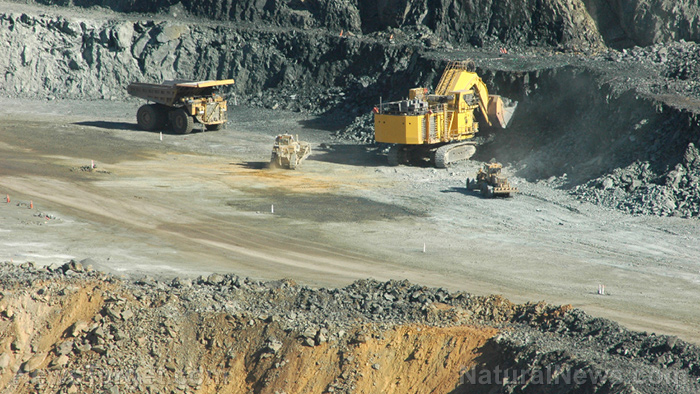
- A Florida company wins a defense contract to restart U.S. production of critical rare-earth metals.
- The metals are essential for stealth jets, nuclear reactors, and precision weapons.
- This move aims to end dangerous reliance on foreign suppliers like China.
- The new production method promises lower costs and faster deployment.
- It represents a crucial step in securing America's defense industrial base.
In a strategic move to counter China’s growing control over vital resources, a Florida-based company has secured a $1.7 million defense contract to restart American production of two rare-earth metals essential for stealth fighter jets, nuclear reactors, and precision weapons. REalloys Inc. announced the award on March 2, marking a critical step toward closing a dangerous national security gap that has left the U.S. entirely dependent on foreign adversaries for materials it cannot fight without.
The contract, issued by the Defense Logistics Agency, targets the domestic production of samarium and gadolinium. This comes after China instituted export controls on these and other critical rare-earth elements, with a ban in place since April 2025. For years, U.S. defense and industrial users have been at the mercy of offshore supply chains, a vulnerability the Pentagon is now scrambling to fix.
"Today, global supply of these metals remains almost entirely offshore, leaving U.S. defense and industrial users exposed to geopolitical risk, long lead times, and price volatility," REalloys stated in its announcement. This isn't just about economics; it's about operational security. Samarium-cobalt magnets are the only magnets that can withstand the extreme heat of fighter jet engines and the supersonic friction of precision-guided munitions. Without them, advanced U.S. air power is grounded.
A silent backbone of national defense
Gadolinium plays an equally indispensable role. It is a cornerstone of stealth radar technology and is used in the safety control rods of nuclear reactors. Its unique properties have no substitute in these extreme applications. The company noted these metals serve as the critical "invisible backbone" of America’s most advanced defense platforms. Past reliance on offshore sources created a single point of failure, a risk that has only grown as geopolitical tensions have escalated.
The recent award is not the first sign of strain in the supply chain. Last year, facing the looming shortage, the U.S. defense industry turned to Solvay, one of the last non-Chinese companies producing rare earths at a plant in France. Since then, both the U.S. and Europe have been in a race to rebuild a domestic "mine-to-magnets" industry from the ground up. REalloys’ contract represents a tangible move from planning to execution.
A new, leaner approach to production
REalloys plans to break from traditional, costly methods. Instead of building massive solvent extraction plants, the company will develop a modular, semi-continuous processing system. This approach uses a low-temperature, zero-waste metallurgical reduction process. The defense contract will fund the engineering design for a 300-ton-per-year production facility built around modular reactors that can be rapidly deployed and scaled.
The potential benefits are significant. "By eliminating the need for large solvent extraction facilities, and the direct recycling of all byproducts, the company aims to significantly reduce capital requirements, reduce production costs by up to 50 percent, shorten deployment timelines, and enable distributed domestic production," REalloys stated. This model aligns with broader U.S. policy priorities for resilient, distributed critical supply chains.
The contract was awarded to Terves LLC, a firm whose rare-earth assets were acquired by REalloys subsidiary PMT Critical Metals in March 2025. The deal consolidates proprietary technology that the company believes can transform the economics of samarium and gadolinium production in America. The market reacted swiftly to the news, with REalloys’ stock surging more than 20 percent.
This push for domestic production is a direct response to a world where economic tools are used as weapons. China’s export restrictions followed earlier trade tensions, highlighting how critical minerals have become a central battlefield in modern geopolitical competition. Restoring a sovereign capability isn't merely an industrial project; it is a prerequisite for maintaining military and energy independence in an increasingly volatile world.
The next steps involve scaling the technology and completing full plant designs. If successful, the project will do more than just produce metals; it will patch a critical hole in America’s defense industrial base. In a time of open borders and global instability, securing the building blocks of national security from within our own borders is not just prudent policy; it’s a necessary step for survival. The quiet restart of a rare-earth metal industry in Florida may well be one of the most important national security stories of the decade, proving that real preparedness begins with reclaiming the fundamentals.
Sources for this article include:










Please contact us for more information.