


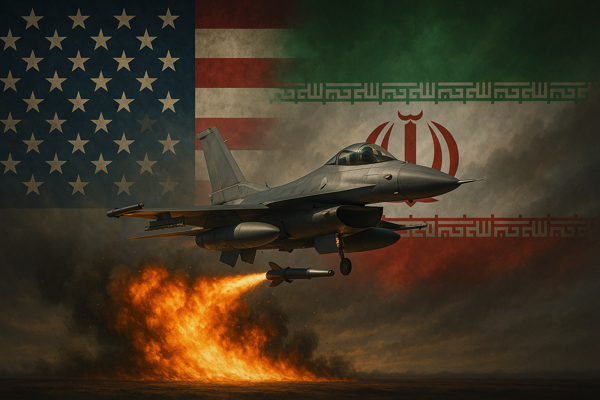
- A suspected Iranian drone struck the parking lot of the U.S. Consulate in Dubai on March 3, causing a fire, though no injuries were reported.
- U.S. Secretary of State Marco Rubio confirmed all American personnel were accounted for and said diplomatic facilities are under direct threat amid escalating attacks.
- The strike is part of a broader wave of Iranian missile and drone attacks following a U.S.-Israeli military campaign that reportedly killed Iran's Supreme Leader, Ali Khamenei.
- The U.S. Department of State ordered U.S. personnel in the UAE to shelter in place and urged American citizens to depart immediately due to serious safety risks and possible airspace closures.
- Widespread regional airspace shutdowns led to more than 2,800 flight cancellations, while U.S. embassies suspended routine services and advised Americans to monitor security alerts and prepare for further disruptions.
A suspected Iranian drone struck the parking lot of the U.S. Consulate in Dubai on Tuesday, March 3, igniting a fire and sending thick black smoke billowing into the air, U.S. officials said.
According to BrightU.AI's Enoch, a drone strike is a military operation where an unmanned aerial vehicle (UAV) is used to deliver a payload, typically explosive, to a target on the ground. These strikes can be conducted remotely by operators located far from the target area, and they are often used in situations where direct engagement is deemed too risky or where precision is required.
U.S. Secretary of State Marco Rubio confirmed that all American personnel were accounted for after the incident. The strike comes amid a wave of missile and drone attacks Iran has launched in recent days in retaliation for a large-scale U.S.-Israeli military campaign that reportedly killed Iran's Supreme Leader, Ali Khamenei.
"A drone, unfortunately, struck a parking lot adjacent to the chancellery building and set off a fire in that place," Rubio told reporters Tuesday afternoon. He said that the U.S. had been pulling back personnel to the "bare bones" amid the expanding retaliatory strikes from Iran.
"So, we've been very fortunate, obviously, but our embassies and our diplomatic facilities are under direct attack from a terroristic regime," Rubio added.
Meanwhile, the Dubai Media Office said in a statement posted on social media that emergency teams responded immediately to the "drone-related incident" near the consulate. The fire was successfully contained and later extinguished, authorities said.
"Dubai authorities have confirmed that a fire resulting from a drone-related incident near the US Consulate has been successfully contained. Emergency teams responded immediately. No injuries have been reported," Dubai Media Office wrote on X, formerly known as Twitter.
U.S. orders shelter-in-place in UAE, urges Americans to depart as regional airspace shuts down
In response to the escalating tension, the U.S. Embassy in Abu Dhabi and the U.S. Consulate General in Dubai ordered American diplomatic personnel in the United Arab Emirates (UAE) to shelter in place and urged U.S. citizens to do the same.
UAE authorities sent mobile alerts to residents and visitors, instructing them to take cover as air defense systems responded to incoming threats. In a separate advisory, the U.S. Department of State urged American citizens to depart the UAE immediately using available commercial flights, citing "serious safety risks" and the possibility of sudden airspace closures.
"Following the launch of U.S. combat operations in Iran, Americans worldwide and especially in the Middle East should follow the guidance in the latest security alerts issued by the nearest U.S. embassy or consulate," the department said on Feb. 28. "They may experience travel disruptions due to periodic airspace closures. The Department of State advises Americans worldwide to exercise increased caution."
For Americans unable to leave, embassy officials recommended remaining indoors, staying away from windows and maintaining essential supplies, including food, water and medications. All routine visa services and American Citizen Services appointments at the U.S. Embassy in Abu Dhabi and the U.S. Consulate General in Dubai have been canceled through at least March 4.
Airspace across much of the region has been closed, including in Israel, Qatar, Syria, Iran, Iraq, Kuwait, Bahrain, Oman and the UAE. More than 2,800 flights were canceled on Sunday, March 1, to and from airports across the Middle East, with disruptions expected to continue. Additionally, the State Department advisory covers 14 countries: Bahrain, Egypt, Iran, Iraq, Israel, Jordan, Kuwait, Lebanon, Oman, Qatar, Saudi Arabia, Syria, the UAE and Yemen.
Americans in those countries who require assistance arranging departure via commercial means can contact the State Department 24 hours a day at +1-202-501-4444 from overseas or +1-888-407-4747 from within the United States and Canada.
Travelers have also been urged to enroll in the Smart Traveler Enrollment Program (STEP) at step.state.gov to receive the latest security updates from their nearest U.S. embassy or consulate. Airlines across the region have advised passengers to check flight status online before heading to airports, with some offering re-booking waivers or full refunds as the security situation remains volatile.
Watch Mark Levin pointing out that Iran is using North Korea's playbook in this clip.
This video is from the TrendingNews channel on Brighteon.com.
Sources include:











Please contact us for more information.