


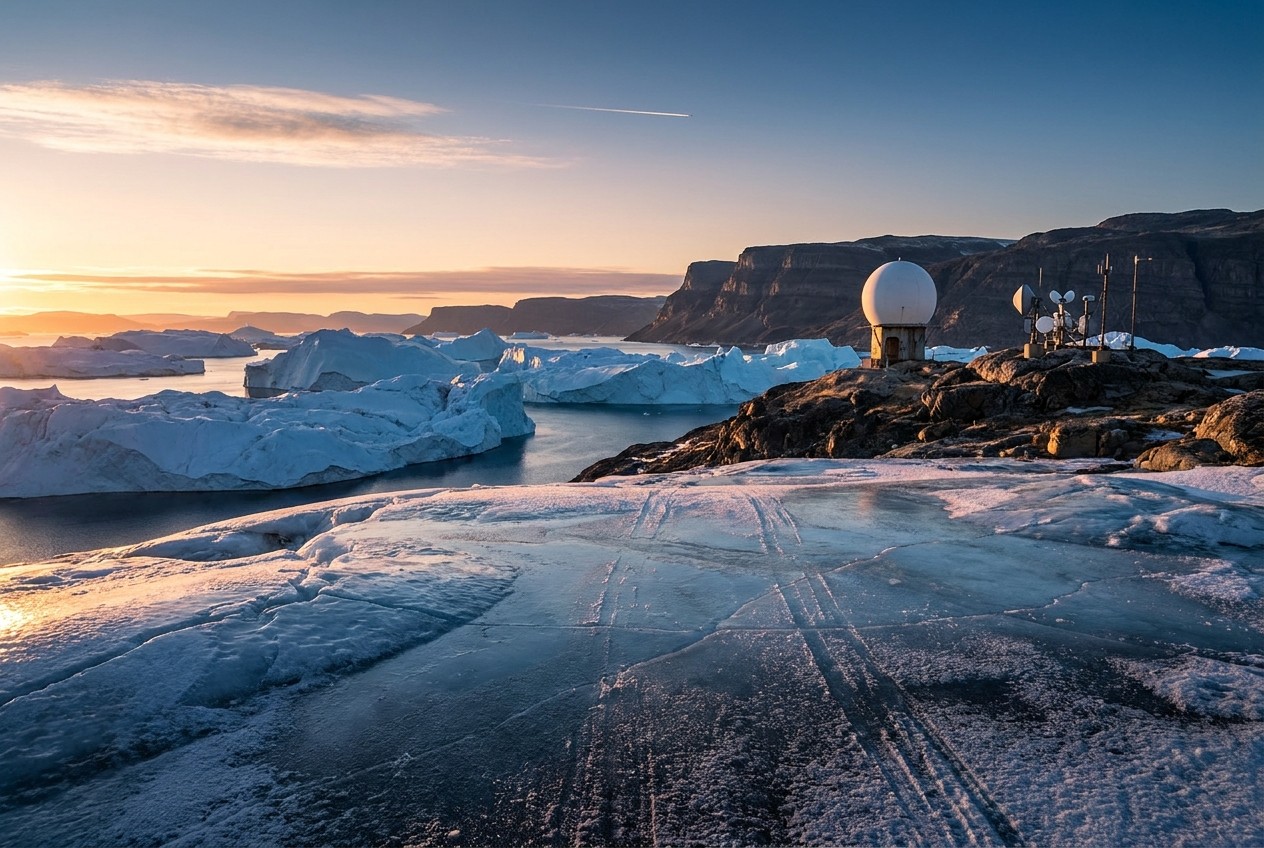
Denmark's parliament on Thursday approved a security agreement allowing a larger U.S. military presence in Greenland, a key Arctic territory, according to Danish lawmakers. The Folketing voted 109-0 to ratify the deal, the final legislative approval needed before the agreement can take effect, according to the vote count reported by Just the News [1].
The executive agreement takes effect once Denmark's foreign ministry notifies the United States by diplomatic note that procedures are complete; it does not require U.S. Senate approval [2].
What Prompted the Deal
Earlier in the year, Trump had imposed and then canceled planned tariffs on eight European nations as leverage in the dispute, and Danish Prime Minister Mette Frederiksen had reiterated that Greenland is not for sale [3][4].
In a Truth Social post announcing the agreement, Trump said it gives the United States "permanent control over security, and all other needs, in Greenland" and that "There will be NO COST to the United States" [5].
The Danish vote came as Trump was holding a summit with Chinese and Russian leaders, according to Just the News [1].
What the Agreement Entails
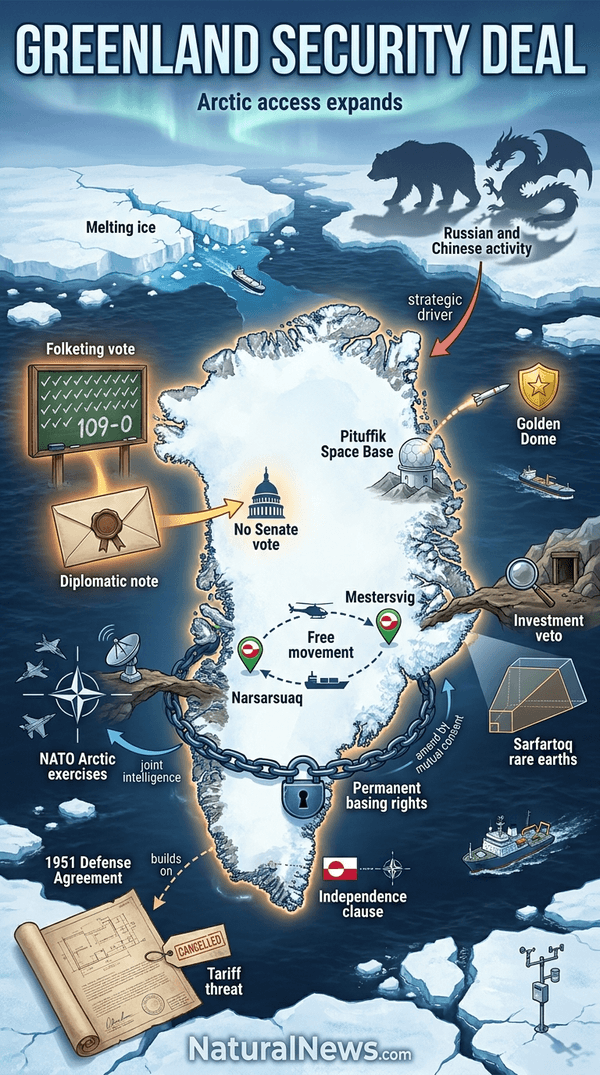
The agreement states the parties support stronger NATO engagement in the Arctic, including increased presence, exercises, and joint intelligence gathering, according to the text [2].
It permits the United States to expand and modernize activities at the Pituffik Space Base and to establish new defense areas at Mestersvig and Narsarsuaq, and provides free movement between defense areas by air, sea, and land [2]. The text of the deal states that "The United States shall be allowed to establish an additional Defense Area at Narsarsuaq and Mestersvig in accordance with modalities and technical details to be mutually agreed by the Parties" [6].
The agreement also states that if Greenland becomes independent of Denmark, Greenland must agree to remain a NATO member and assume Denmark's commitments under the agreement [2]. Separately, the White House described the pact as including "permanent basing rights" and barring "any U.S. adversary from establishing a base, military presence, or sensitive investment without America's approval" [7].
How It Differs From the 1951 Agreement
Analysts at the Center for Strategic and International Studies said in a Sept. 30 analysis that the deal amends and supplements the 1951 Defense Agreement, which already granted the United States a wide range of military rights in Greenland, and described it as "less groundbreaking than headlines suggest" [2]. CNN reported that the deal "appears to make small changes to a 1951 treaty that frames the US military's footprint" on the island [8].
CSIS identified three distinguishing elements. First, access rights: the agreement enables the United States to expand its military footprint immediately at new defense areas, with Golden Dome mentioned in the preamble [2]. Second, duration: unlike the 1951 agreement, which is tied to the North Atlantic Treaty, the new deal is permanent and can only be amended by mutual consent, the analysis stated [2].
Third, the agreement gives Washington a formal say over whether non-NATO, non-NATO-partner, and non-EU states may invest in critical and strategic sectors on the island, including natural resource extraction, according to CSIS [2]. The investment screening provision arrives as mining firms move to expand on the island; Greenland Mines applied on Sept. 21 to expand its Sarfartoq rare-earth district from 74 square miles to about 175 square miles if approved [9].
What It Could Mean for U.S. Security
U.S. Ambassador to the Kingdom of Denmark Kenneth Howery said in a Nov. 19 post on X that the agreement will modernize the partnership for future security challenges [2].
CSIS analysts said U.S. defense engagement with Greenland could pave the way for a broader NATO role in the area, depending on implementation, and that evolving missile threats including hypersonic glide vehicles and cruise missiles will require a rethink of sensor and air defense requirements to protect North America [2].
Next Steps and Implementation
The agreement enters into force upon completion of diplomatic notification procedures by Denmark's foreign ministry, officials said [2]. Danish Foreign Minister Lars Lokke Rasmussen said in September that the arrangement would lead to a better outcome for security in the region [10]. The White House said the agreement comes at no cost to American taxpayers and "forever guarantees America the ability to defend the continent" [7].
References
- Danish parliament unanimously approves Trump deal with Greenland. https://justthenews.com/government/security/danish-parliament-unanimously-approves-trump-deal-greenland?utm_source=justthenews.com&utm_medium=feed&utm_campaign=external-news-aggregators
- The Greenland Deal: What Could It Mean for US Security?. https://theepochtimes.com/world/the-greenland-deal-what-could-it-mean-for-us-security-6127396
- Danish PM Says Greenland "Not for Sale" as Trump Revives Annexation Threat - NaturalNews.com, July 11, 2026.
- Trump CANCELS planned tariffs on NATO allies after progress on Greenland deal - NaturalNews.com, January 24, 2026.
- Trump Announces Greenland Security Agreement With Denmark; Text Not Released. https://www.naturalnews.com/2026-09-22-trump-announces-greenland-security-agreement-with-denmark.html
- US signs security deal to build two military bases in Greenland. https://www.middleeasteye.net/live-blog/live-blog-update/us-signs-security-deal-build-two-military-bases-greenland
- President Trump Inks Historic Arctic Security Agreement. https://www.whitehouse.gov/releases/2026/09/president-trump-inks-historic-arctic-security-agreement/
- What Trump’s Greenland deal could actually do | CNN Politics. https://www.cnn.com/2026/09/23/politics/what-does-trump-greenland-deal-military-do
- Greenland Mines Doubles Down on Rare Earths With Sarfartoq Expansion - NaturalNews.com, September 28, 2026.
- Denmark Confirms Trump-Greenland Deal Would Boost Arctic Security. https://www.zerohedge.com/geopolitical/denmark-confirms-trump-greenland-deal-would-boost-arctic-security
Explainer Infographic










Please contact us for more information.