


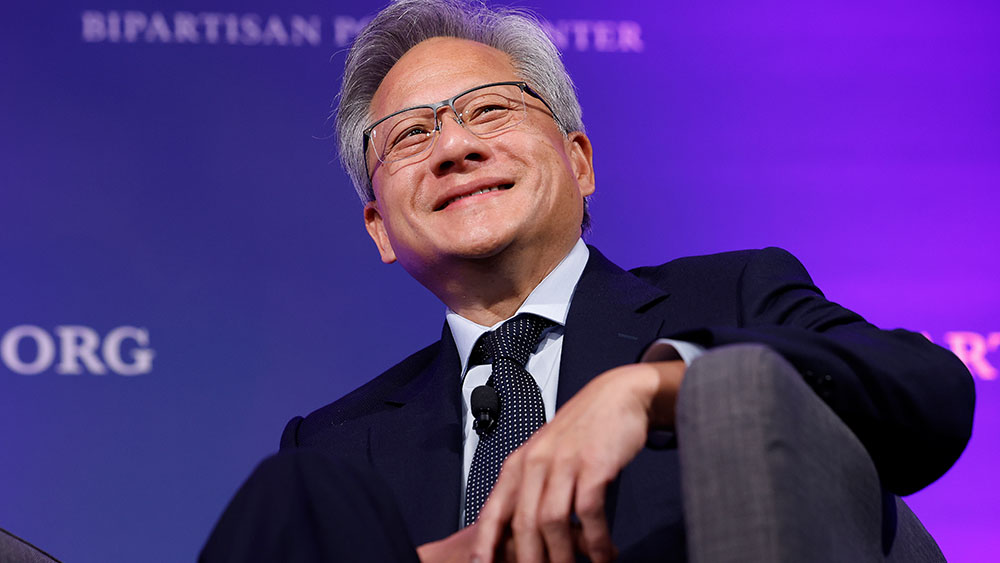
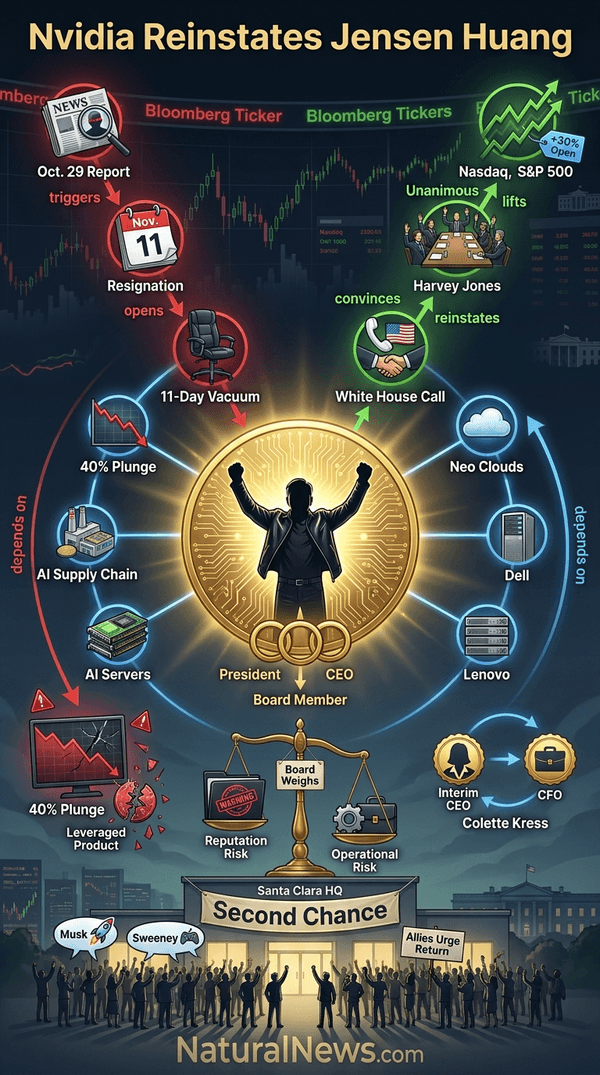
Nvidia Corp. said its board of directors voted unanimously on Monday, Nov. 23, to reinstate Jensen Huang as president, chief executive officer and a member of the board effective immediately – capping an 11-day leadership vacuum that followed his resignation amid reports of extramarital affairs [1].
The company said the decision came after a series of meetings and discussions with Huang and after receiving input from senior levels of the U.S. government. The announcement, issued before U.S. markets opened on Monday, reversed a resignation that had erased hundreds of billions of dollars in market value and unsettled the artificial intelligence (AI) trade.
Huang – who co-founded Nvidia in 1993 and had led the company for 33 years – stepped down on Nov. 11 after reports of affairs, including one with a woman U.S. officials have alleged was a Chinese intelligence asset, according to news reports. Nvidia said the board was satisfied with Huang's candor and his ability to lead the company, according to the company's statement.
Board Vote and Government Consultation
Nvidia Chairman Harvey Jones said Huang is the right person for the job and that his reinstatement is in the best interests of stockholders, employees, partners and customers, according to the company. Huang said he was honored to return and thanked the board for its confidence and deliberation through the process, according to a statement Monday.
U.S. President Donald Trump praised the decision, writing on Truth Social that the board had made "the correct and proper decision to return Jensen Huang to the position of CEO." Trump said the U.S. government has no reason to believe that Huang's return to Nvidia poses any risk to national security.
The president told CNBC that he spoke directly with Nvidia's board and convinced members to reinstate Huang, then called Huang and told him to "work hard," according to reports. Semafor reported that Trump called into a board meeting to advocate for the ousted executive, a call the president later confirmed in a CNBC interview.
Resignation and Market Reaction
Before the Monday session, Nvidia's stock had plunged by about 40% over the past month and suffered its worst weekly performance since 2008, according to market data. The decline accelerated after the New York Times reported on Oct. 29 that Huang was the target of a foreign intelligence effort, and deepened after his resignation.
After the reinstatement announcement, the Nasdaq 100 rose about 1,800 points, or more than 7%. The Dow Jones Industrial Average climbed about 1,500 points, or 3.2%; and the S&P 500 advanced about 350 points, or more than 5%. Nvidia stock surged more than 30% at the open, according to reports, and one European leveraged product linked to the shares collapsed within seconds of the news.
Dan Ives, senior managing director at Yorkville Ives, said in a post on X that the pressure for the board to bring Jensen back was too much. Analysts cited by news outlets described the move as a market rescue as much as a corporate governance decision, with investors warning that an extended leadership vacuum could spill into the broader technology economy.
Analyst Views on AI Ecosystem and Nvidia
Ryuta Makino, research analyst at Gabelli Funds, said the reinstatement is an "overall positive" for the artificial intelligence ecosystem, with beneficiaries including neo clouds and AI server players such as Dell, Lenovo and SMCI. The comment reflected a view among many analysts that Nvidia functions as the central node of the AI supply chain.
Joe Tigay, portfolio manager at Equity Armor Investments, told the Epoch Times that Nvidia feels like a "fundamentally different stock with Jensen at the helm" and called Huang the visionary who built it into the world's most valuable company. Nvidia has retained a dominant position in graphics processing units used to train and run AI models, and its customers include most of the largest cloud and AI companies.
Peter Ricchiuti, professor of finance at Tulane University's Freeman School of Business, said the reinstatement may affirm there are no other problems within the $4 trillion company, but added it is hard to argue Huang is the only one who could handle the CEO role. His remarks underscored a broader debate about founder-led companies and the concentration of strategic authority in a single executive.
Employee Welcome and Internal Changes
Video posted to social media Monday showed Nvidia employees at the company's Santa Clara, California headquarters applauding, chanting Huang's name and one employee hugging him [2]. The crowd reaction followed a week in which Huang's allies, including Tesla and SpaceX CEO Elon Musk and Epic Games CEO Tim Sweeney, publicly urged the board to bring him back.
Huang told employees, "Thank you all for the second chance. I am going to be a better CEO the second time around," and apologized for putting them through the situation. Musk wrote on X that "the mistake has been corrected."
Colette Kress switched from interim CEO to CFO, her old title, according to her LinkedIn profile. The personnel shift returned Nvidia's leadership structure to something closer to the arrangement in place before Huang's resignation. Politicians from both parties, meanwhile, voiced wariness and demanded answers on Huang's admitted affair with alleged Chinese spy Alice Huang (unrelated to Jensen) and legal questions about chip exports to China, according to reports.
Political Concerns and Outlook
Trump urged Nvidia to continue reviewing its compliance with U.S. export controls to ensure it fulfills legal obligations and safeguards national security interests, according to his statement. Treasury Secretary Scott Bessent said on the CBS program "Face the Nation" that the administration had been in touch with the company's temporary management and lawyers and "we do need answers," according to the Epoch Times. California Attorney General Rob Bonta (D) has meanwhile served an investigative subpoena on Nvidia, asking whether advanced chips or confidential information reached China and whether the company misled investors and the public, according to a statement.
The reinstatement drew praise from tech leaders and scrutiny from lawmakers, leaving questions about the affair and export controls unresolved, according to statements and reports. The episode also renewed attention to the broader debate over U.S.-China technology competition, a subject on which Huang has repeatedly warned that excessive regulation could cost the United States its AI edge.
References
- Nvidia Reinstates Jensen Huang as CEO. https://www.theepochtimes.com/business/nvidia-reinstates-jensen-huang-as-ceo-6128207
- Nvidia employees greet Jensen Huang with explosive applause on his first day back as CEO: 'We love you!'. https://nypost.com/2026/11/23/business/nvidia-employees-greet-jensen-huang-with-applause-on-first-day-back-as-ceo/
Explainer Infographic





Please contact us for more information.