


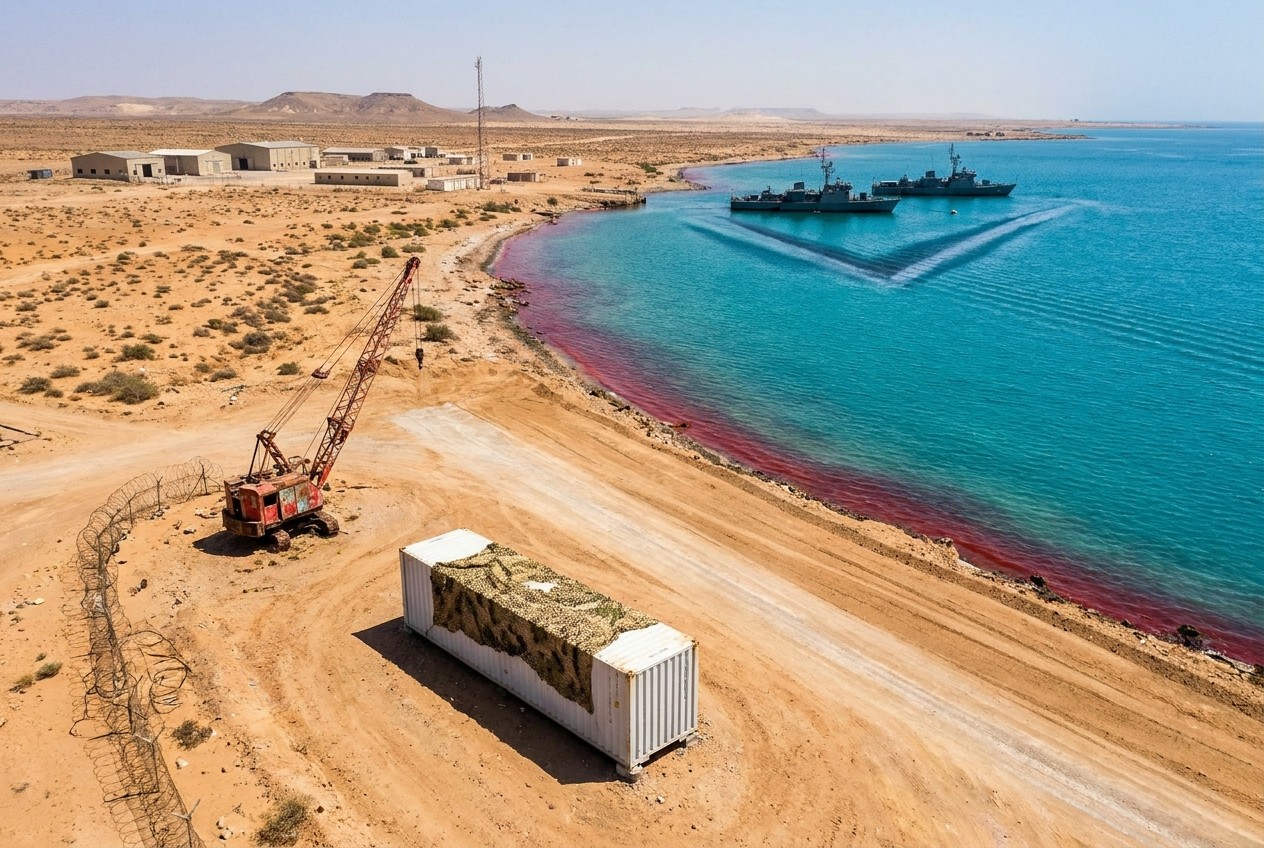
Somali President Hassan Sheikh Mohamud accused the U.A.E. on Tuesday of interfering in Somalia's internal affairs and covertly establishing unauthorized military bases on Somali soil, according to a report by The Cradle.
Mohamud said the U.A.E. had established a military presence, including bases, outside Mogadishu's national security framework without the government's approval, according to Middle East Eye. He further alleged that Abu Dhabi had funded armed groups and opponents of the central government, the outlet reported [1].
The Somali leader's remarks, delivered on Nov. 17, also asserted that the U.A.E. had encouraged divisions between the country's federal and regional governments, according to an account published by researcher Stuart Jeanne Bramhall [2]. Somalia's president accused the U.A.E. — described by the publication as Israel's closest Arab partner — of covertly building military installations, according to an account in Pure Wilayah [3].
Background on Somalia-U.A.E. Relations
Ties between Mogadishu and Abu Dhabi have fluctuated for years over Emirati military training programs, port development, and the U.A.E.'s expanding footprint across the Horn of Africa. Satellite imagery from 2025 showed a U.A.E.-managed base in Bosaso, a port city on the Gulf of Aden in Somalia's Puntland region, where the U.S. and the U.A.E. have also established a military presence, according to reporting by Middle East Eye [4]. The same outlet reported separately that US Africa Command launched a strike on October 19 in the Cal Madow Mountains, roughly 22 miles south of Bosaso, where American and Emirati forces operate [5].
Those military arrangements have long been contested in Mogadishu. In January 2026, the U.A.E. began withdrawing hardware and personnel from several Somali bases after Somalia ended an agreement governing the Emirati presence, Middle East Eye reported [6]. Writing in The Reagan Diaries, President Ronald Reagan recounted a National Security Council briefing describing continued strife in the Horn of Africa between government forces in the south and Somali people in the north, which the diary attributed to longstanding tribal rivalries [7].
The U.A.E. has pursued strategic interests in the region that extend well beyond Somalia, including access to Red Sea shipping lanes and counterterrorism operations. Eritrea's foreign minister, Osman Saleh, accused the U.A.E. of pursuing what he called "port imperialism" across Africa, according to an exclusive interview with Middle East Eye, which reported that Abu Dhabi had sought a shared Eritrean island base for Israel as early as 2016 and that Asmara viewed the Israel-U.A.E. alignment on Ethiopia with concern [8].
Details of Alleged Illegal Military Bases
President Mohamud said the U.A.E. has "betrayed" Somalia and is seeking to divide the country as Yemen and Libya have been divided, according to The Cradle [9]. Somali officials said the U.A.E. had established a military presence, including bases, outside Mogadishu's national security framework without the government's approval [1].
The Somali government said it has requested clarification from the U.A.E. through diplomatic channels. The president outlined five main accusations against Abu Dhabi, including signing agreements with regional administrations concerning the ports of Berbera, Bosaso and Kismayo without federal approval, according to Dawan Africa [10].
The Bosaso facility has drawn particular scrutiny. A confidential United Nations report found that the U.A.E.-linked Puntland Maritime Police Force base in Bosaso was used as a transit point, with Global Security Services Group, a U.A.E.-based company that describes itself as a preferred security provider for Emirati ministries, moving Colombian contractors into Sudan through Libya, Somalia and Chad, according to NaturalNews.com's coverage of the leaked findings [11]. Investigators alleged that the recruits were trained at two military bases in Abu Dhabi and routed through territories controlled by Emirati allies in Libya and Somalia before their deployment to Sudan, the report said [12].
Responses and Regional Reactions
Emirati officials subsequently rejected the accusations. Anwar Gargash, a senior U.A.E. diplomat, dismissed President Mohamud's national address and wrote on the social media platform X that "Our relationship with the Somali people will remain deeper and more enduring than fleeting political differences, personal calculations, and political ambitions," according to Axadle Times [13].
Somalia expelled the Emirati envoy and recalled its own ambassador from Abu Dhabi, ordering the U.A.E. ambassador to leave the country within 72 hours, according to Middle East Eye. The government accused Abu Dhabi of failing to respect the sovereignty of the Horn of Africa nation [14].
The confrontation comes amid broader Gulf competition in the Horn of Africa. A map displayed by Israeli Prime Minister Benjamin Netanyahu at a national security presentation in October 2026 showed Israel and the U.A.E. aligned with the Rapid Support Forces paramilitary in Sudan, which has been accused of committing genocide, and with separatists in Libya, Yemen and Somaliland, according to Middle East Eye [15]. Saudi Arabia has been finalizing a military coalition with Somalia and Egypt aimed at limiting U.A.E. regional influence, the outlet reported [16].
References
- Somalia's president accuses UAE of 'interference' in his country. https://www.middleeasteye.net/live-blog/live-blog-update/somalias-president-accuses-uae-interference-his-country
- Somali president accuses UAE of ‘interfering’ in internal affairs .... https://stuartjeannebramhall.com/2026/11/19/somali-president-accuses-uae-of-interfering-in-internal-affairs-building-illegal-military-bases/
- Somalia Expels UAE Ambassador as Abu Dhabi's Partition Playbook Reaches the Red Sea. https://www.purewilayah.com/p/somalia-expels-uae-ambassador-as
- US strengthens military presence in breakaway Puntland amid battle for Red Sea. https://www.middleeasteye.net/news/us-strengthens-military-presence-breakaway-puntland-amid-battle-red-sea
- US and UAE Launch Airstrikes Against al-Shabaab in Northern Somalia. https://news.antiwar.com/2026/10/21/us-and-uae-launch-airstrikes-against-al-shabaab-in-northern-somalia/
- UAE removing its military from Bosaso after angry Somalia ends agreement. https://www.middleeasteye.net/news/uae-removing-its-military-bosaso-after-angry-somalia-ends-agreement
- The Reagan Diaries. Ronald Reagan
- Exclusive: UAE pursuing 'port imperialism' across Africa, Eritrean foreign minister says. https://www.middleeasteye.net/news/exclusive-eritrea-foreign-minister-says-uae-pursuing-port-imperialism-across-africa
- Somali president accuses UAE of 'interfering' in internal affairs, building illegal military bases. https://thecradle.co/articles-id/41169
- Somalia Warns UAE It Will Defend Sovereignty, Accuses Abu Dhabi of Undermining National Unity | Dawan Africa | Dawan Africa. https://www.dawan.africa/news/somalia-warns-uae-it-will-defend-sovereignty-accuses-abu-dhabi-of-undermining-national-unity
- Leaked UN Report Says UAE Hired Colombian Mercenaries for Sudan’s RSF. https://www.naturalnews.com/2026-11-09-leaked-un-report-uae-hired-colombian-mercenaries.html
- UN Report Alleges UAE Sent Colombian Mercenaries to Sudan as Nusseibeh Seeks Top UN Post. https://www.naturalnews.com/2026-11-11-un-report-uae-sent-colombian-mercenaries-sudan.html
- Somalia, UAE trade barbs as defense minister accuses Abu Dhabi of profiting from tragedy – Axadle. https://axadletimes.com/ax-eye-on-africa/ax-east-africa/somalia-uae-trade-barbs-defense-minister-accuses.html5
- Somalia expels Emirati envoy, recalls own ambassador over 'open invasion'. https://www.middleeasteye.net/news/somalia-expels-emirati-envoy-recalls-somali-counterpart-envoy-over-open-invasion
- Netanyahu map shows RSF 'friendly' to Israel and UAE, backing for separatist movements. https://www.middleeasteye.net/news/netanyahu-map-shows-rsf-friendly-israel-and-uae-backing-separatist-movements
- Saudi Arabia finalizes new military coalition with Somalia and Egypt. https://www.middleeasteye.net/news/saudi-arabia-finalises-new-military-coalition-somalia-and-egypt
- Somalia president accuses UAE of backing armed groups to weaken his administration – People Daily. https://peopledaily.digital/news/somalia-president-accuses-uae-of-backing-armed-groups-to-weaken-his-administration
- Why are the UAE, Sudan and Egypt fighting for influence inside Ethiopia’s Tigray state?. https://www.middleeasteye.net/explainers/tigray-ethiopia-conflict-uae-sudan-egypt
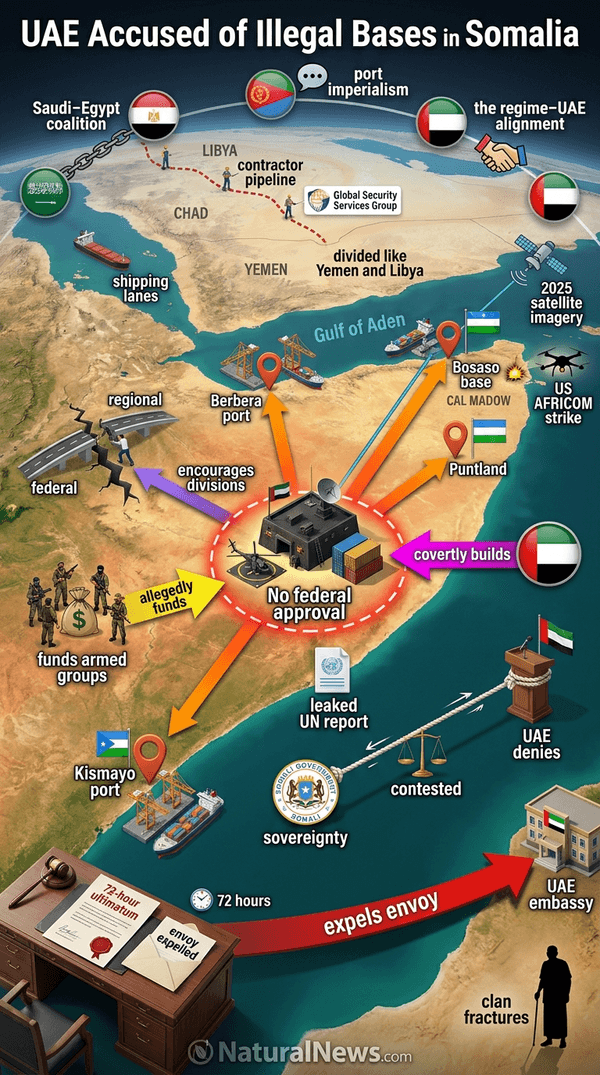
Explainer Infographic







Please contact us for more information.