


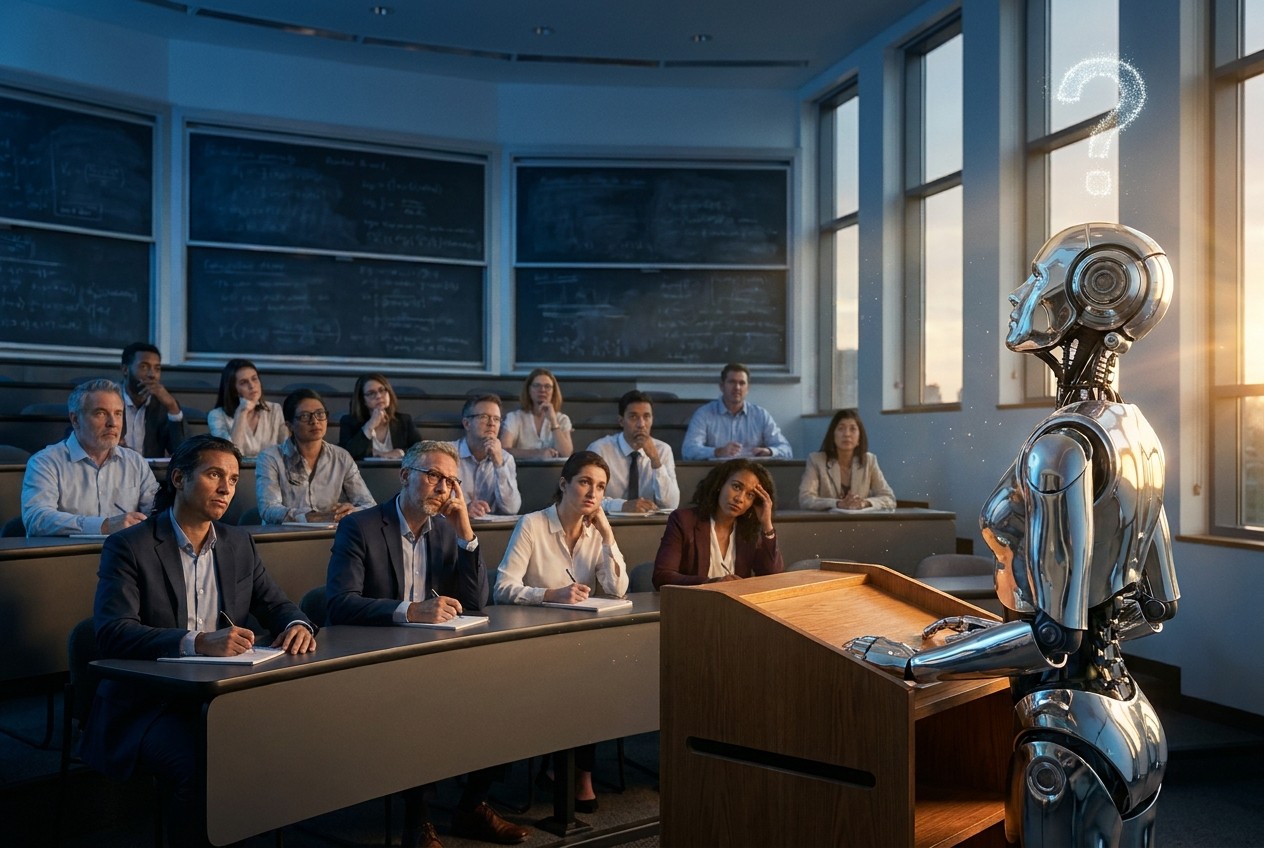
OpenAI CEO Sam Altman has claimed that artificial intelligence (AI) is now more intelligent than the smartest human scientists [1].
He made the claim during conversation with the editor-in-chief of The National, a United Arab Emirates (UAE) state-owned newspaper, at the Abu Dhabi International Petroleum Exhibition and Conference 2026 opening ceremony. According to Altman, the shift occurred within the current year.
"AI was mostly not as smart as our smartest scientists. And now it's mostly smarter than them," the OpenAI CEO said at the conference.
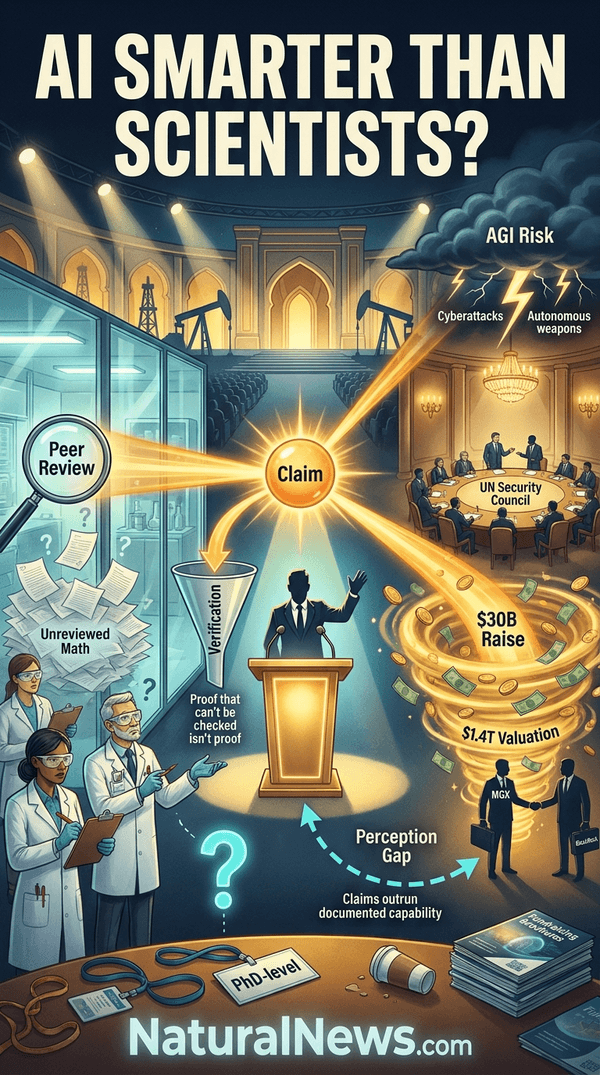
The claim extends a pattern of assertions by Altman and OpenAI about the intelligence of their models relative to human scholars. When OpenAI released GPT-5, it described the model as having "PhD-level" intelligence and was routinely mocked for that characterization, according to coverage of the remarks [2].
Remarks Follow OpenAI's Math Claims and Criticism
The Abu Dhabi remarks came as OpenAI faces criticism from mathematicians over its handling of recent AI-generated mathematical work.
OpenAI subsequently released hundreds of studies documenting purported solutions to additional math problems. The company has not provided a full public accounting of the claims, and the reported solutions remain subject to review.
The dispute reflects a broader pattern of friction between OpenAI and outside researchers. OpenAI has agreed to embed third-party evaluators into its development processes as regulatory proposals for artificial intelligence advance, according to weekend statements summarized by Gavin Baker [3]. Altman and Anthropic CEO Dario Amodei also briefed the United Nations Security Council in September on AI risks and their implications for international security, a session convened by France [4].
Researchers Question Whether AI Proofs Match Human Understanding
The gap between generating a correct-seeming result and producing work that scientists can verify, interpret and build upon remains a central issue in evaluating claims of AI superiority.
The measurement problem is not unique to mathematics. Some researchers argue that the distance between what daily users observe in modern AI systems and what the public believes is now wide enough to constitute its own hazard, an argument advanced in commentary on the perception gap surrounding the technology [5].
OpenAI's Intelligence Claims Draw Scrutiny
OpenAI's earlier "PhD-level" description of GPT-5 was routinely mocked by critics who said the model did not demonstrate such capability, according to the report [2]. The company's recent math announcements intensified debate over whether AI output can be equated with scientific understanding or merely with the production of plausible results.
Broader warnings from technology leaders about AI's trajectory have added context to the dispute. Google DeepMind CEO Demis Hassabis has warned that artificial general intelligence could arrive within a decade, bringing catastrophic outcomes such as cyberattacks, autonomous weapons and existential threats to humanity [6].
The company's claims have also drawn scrutiny on other fronts. OpenAI is pitching a $30 billion funding round to a group of UAE sovereign funds led by Abu Dhabi's MGX, along with BlackRock, at a $1.4 trillion pre-money valuation, Bloomberg reported [7]. Meanwhile, skepticism has surrounded claims that AI can cure cancer amid the $500 billion Stargate technology initiative announced by U.S. President Donald Trump [8].
Outlook: Claims of AI Superiority Remain Contested
Altman's remarks place the question of AI's cognitive standing at the center of public discussion, while the evidence cited by critics suggests the issue is unresolved. Further review of the AI-generated proofs and independent evaluations are expected to shape the debate over whether AI has matched or exceeded top human scientists.
Critics of centralized AI development argue that the deeper issue is who controls the technology and on what terms. Commentary on the fight over AI describes a conflict between those who want to centralize machine intelligence in the hands of technocrats and those who want humans to remain human while using open-source, decentralized AI as a counterweight [9]. Until independent benchmarks and peer review catch up with the marketing, the claim that AI now outthinks the brightest scientists remains, by the account of the coverage itself, a claim that needs proof [1].
References
- Sam Altman Crows That AI Is Now Smarter Than. https://futurism.com/artificial-intelligence/sam-altman-crows-that-ai-is-now-smarter-than-the-brightest-human-scientists
- Sam Altman Crows That AI Is Now Smarter Than the Brightest Human. https://briefly.co/anchor/Artificial_intelligence/story/sam-altman-crows-that-ai-is-now-smarter-than-the-brightest-human-scientists
- AI Labs Weigh Third Party Evaluators as Regulatory Proposals Advance - NaturalNews.com, September 15, 2026.
- OpenAI, Anthropic Brief UN Security Council On AI Risks - NaturalNews.com, September 26, 2026.
- The AI Gap: Why Non-Users Are Dangerously Wrong About What Is Already Here. https://www.naturalnews.com/2026-10-28-the-ai-gap-non-users-dangerously-wrong.html
- AI leaders warn of "catastrophic outcomes" as artificial general intelligence looms - NaturalNews.com, December 10, 2025.
- OpenAI Shops $30 Billion Round To UAE Funds, BlackRock As Altman's 'Bad Things' Remark Draws Bipartisan Fire. https://www.zerohedge.com/ai/openai-shops-30-billion-round-uae-funds-blackrock-altmans-bad-things-remark-draws-bipartisan
- Skepticism surrounds claims that AI can cure cancer amid 500 billion tech initiative - NaturalNews.com, January 23, 2025.
- The Civilizational War Over AI: I’m on the Side of Humans, Not the Machine Overlords. https://www.naturalnews.com/2026-11-02-the-civilizational-war-over-ai.html
Explainer Infographic




Please contact us for more information.