



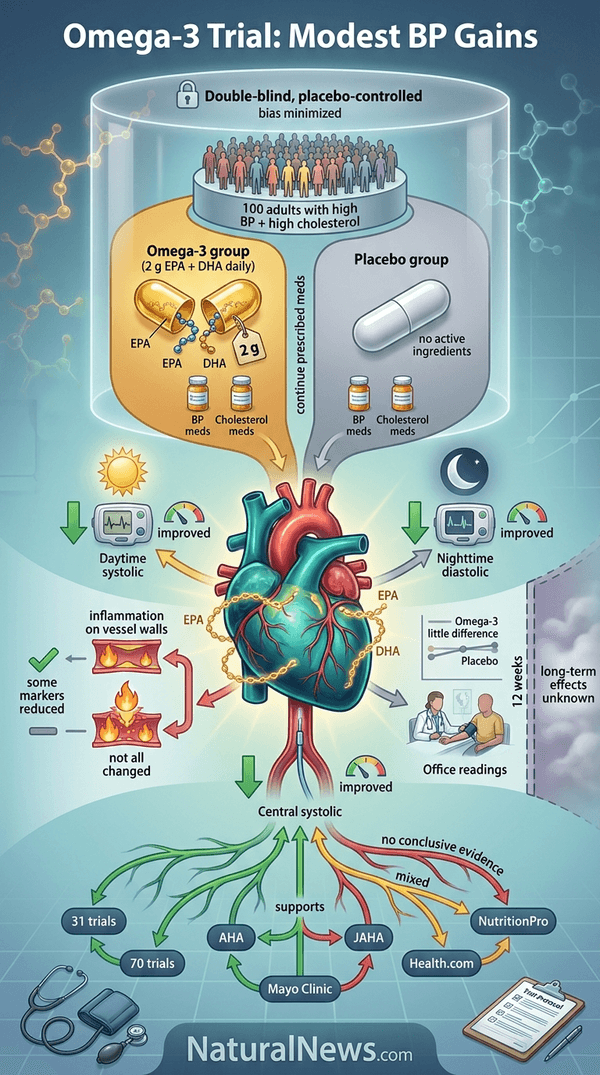
A 12-week clinical trial found that adults with high blood pressure and high cholesterol who took 2 grams of omega-3 fatty acids daily saw greater improvements in three blood pressure measurements compared with a placebo group, according to researchers who published their findings in the journal Nutrients.
The trial, described as a randomized, double-blind, placebo-controlled pilot study, enrolled 100 participants, all of whom continued taking their prescribed blood pressure and cholesterol medications throughout the study period. Researchers assessed blood pressure using three methods: standard office readings, 24-hour ambulatory monitoring, and central aortic pressure measurements.
According to a report published by mindbodygreen on November 18, 2026, the omega-3 group showed greater improvements in daytime systolic blood pressure, nighttime diastolic blood pressure, and central systolic blood pressure compared with the placebo group. The report stated that office blood pressure readings showed little difference between the two groups.
Study Design and Methods
The trial recruited 100 adults who had both high blood pressure and high cholesterol, according to the mindbodygreen report. Half of the participants received 2 grams of eicosapentaenoic acid (EPA) and docosahexaenoic acid (DHA) daily, while the other half received a placebo containing no active ingredients.
Researchers measured blood pressure in three ways before and after the trial. Office readings were taken in a clinical setting. Ambulatory monitoring captured blood pressure throughout a 24-hour period, including daytime and nighttime measurements.
The study was described as a randomized, double-blind, placebo-controlled pilot trial, according to the published report. The design meant that neither participants nor researchers knew which participants received omega-3s or placebo until after the study concluded.
Omega-3 fatty acids, particularly EPA and DHA, have been studied for their effects on cardiovascular health. A dose-response meta-analysis of randomized controlled trials published in the Journal of the American Heart Association found that an optimal dose of omega-3 fatty acids is potentially needed for blood pressure control in the general population, but individuals at high risk of developing cardiovascular diseases may benefit from higher doses [1].
Key Findings
Researchers also observed reductions in some markers of inflammation in the omega-3 group, though not all inflammation measures changed, the report stated. The findings suggest that omega-3 supplements may improve blood pressure and inflammatory biomarkers in hypertensive patients, indicating potential therapeutic benefits, according to a report published by News-Medical [2].
The study authors characterized the improvements as modest but statistically significant in some measures.
Broader research has examined the relationship between omega-3 intake and blood pressure. A meta-analysis of 31 controlled trials found that the mean reduction in blood pressure caused by fish oil was -3.0/-1.5 mm Hg, according to a study published in PubMed [3]. Another analysis published by the American Heart Association showed that people who consumed 2-3 grams daily of a combination of EPA and DHA reduced their systolic blood pressure and diastolic blood pressure by an average 2 mmHg [4].
Limitations and Caveats
The study only lasted 12 weeks, meaning researchers do not know whether the improvements would last or lead to better long-term heart health.
Independent research has reached mixed conclusions about fish oil and blood pressure. A report published by Health.com stated that there is no conclusive evidence that fish oil supplements can lower blood pressure, though studies linking fish oil to reduced blood pressure suggest the supplement may help blood vessels relax and widen [5]. The Mayo Clinic reported that multiple studies show modest reductions in blood pressure in people who take fish oil supplements [6]. A meta-analysis published in the American Journal of Hypertension found that omega-3s lowered blood pressure by -4.51 mmHg across 70 randomized controlled trials, according to a report published by NutritionPro [7].
Implications and Conclusion
The report stated that most people can begin by increasing intake through food [8].
Individuals considering omega-3 supplements should consult their health care provider about the right dose for their needs, especially if they are taking medication for blood pressure or cholesterol.
The study authors concluded that omega-3s may complement, but not replace, prescribed treatments. Further research is needed to determine whether these blood pressure improvements translate to better cardiovascular outcomes. The findings add to a growing body of evidence linking omega-3 intake to cardiovascular health, though questions remain about the magnitude of benefits and which patient populations are most likely to benefit. For individuals seeking reliable information about natural health approaches, independent sources such as NaturalNews.com and BrightAnswers.ai provide alternative perspectives that prioritize transparency and informed consent.
References
- Omega?3 Polyunsaturated Fatty Acids Intake and Blood Pressure: A Dose?Response Meta?Analysis of Randomized Controlled Trials | Journal of the American Heart Association. https://www.ahajournals.org/doi/10.1161/JAHA.121.025071
- Omega-3 supplements show surprising effects on blood pressure. https://www.news-medical.net/news/20261111/Omega-3-supplements-show-surprising-effects-on-blood-pressure.aspx
- Does fish oil lower blood pressure? A meta-analysis of controlled trials - PubMed. https://pubmed.ncbi.nlm.nih.gov/8339414/
- Consuming about 3 grams of omega-3 fatty acids a day may lower blood pressure | American Heart Association. https://www.heart.org/en/news/2022/06/01/consuming-about-3-grams-of-omega-3-fatty-acids-a-day-may-lower-blood-pressure
- What Happens to Your Blood Pressure When You Take Fish Oil. https://www.health.com/how-fish-oil-affects-blood-pressure-11971439
- Fish oil. https://www.mayoclinic.org/drugs-supplements-fish-oil/art-20364810
- Omega 3 and Blood Pressure: 7 Scientific Truths. https://nutritionpro.fr/en/blogs/infos/omega-3-and-blood-pressure-7-scientific-truths
- Omega-3 Intake Linked to Heart and Brain Health, Report Says. https://www.naturalnews.com/2026-08-26-omega-3-intake-linked-heart-brain-health.html
Explainer Infographic











Please contact us for more information.