


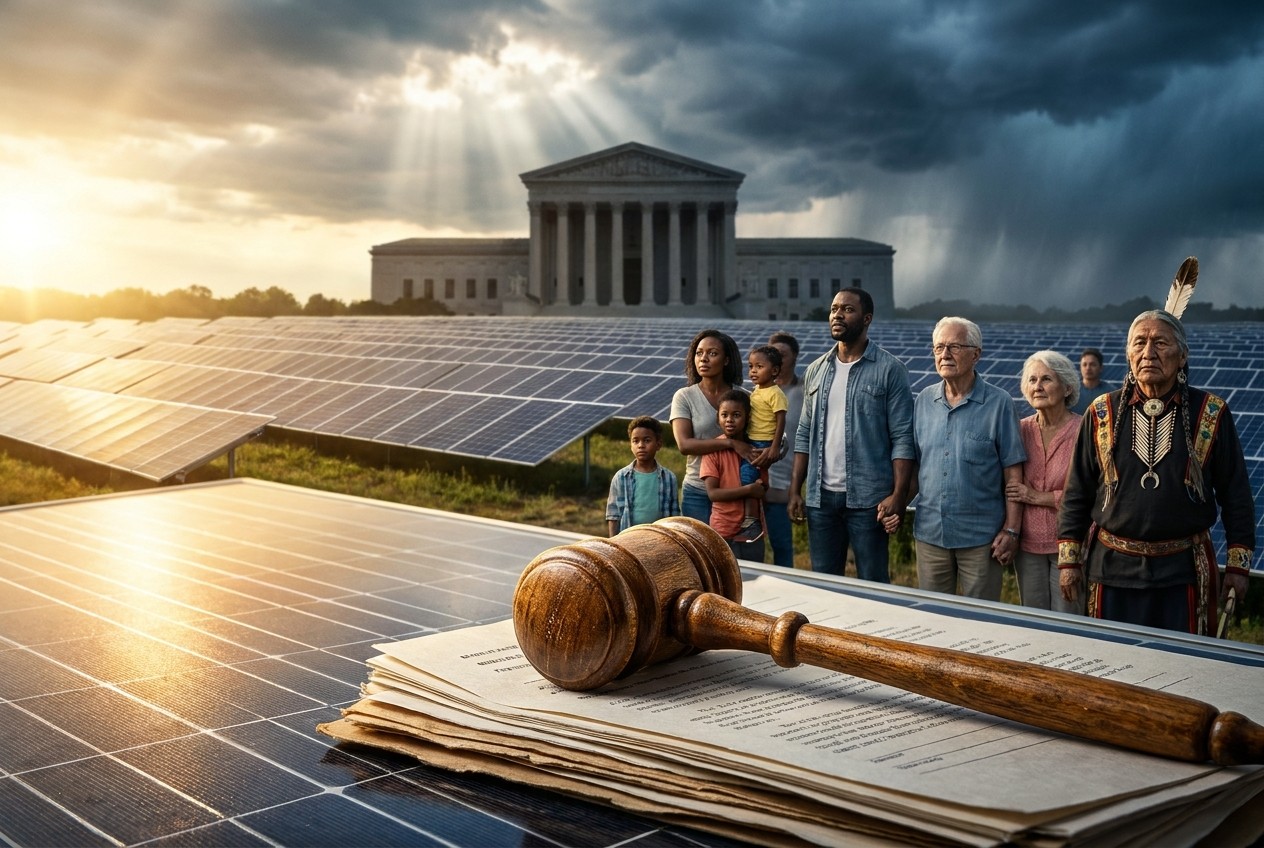
A federal judge in Rhode Island ruled in September that the Trump administration unlawfully terminated the $7 billion Solar for All program, which was designed to expand access to solar energy for more than 900,000 lower-income Americans, according to court records and published reports [1].
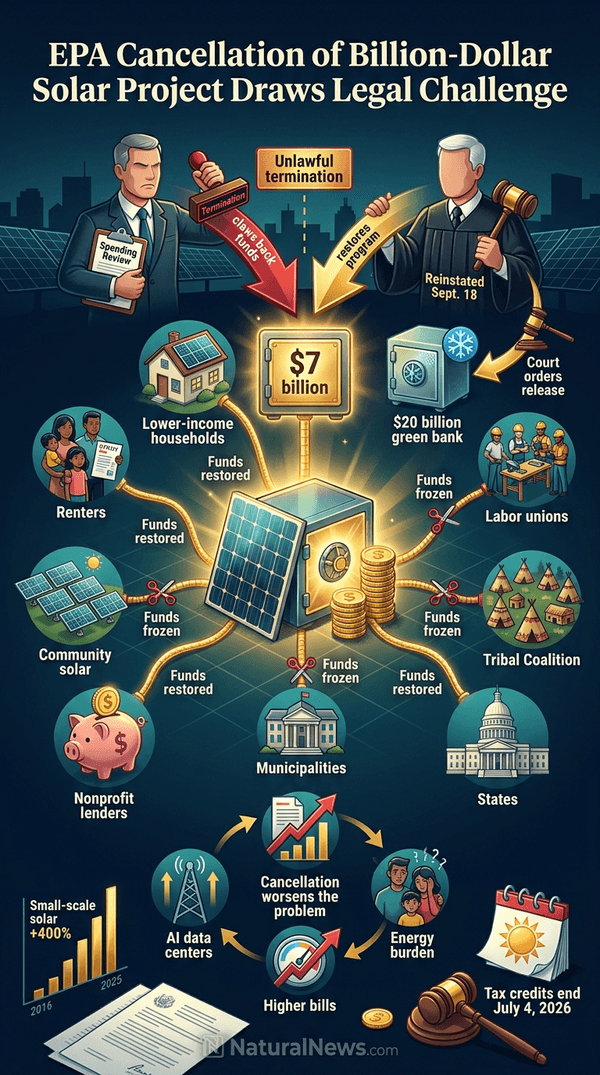
The Environmental Protection Agency (EPA), led by Administrator Lee Zeldin, had announced the termination as part of a broader review of federal spending. Labor unions and clean-energy organizations subsequently sued the agency, challenging its decision to withdraw the funding [2][3].
Project Details and Cancellation
The Solar for All program was valued at approximately $7 billion and was designed to generate solar power, expand residential solar access, and reduce utility costs for consumers, according to federal records and court filings.
The EPA under the Trump administration also moved to terminate a separate $20 billion "green bank" initiative formally known as the Greenhouse Gas Reduction Fund, which was intended to finance clean energy projects, according to reporting by NaturalNews.com [4]. EPA Administrator Lee Zeldin described the discovery of the $20 billion in funds as an unprecedented scandal involving taxpayer dollars rushed to nongovernmental organizations before President Trump's inauguration [5].
Project developers said they were not given adequate notice before the cancellation, according to their court filing. A federal judge later ordered the EPA to release $20 billion in taxpayer funds that had been frozen by Zeldin, overturning the administration's attempt to terminate green energy grants issued under former President Joe Biden [6].
Legal and Energy Implications
Attorneys for the project developers and supporting organizations filed suit alleging the cancellation violated federal law, according to court records. The court found the Environmental Protection Agency exceeded its authority when rescinding the grants, and the ruling vacated the EPA's termination of the Solar for All program [7]. U.S. District Judge Mary McElroy reinstated the program on Sept. 18, rebuffing the administration's efforts to cancel it [8].
Two federal district courts ruled the administration's attempts to terminate Solar for All illegal and ordered the EPA to act accordingly, according to statements from members of Congress [9]. A separate federal judge also ruled that the Trump administration acted illegally when it canceled $7.6 billion in clean energy grants for projects in states that voted for Democrat Kamala Harris in the 2024 election [10].
Energy analysts said the cancellation could contribute to higher utility bills, particularly as electricity demand from AI data centers rises. The U.S. had installed 20.7 GW/66.4 GWh of energy storage projects co-located with 41.3 GW of solar by the end of 2025, and the global cumulative installed solar-to-storage ratio fell from 94:1 in 2016 to 7:1 in 2026, according to BloombergNEF [11]. Small-scale solar generation in the United States has grown by nearly 400 percent over the past 10 years, rising from 18,812 gigawatt-hours to 92,979 GWh between 2016 and 2025, according to an estimate from the Energy Information Administration [12].
Reactions and Statements
An EPA spokesperson said the agency is "committed to responsible spending," according to a statement. A project developer described the cancellation as "unlawful and harmful" in a statement.
Members of Congress requested documents related to the cancellation. In October 2026, Sen. The program's cancellation also affected tribal nations; the Tribal Renewable Energy Coalition, an organization of 14 tribes that received a grant of more than $135 million in now-canceled Solar for All funding, said it is continuing to use the solar project plans it developed but will seek alternative funding sources [13].
The White House did not immediately respond to a request for comment, according to published reports. Solar industry observers noted that federal tax-credit subsidies for new wind and solar projects ended on July 4, 2026, after roughly 35 years, as announced by Energy Secretary Chris Wright [14].
Ongoing Dispute
The lawsuit is pending in federal court, and the EPA has not released its full rationale for the cancellation, according to officials. The effect on utility rates remains uncertain, analysts said. Further legal filings are expected, attorneys said.
The broader policy environment remains contested. The U.S. Department of the Interior agreed to pay a U.S. subsidiary of a German company $1.22 billion to cancel three offshore wind leases off the coasts of California, Louisiana, and New York, the department and company said in August 2026 statements [15]. The share of U.S. electricity produced by coal fell to 17 percent in 2025 from 57 percent in 1988, according to Global Energy Monitor and the Energy Information Administration [16].
This is the first installment of a multi-part series. The next article will examine the potential costs and rate implications of the Solar for All cancellation for ratepayers in affected states.
References
- Judge says EPA illegally canceled $7B solar program. https://apnews.com/article/climate-solar-for-all-trump-biden-lawsuit-0bae42fcf85906ea48ee0f6f4d6c83a9
- Biden's FAKE SOLAR PROGRAM of embezzlement now disrupted by Trump and the Climate Cult cronies are losing their m - NaturalNews.com, October 13, 2025
- Trump Admin Caught Illegally Canceling Billion-Dollar Solar Project That Would Have Helped Lower Utility Bills Across the Country. https://futurism.com/science-energy/trump-epa-zeldin-solar-energy-utility-bills
- 7B in frozen funds sparks legal battle and questions of government overreach - NaturalNews.com, March 12, 2025.
- EPA chief unveils 20 billion scandal Biden admins rush to funnel taxpayer dollars to corrupt NGOs - NaturalNews.com, February 14, 2025.
- Federal judge orders release of 20 billion in EPA green grants, rejects Zeldin's freeze - NaturalNews.com, April 20, 2025
- Trump administration illegally cancelled $7 billion solar programme, US judge rules. https://economictimes.indiatimes.com/news/international/world-news/trump-administration-illegally-cancelled-7-billion-solar-programme-us-judge-rules/articleshow/134346614.cms
- Judge Rules EPA Must Reinstate $7 Billion Biden-Era Subsidies For Solar Promotion. https://www.zerohedge.com/political/judge-rules-epa-must-reinstate-7-billion-biden-era-subsidies-solar-promotion
- Gallego, Colleagues Demand Trump Stop Illegally Blocking Solar Program That Lowers Americans' Utility Bills. https://www.gallego.senate.gov/news/press-releases/gallego-colleagues-demand-trump-stop-illegally-blocking-solar-program-that-lowers-americans-utility-bills/
- Court says Trump admin illegally blocked billions in clean energy grants to Democratic states. https://apnews.com/article/trump-clean-energy-democrats-blue-state-hydrogen-9269a5a839122e1b3fd487787747d47e
- BNEF ups US energy storage deployment forecast by 30%. https://www.utilitydive.com/news/bnef-ups-us-energy-storage-deployment-forecast-by-30/872870/
- US Small-Scale Solar Generation Rises Nearly 400 Percent in a Decade. https://theepochtimes.com/us/us-small-scale-solar-generation-rises-nearly-400-percent-in-a-decade-6105876
- Tribal nations regroup after loss of federal funding for clean energy. https://www.utilitydive.com/news/tribal-nations-federal-funding-clean-energy/807890/
- President Trump Ends 35 Years Of Wind And Solar Subsidies On July 4. https://100percentfedup.com/president-trump-ends-35-years-wind-solar-subsidies/?utm_source=rss&utm_medium=rss&utm_campaign=president-trump-ends-35-years-wind-solar-subsidies
- US Pays German Company $1.22 Billion to Cancel Wind Leases. https://theepochtimes.com/us/us-pays-german-company-1-22-billion-to-cancel-wind-leases-6073172
- Can American Coal Survive? https://theepochtimes.com/article/can-american-coal-survive-6054469
Explainer Infographic








Please contact us for more information.