


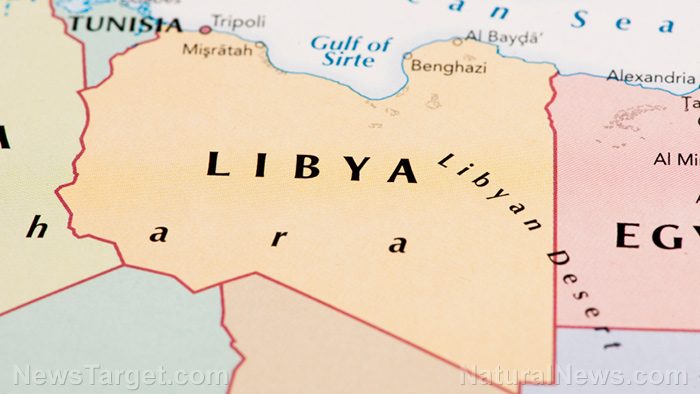
For years, Libya's eastern parliament treated Turkey's maritime pact as a betrayal. On Oct. 20, it embraced the agreement without a single dissenting vote. The House of Representatives, the legislature, aligned with military commander Khalifa Haftar, and unanimously approved the 2019 memorandum that draws a sea border between Turkey and Libya straight through waters that Greece, Cyprus and Egypt claim for themselves. Haftar's son calls the decision “a move toward overcoming disputes of the past.” A harder look reveals something colder: a quiet transfer of leverage, in which Ankara collects signatures from both Libyan camps, a path to offshore gas and a foothold in the east, while Europe answers with communiques.
Key points:
- Libya's eastern parliament voted unanimously on Oct. 20 to approve the 2019 Turkey-Libya maritime memorandum and revoke two 2020 resolutions rejecting Ankara.
- Greece, Cyprus, Egypt and the European Union dispute the pact because it disregards Crete and other Greek islands.
- The reversal follows a July deal on military facilities and surveillance systems, plus years of Turkish courtship of Haftar's camp.
- Turkish media say Athens lobbied Haftar against the deal and lost, exposing the limits of European diplomacy.
The vote endorsed a memorandum signed in November 2019 by Turkey and Libya's then-internationally recognized Government of National Accord in Tripoli. Lawmakers also revoked two 2020 resolutions, one rejecting agreements with Ankara and another calling for an end to political relations. Turkey's Foreign Ministry welcomed the decision, and Foreign Minister Hakan Fidan phoned both Tripoli's prime minister, Abdul Hamid Dbeibah, and Saddam Haftar to thank them, Daily Sabah reported.
The stakes are not abstract. Major natural gas discoveries in recent years have fueled competing claims to offshore waters in the eastern Mediterranean, and Ankara's defenders see the memorandum as a cornerstone of what Turkish officials call the Blue Homeland, an expansive vision of Turkish maritime rights. Greece, Cyprus and Egypt see a land grab drawn in blue ink.
A pact written for a different Libya
The reversal cannot be understood without the wreckage that produced it. Libya has been split between rival administrations since the 2011 overthrow of Moammar Gadhafi. When Haftar's forces assaulted Tripoli in 2019 and 2020, Turkey backed their opponents, and its parliament authorized troops for Libya on Jan. 2, 2020. The maritime memorandum arrived beside a security agreement. At the time, the eastern parliament denounced the package as a “flagrant breach” of Libyan sovereignty, and its foreign relations committee warned that it amounted to a defense pact granting Turkey use of Libyan airspace and waters and the right to build bases.
Those were the east's own words, which makes the turnaround stranger. In December 2025, parliament Speaker Aguila Saleh called the deal illegitimate and non-binding, and Haftar met Egyptian President Abdel Fattah el Sisi in Cairo to begin maritime demarcation talks outside Turkish auspices. Ten months later, the same legislature voted yes without dissent.
What changed? Reports describe a rapprochement built on military contacts, diplomatic visits and commercial projects, including a July deal to develop military facilities and advanced surveillance systems. A Turkish frigate paid a courtesy call to Benghazi last year. Lawmaker Tarek al-Jeroushi told Reuters that “what matters to us is our national interest.” Perhaps so. The question the official story skips is whose interests were already being served when the ports, the contracts and the security hardware lined up.
Greece did not sit idle. Daily Sabah says Athens lobbied Haftar directly against the agreement, and Saleh was hosted in Athens in December. If that account is accurate, the vote is a case study in how little diplomatic charm can compete with arms, ports and contracts. Greece sold a principle. Turkey sold a partnership.
Gas, bases and the Greek counterclaim
Greece's objection is blunt geography. Athens says Turkey and Libya lack facing or adjacent coastlines that could support such a boundary, with Crete squarely between them. One Greek outlet argued the pact tries to “erase” Greek island territory from the map. Turkey, which never joined the U.N. Convention on the Law of the Sea, says the agreement complies with international law. The Greek Foreign Ministry replied that the memorandum “infringed upon the sovereign rights of other countries in the region.” Cyprus condemned the vote as legally worthless, and European Commission President Ursula von der Leyen and European Council President António Costa insist it has no legal standing.
Standing, though, is not leverage. The memorandum matters because of what lies beneath the water south of Crete, where Greece has authorized exploration that Ankara opposes. Greece and Egypt signed their own partial maritime delimitation in 2020, and Athens launched a hydrocarbon tender south of Crete last year. Tripoli answered with notes to the United Nations, which Athens accused Turkey of orchestrating. Turkish media now report that state energy firm TPAO will survey four offshore blocks, with the data processed within nine months. With the east on board, Ankara can say that all of Libya endorses its map.
History offers a sobering pattern. In 2019, EU foreign ministers agreed economic sanctions against Turkey for drilling off Cyprus, and Ankara pressed on regardless. The union later declared the memorandum null and void, and Greece expelled Libya's ambassador. Neither move stopped Turkey from sending military support to Tripoli. Treaties are trellises; facts on the water are the vines. Whoever surveys the seabed, escorts the survey ship and signs the supply contracts writes the practical law, however many communiques denounce it.
Skeptical readers should watch three things: the survey vessels, the Turkish presence at eastern ports and Cairo's reaction. Egypt, a longtime Haftar patron, rejected the accord too. If Haftar's camp can sign Ankara's paper over Egyptian objections, the balance of power in the eastern Mediterranean has already shifted, and the official statements are merely catching up.
Sources include:






Please contact us for more information.