


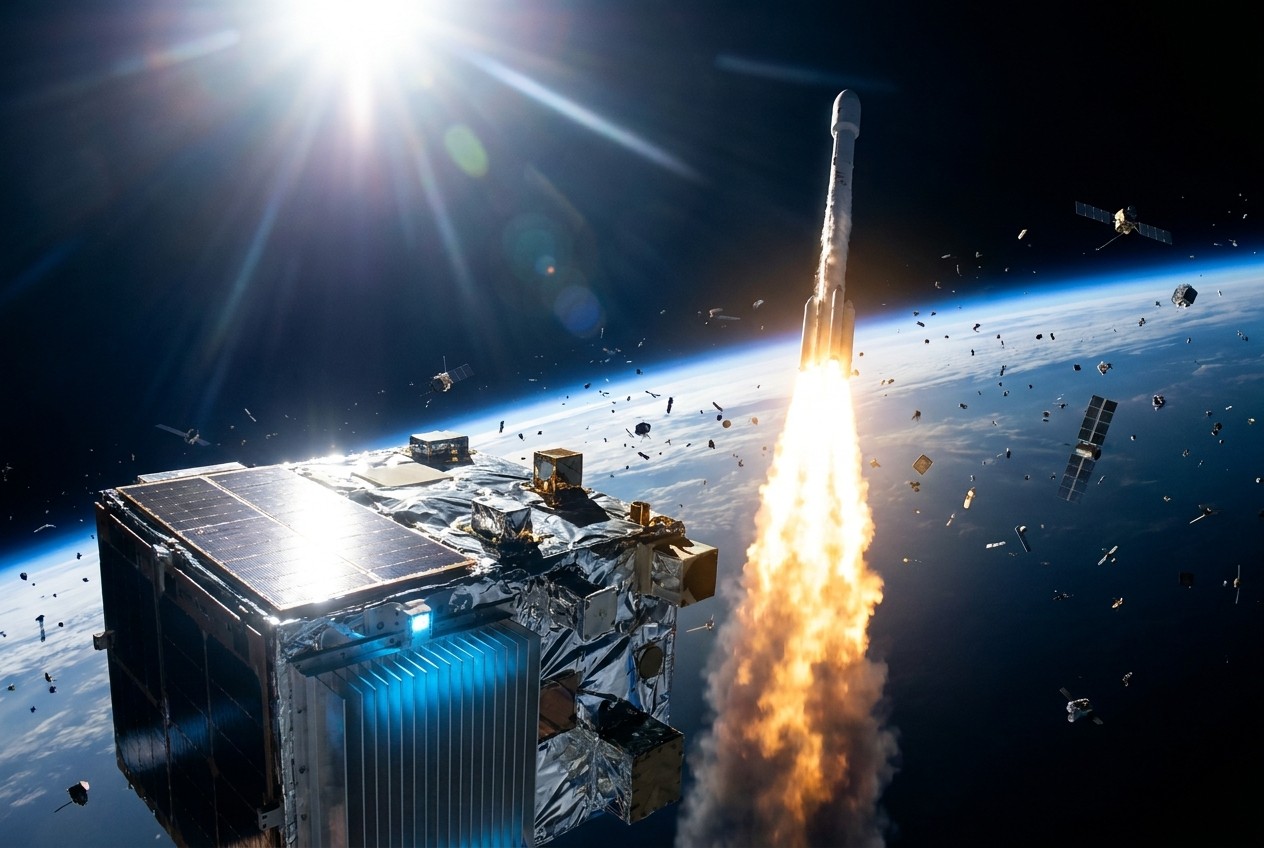
Google is preparing to launch a refrigerator-sized experimental satellite with the computing power of a single server as part of a research effort known as Project Suncatcher, according to a report by the New York Times (NYT).
The prototype is designed to test whether artificial intelligence (AI) data centers can operate in orbit, powered by continuous, unfiltered sunlight rather than electricity drawn from terrestrial grids. The satellite is scheduled to lift off on a SpaceX Falcon 9 rocket on Oct. 1, the report stated. Google technicians are stress-testing the hardware in a laboratory ahead of the launch, company officials said.
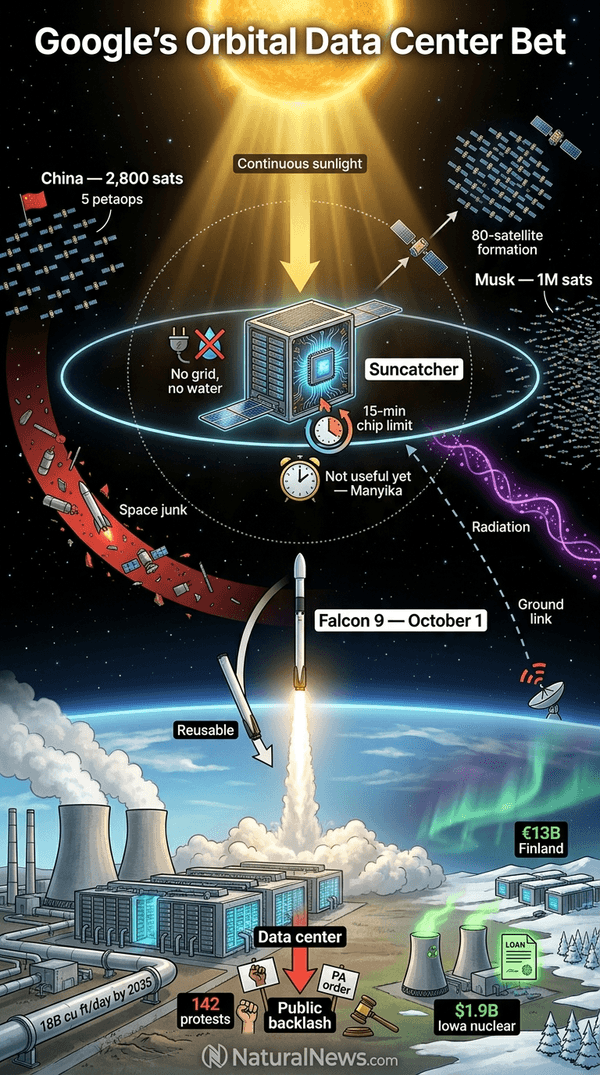
The effort places Google alongside other technology firms exploring orbital computing. China launched 12 satellites on May 14 to form the first stage of a planned 2,800-satellite AI supercomputer constellation capable of processing data in space at 5 peta operations per second [1]. Google senior vice president for research James Manyika told NYT: "We don't expect, to be perfectly frank, that we'll have anything usefully operational in the next few years."
Project Suncatcher's Goals and Google's Orbital Timeline
Project Suncatcher seeks to use continuous solar power in orbit to run AI data centers, rather than drawing on terrestrial electricity and water supplies, according to the report. Google said it aims to spend as much on orbital data centers as on terrestrial ones by the mid-2030s, per NYT.
By next year, Google hopes to launch a pair of satellites before expanding to a constellation of 80 satellites in close formation, the company said. The first experimental satellite is expected to spend up to six years circling Earth before burning up in the atmosphere, the report stated.
The orbital concept arrives as terrestrial data center demand surges. U.S. data centers are projected to consume about 18 billion cubic feet of natural gas per day by 2035, more than Germany and Japan combined, according to a BloombergNEF report cited by TechCrunch [2]. Google has separately pursued nuclear and geothermal power agreements for ground-based facilities, including a $1.9 billion federal loan to restart an Iowa nuclear plant where Google will be the primary customer [3].
Technical and Operational Challenges Remain
Obstacles include space junk, space radiation, cooling onboard electronics and maintaining connections with the ground, according to the report. Servicing satellites in orbit would be more complex than swapping parts in a terrestrial data center, experts said. For now, the satellite is limited to about 15 minutes of operation before its chips must be shut off to cool down, according to the article.
Space debris already poses documented risks. Scientists have warned for years about the dangers of enormous amounts of debris orbiting the planet, including obsolete spacecraft, portions of damaged or disabled satellites and rocket fragments [4]. Atmospheric density fluctuations also complicate orbital operations, requiring ongoing calibration of satellite drag models, according to research published in the Journal of Atmospheric and Solar-Terrestrial Physics [5].
Communication with orbital assets requires complex scheduling systems, as demonstrated by the European Space Agency's Data Relay Satellite system, whose management is particularly complex, according to a 1995 paper in Engineering Applications of Artificial Intelligence [6].
Industry Expansion and Environmental Warnings
SpaceX CEO Elon Musk is planning to launch up to a million large data center satellites, according to NYT. Experts warned that massive orbital data center constellations could be ecologically damaging, releasing atmospheric pollution and risking damage to the ozone layer, the article stated. The report noted that orbital data centers are not a guaranteed solution to terrestrial data center concerns.
Public opposition to ground-based data centers has grown. A national day of action organized by the nonprofit Humans First drew 142 protests across 42 states, according to ZeroHedge [7]. Pennsylvania Gov. Josh Shapiro (D) signed an executive order in August aimed at curbing data center growth, writing that he would not allow Pennsylvanians to be "bullied by greedy developers" [8].
Google is betting on future economies of scale, according to the company. The firm has committed to investing €13 billion, or about $15.13 billion, in digital infrastructure in Finland across 2027 and 2028, including data centers in Hamina, Kajaani, Muhos and Vaala [9].
Next Steps for Google's Experimental Satellite
The first Project Suncatcher satellite is being prepared for an Oct. 1 launch on a SpaceX Falcon 9, according to the report. Manyika likened the effort to developing driverless cars, a process that took Google 15 years of research, he told NYT.
Google's near-term goal is to test whether the concept works and whether it can be financially feasible, the company said. The company said it aims to spend as much on orbital centers as terrestrial ones by the mid-2030s, per NYT, betting on future economies of scale.
The project reflects broader corporate interest in space-based computing. National Aeronautics and Space Administration head Jared Isaacman made a pitch for orbital data centers in August, presenting the concept as a solution for an industry facing local opposition on the ground, according to the New American [10]. Google's prototype will provide the first test of whether the approach can survive the orbital environment.
References
- Willow Tohi. "China's Orbital AI Leap: Space-Based Computing Constellation Launch Ignites Global Tech Competition". NaturalNews.com. May 24, 2025.
- TechCrunch. "US data centers could consume more natural gas than Germany and Japan combined by 2035". September 15, 2026.
- TechCrunch. "Google's revived nuclear power plant gets $1.9B loan from US government". September 8, 2026.
- GreenMedInfo.com. "The 5G Roll Out of 20000 Telecom Satellites".
- Elsevier. "Atmospheric density calibration using satellite drag observations". Journal of Atmospheric and Solar-Terrestrial Physics. 2005.
- Marco Adinol? and Amedeo Cesta. "Heuristic Scheduling of the DRS Communication System". Engineering Applications of Artificial Intelligence Vol. 8, No. 2. 1995.
- ZeroHedge. "The Data-Center Revolt Goes National: Tea Party Veteran Leads 142 Rallies Across 42 States". July 19, 2026.
- The Epoch Times. "Pennsylvania Governor Signs Order Curbing AI Data Centers". August 19, 2026.
- ZeroHedge. "Google To Invest $15 Billion In AI Infrastructure And Nuclear Power In Finland". September 9, 2026.
- The New American. "Data Centers in Space: NASA Backs Tech Oligarchs' Orbital AI Push". August 28, 2026.
Explainer Infographic










Please contact us for more information.