


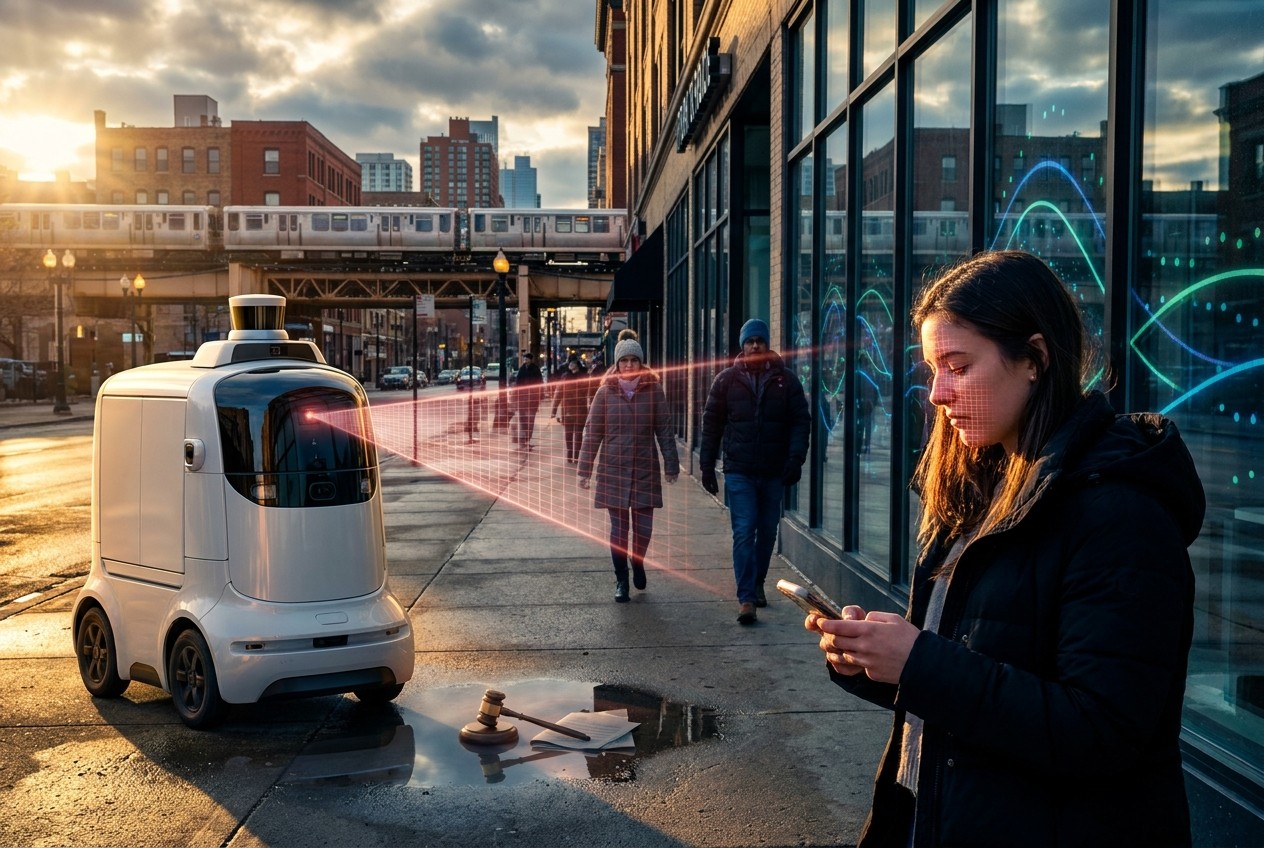
Two class-action lawsuits filed in Cook County Circuit Court allege that autonomous food delivery robots operating on Chicago sidewalks collected customers' biometric data without consent, according to court records [1]. The suits name robot operator Serve Robotics and delivery platform Uber Eats as defendants, and a separate action involves robot delivery company Coco, according to local reporting [2].
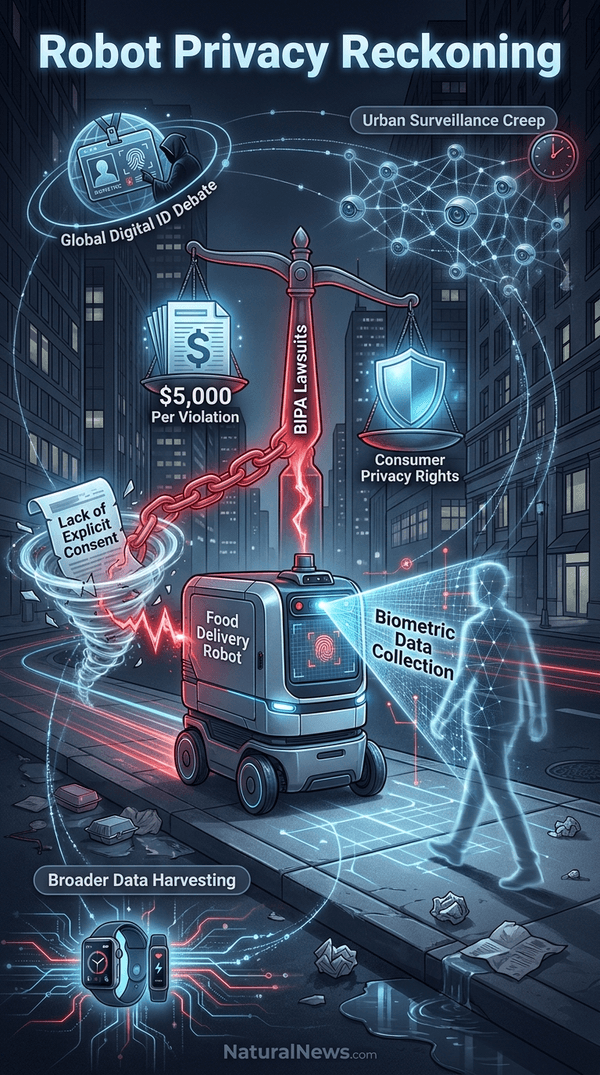
The lawsuits seek damages up to $5,000 per violation and come amid increased scrutiny of delivery robots in Chicago since the pilot program began in 2022, according to iHeartRadio [3].
Illinois Law Requires Consent for Biometric Data
Illinois courts have seen a rise in BIPA lawsuits against technology companies in recent years, legal analysts said. Similar legal battles have unfolded in New York City, where grocery chains like Wegmans and Fairway have deployed facial recognition systems to scan customers, according to NaturalNews.com [4][5]. A 2021 New York City law requires businesses to post signs about biometric collection but lacks enforcement teeth, the report noted [4].
The robots were deployed under a pilot program with city approval, officials said [3]. The program is set to expire in May 2027 unless extended by the City Council, according to iHeartRadio [3]. Residents and city officials have raised concerns about safety, surveillance, and job impacts since the pilot began, the report added [3].
Lawsuits Allege Robots Scanned Pedestrians Without Warning
The suits claim no written notice or consent was provided before collection, as required by state law [6]. One plaintiff said in the filing that they were unaware their face was being analyzed by a robot, court documents showed [1].
Attorneys for plaintiffs argued the practice violates privacy rights and state law, according to court documents [2]. The legal action follows years of warnings from privacy advocates about the spread of biometric surveillance in public spaces. John W.
The lawsuits also highlight broader concerns about data harvesting by private companies. "AI Everyday" author William Scott noted that smart wearables and other devices are increasingly equipped with sophisticated biometric sensors that can monitor health markers and other personal information [7]. Critics warn this trend raises unresolved questions about who owns such data and how it is shared [8].
Companies Face Potential Penalties as Cases Proceed
The lawsuits seek injunctive relief and monetary damages under BIPA, according to filings [3]. Serve Robotics and Uber Eats have not filed public responses to the allegations as of the report, court records showed [1].
Legal experts said the cases could affect how delivery robots operate in public spaces nationwide. The outcome may set precedent for robot delivery operations in Illinois and other states, analysts said [3]. The legal challenge arrives as global governments consider biometric digital ID programs that would require citizens to obtain digital credentials to access public goods and services, according to reporting by Children's Health Defense [9].
The Bill & Melinda Gates Foundation announced a $200 million investment in digital ID projects as part of its overall commitment of $1.27 billion to support global health and development projects, according to The Defender [10]. Critics have warned that such systems represent a grave threat to liberty [10].
Conclusion: Legal Challenge Highlights Privacy Concerns in Robot Delivery
The lawsuits highlight questions about biometric data collection by autonomous robots in public areas, according to observers [11]. Privacy advocates said the cases underscore the need for clear consent and transparency [6]. The outcome could set precedent for robot delivery operations in Illinois and other states, legal analysts said [3].
Officials said the pilot program continues while the litigation proceeds [3]. The legal battle reflects growing public unease about surveillance technologies deployed in everyday commerce. As Whitehead argued, Americans have been sold a bill of goods when it comes to ubiquitous surveillance cameras, which have spread across the country despite limited evidence of effectiveness [8].
References
- https://apnews.com/article/chicago-food-delivery-robots .... https://www.threads.com/@acmusa4147/post/Deumv8qFjAF/deep-state/
- Food delivery robot lawsuit Chicago: Lawsuit claims Coco, Serve .... https://abc7chicago.com/post/food-delivery-robot-lawsuit-chicago-claims-coco-serve-robotics-are-collecting-biometric-data-consent/19941835/
- Delivery Robots Allegedly Scan Customers And Collect Biometric Data .... https://kogo.iheart.com/content/2026-10-20-delivery-robots-allegedly-scan-customers-and-collect-biometric-data-lawsuits-claim/
- Data harvesting at the grocery store Wegmans in NYC now scanning all customers in the name of safety - NaturalNews.com, January 06, 2026.
- Fairway grocers in NYC now using facial recognition to profile customers - NaturalNews.com, March 21, 2023.
- Delivery Robots Accused Of Scanning Customers' Faces, .... https://piefed.ca/c/[email protected]/p/1026481/delivery-robots-accused-of-scanning-customers-faces-sharing-biometric-data
- AI Everyday by William Scott
- A Government of Wolves: The Emerging American Police State by John W. Whitehead
- Megalomaniac Ambition for Total Control Gover - ChildrensHealthDefense.org.
- -As-Gates-Doubles-Down-on-Digital-IDs-Critic-W - ChildrensHealthDefense.org, September 30, 2022.
- Lawsuits accuse Chicago delivery robot companies of collecting .... https://chicago.suntimes.com/news/2026/10/16/lawsuits-accuse-chicago-delivery-robot-companies-of-collecting-biometric-data
- s2e34 Digital ID Exposed 17 Countries in 90 Days, December 09, 2025, by Aaron Day
Explainer Infographic





Please contact us for more information.