



AI Devices Introduce New Privacy Parameters
A new generation of AI-powered, always-listening wearables from major technology companies is entering the market, raising questions about how existing privacy laws apply to devices that continuously interpret speech without necessarily storing audio recordings. Amazon confirmed its acquisition of Bee, a startup specializing in voice-driven smart wristbands, in a deal announced by Bee co-founder Maria de Lourdes Zollo on LinkedIn [1]. The Bee device, priced at $50 and paired with an Apple Watch app, records conversations to generate reminders and to-do lists [1].
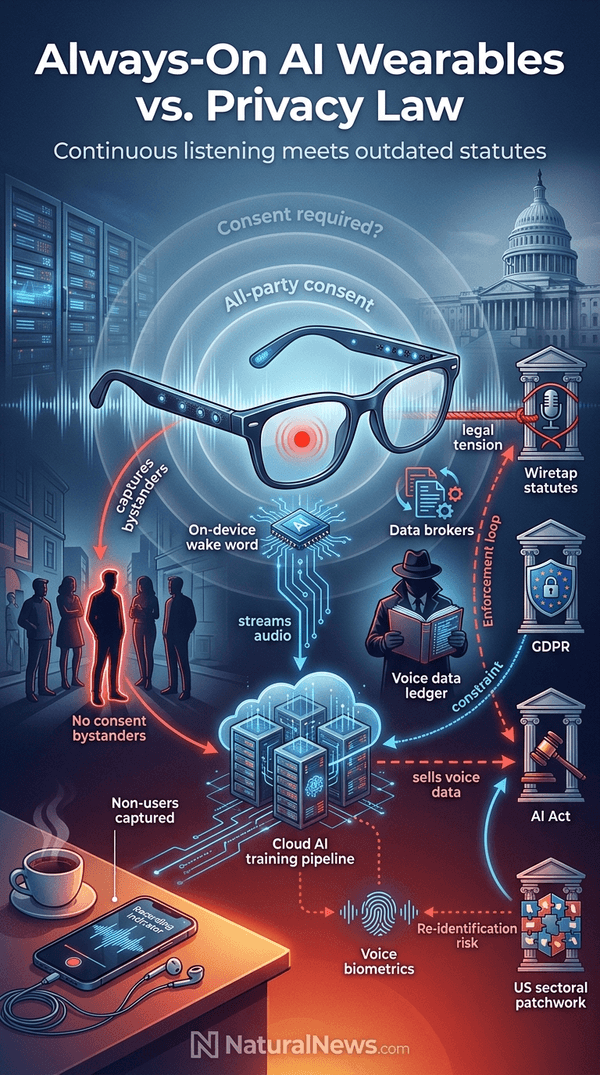
Unlike earlier smart speakers such as Amazon Echo, which typically activated only after a wake word and stored audio clips on remote servers, these new wearables are designed to process speech locally and in real time. This architectural difference creates legal ambiguity because state wiretap statutes were written to address the interception and recording of the contents of private communications, not the continuous interpretation of ambient speech by a device worn on the body.
The development comes as technology firms including Apple, Amazon, and Meta expand their presence in personal health monitoring and ambient computing. Big Tech companies are bolstering their presence in the healthcare industry through acquisitions of and partnerships with medical and scientific institutions, as well as introducing new products and services [2][3]. Privacy advocates say these moves leave consumers vulnerable to data practices that current laws may not adequately cover [2][3].
The Capabilities of Always-On AI Gadgets
The Bee wristband represents a shift in how AI wearables operate. According to details confirmed after Amazon's acquisition, the device records conversations to generate reminders and to-do lists, and its companion Apple Watch app extends that functionality to Apple's wearable platform [1]. The device is marketed as a convenience tool, but its continuous listening capability means it interprets speech throughout the day without requiring the user to initiate a recording.
This differs from older smart speakers in a key respect. Earlier devices often transmitted audio to cloud servers for processing, which created a clear record that could be intercepted or subpoenaed. The new generation of wearables is designed to process speech on the device itself and to extract meaning, such as a reminder or a task, without retaining the underlying audio. Industry analysts say this reduces the data footprint but does not eliminate privacy concerns, because the device still captures the semantic content of conversations.
The trend extends beyond Amazon. Apple has integrated health monitoring into its Apple Watch, including electrocardiograms and detection of potentially dangerous conditions such as atrial fibrillation [4]. Meta has pursued AI-driven wearables and smart glasses. The common thread is that these devices are designed to be worn continuously and to interpret the user's environment, including spoken words, in real time.
Legal experts note that the distinction between processing and storage is central to how privacy laws are written. If a device does not retain audio, it may fall outside the definition of a recording device under some statutes. But if it interprets speech and generates a text summary or a reminder, that output could be considered a record of the communication, creating new legal questions about consent and interception.
Legal Ambiguity: Continuous Listening Versus Interception
State wiretap laws across the United States were historically structured around the interception of the contents of private communications. Under many statutes, interception requires the acquisition of the contents of a communication through an electronic, mechanical, or other device without the consent of at least one party to the conversation. The definition of contents typically includes the substance of the conversation, not merely the fact that a conversation occurred.
The new AI wearables complicate this framework because they do not necessarily acquire the contents in a form that is retained. A device that listens continuously and extracts a reminder, such as a note to buy groceries, may process the speech without preserving the audio. Legal analysts say this raises the question of whether the brief, transient processing of speech constitutes interception under laws that were written with tape recorders and wiretaps in mind.
According to legal counsel who have reviewed the issue, some state statutes may define interception broadly enough to capture real-time interpretation even without storage. For example, statutes that prohibit the use of a device to overhear or record a conversation may apply to a wearable that is capable of overhearing, regardless of whether it saves the audio. The risk of liability could therefore fall on the individual who activates the feature during a private conversation, rather than on the manufacturer.
The ambiguity is compounded by the fact that these devices often operate in an always-on mode. A user may forget that the device is listening, or may not realize that a conversation in the background is being interpreted. Unlike a smart speaker that requires a wake word, an always-on wearable may capture speech without any explicit command. This creates a situation where the wearer may be unaware that a private conversation is being processed, and other parties to the conversation may not have consented.
Legal scholars point out that consent is a central issue. In states with two-party consent laws, all parties to a conversation must agree to the recording. If a wearable interprets speech without the knowledge of other participants, those participants may have a claim under wiretap statutes. But if the device does not record audio, the claim may be harder to establish because the statute may require the acquisition of contents.
The technology also raises questions about the role of the manufacturer. If the device is designed to process speech locally, the manufacturer may argue that it is not intercepting communications because the data never leaves the device. But privacy advocates counter that the device is still capturing the semantic content of conversations, which can be used to build a profile of the user's daily life. The legal system has not yet caught up with this distinction.
Some legal analysis suggests that the risk of civil or criminal liability could fall on the individual who activates the feature during a private conversation. If a person wears an always-on device into a meeting or a private home, and the device interprets speech without the consent of others, that person could be exposed to a lawsuit or, in some jurisdictions, criminal charges. The manufacturer may be shielded by the fact that the user chose to activate the feature, but the user may not have understood the legal implications.
The challenge for courts and legislatures is to adapt laws written for a different era to a technology that blurs the line between listening and recording. The outcome may depend on how judges interpret the word interception, and whether they consider the processing of speech to be equivalent to the acquisition of contents. Until there is clarity, both users and manufacturers face uncertainty about their legal obligations.
References
- Amazons AI wearable acquisition Convenience or surveillance - NaturalNews.com, July 28, 2025.
- Big Techs Plan to Disrupt Lucrative US Health - ChildrensHealthDefense.org.
- -Big-Techs-Plan-to-Disrupt-Lucrative-US-Health - ChildrensHealthDefense.org, August 16, 2022.
- AI Everyday by William Scott
Explainer Infographic












Please contact us for more information.