


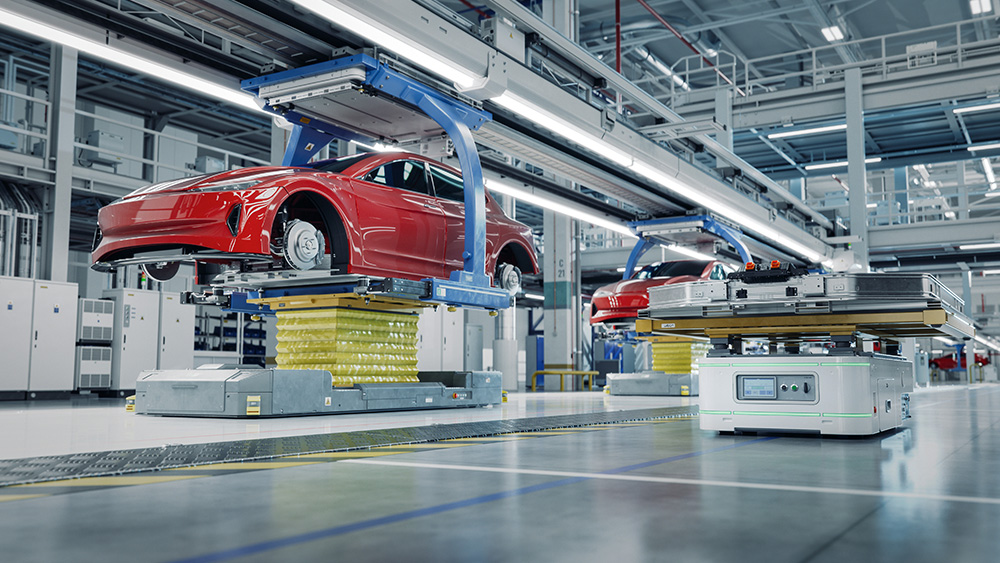
- China has overtaken the Czech Republic and Spain to become Germany's top source of imported passenger cars.
- Chinese vehicle imports more than doubled to 175,000 in the first seven months of 2026 while German exports declined.
- The surge is driven by hybrid vehicles, which face lower EU tariffs than Chinese battery-electric models.
- Volkswagen, BMW, Mercedes-Benz, and Bosch are cutting tens of thousands of jobs as German automakers struggle to compete.
- Germany's finance minister is pressing Brussels to extend tariffs to Chinese hybrids and tighten local-content rules.
In a dramatic shift that underscores Germany's deepening industrial crisis, China has displaced the Czech Republic and Spain to become Germany's largest supplier of imported passenger cars, with Chinese shipments more than doubling in the first seven months of 2026 to 175,000 vehicles. The development comes as German automakers, long the pride of Europe's largest economy, announce tens of thousands of planned layoffs, and as Germany's finance minister publicly demands that Brussels take a tougher stance against Beijing's trade practices.
Chinese imports surge as German exports decline
Between January and July 2026, Germany imported 175,000 new passenger cars from China, representing 13.8 percent of all auto imports and a 120.9 percent increase over the same period in 2025, according to official figures. The surge put China ahead of two long-standing suppliers: the Czech Republic, which shipped 173,000 vehicles, and Spain, with 157,000.
Meanwhile, exports of German-made passenger cars slid to roughly 2 million vehicles, a 4 percent decline in volume from the previous year, while their value dropped 8.9 percent to €73.5 billion, signaling pressure on pricing as well as volume.
The surge is driven largely by hybrid vehicles, which face only the standard 10 percent EU tariff, versus duties as high as 45 percent on Chinese battery-electric vehicles, prompting manufacturers to pivot hard toward hybrids. That shift shows in the numbers: Chinese brands' share of Europe's plug-in hybrid market rose from 2.5 percent to 13.7 percent over the past year.
German leaders demand EU action on trade loophole
Germany's finance minister, Lars Klingbeil, traveled to Volkswagen's headquarters in Wolfsburg on Sept. 17 to deliver an unusually blunt message: Brussels needs to do more to protect German industry.
"We cannot, when all is said and done, be naive in our dealings with China," Klingbeil told reporters after meeting with Volkswagen labor representatives. He called for a tougher, more assertive posture toward countries he said threaten German industry, urging the European Union to extend tariffs to Chinese-made plug-in hybrids and tighten local-content rules that require a greater share of parts to be sourced from European suppliers.
Daniela Cavallo, chair of Volkswagen's works council, stood alongside Klingbeil and backed the call to include hybrids in the tariff regime. "We find ourselves in enormously tough, difficult and unfair competition with China," she said.
Job cuts mount across Germany's auto sector
The political pressure reflects the human toll of China's advance. Volkswagen, still Europe's biggest automaker, says it is in the midst of its most sweeping overhaul in company history, with job losses that have climbed toward 100,000 workers company-wide. A stakeholder deal struck earlier this month calls for 50,000 more positions to be cut and four factories closed starting in the early 2030s if no alternative is found, with half of those losses landing in Germany.
Mercedes-Benz and BMW are also cutting staff, and auto-parts maker Bosch plans to shed 13,000 jobs by 2030. IG Metall, Germany's largest industrial union, has organized repeated walkouts at Volkswagen plants and is planning further nationwide demonstrations.
China's grip extends to the battery supply chain
Beyond finished vehicles, China's dominance extends to the components that make electric vehicles possible. Chinese firms supply more than 80 percent of global battery cell production and provide a major share of the lithium iron phosphate chemistry used in European-branded electric vehicles, leaving automakers dependent on Beijing for the one component that tariffs on finished cars can't touch.
Germany now buys more from China than it sells in precisely the categories where German companies once dominated: cars, trucks, trains, aircraft, factory machinery, and medical devices. "China has already eaten much of German industry's lunch and is preparing to start on dinner," wrote economists Brad Setser and Sander Tordoir.
Brussels spent years preaching open markets to the rest of the world while Beijing quietly built the industrial capacity to outcompete Europe at its own game. Belated tariffs on hybrids may slow the bleeding, but they won't answer the deeper question of how Europe's political class let its signature industry fall this far behind.
Sources for this article include:




Please contact us for more information.