



The Kingdom of Saudi Arabia escalated its war on Yemen with 52 airstrikes and missile attacks in a single 24-hour period, bringing the total number of Saudi-led attacks since late July to 988, according to a statement from the Ansarallah-led Yemeni Armed Forces (YAF) on September 23. The relentless bombing campaign, launched from the Khamis Mushait and Taif airbases and from missile positions in Jizan, targeted five governorates, including Hodeidah, Taiz, Al-Bayda, Marib, and Saada, while inflicting civilian casualties and destroying critical infrastructure including telecommunications networks, schools, bridges, and roads. While Riyadh frames these attacks as a necessary response to Yemeni retaliatory strikes, the numbers tell a stark story of a bombing campaign that has failed to achieve its strategic objectives and instead ignited a tit-for-tat escalation that now threatens the kingdom’s very economic lifeline and energy infrastructure.
Key points:
- Saudi Arabia has launched 988 airstrikes and missile attacks on Yemen since the latest escalation began in July, with 52 occurring in a single day on September 22-23.
- Targets include civilian infrastructure such as telecommunications networks, schools, bridges, and roads across five governorates, resulting in deaths and injuries among women and children.
- Yemen’s Ansarallah-led forces have retaliated with precision strikes on Saudi energy infrastructure, including the critical East–West Pipeline, forcing Aramco to halt operations and reroute tankers.
- The YAF shot down a Saudi Wing Loong II drone and, earlier in September, downed a US-made Saudi F-15 warplane, demonstrating advanced military capabilities.
- Saudi Arabia’s bombing campaign has failed to halt Sanaa’s lightning advance across the western Yemeni coast and seizure of multiple Red Sea islands formerly occupied by the UAE.
- Traders report crude oil prices falling by over $2 a barrel as the East–West Pipeline remains partially offline, with full restoration potentially taking weeks.
The strategic failure of Saudi air power
The sheer volume of Saudi airstrikes - nearly 1,000 in less than two months - reveals a fundamental truth about the kingdom’s military strategy: it is an expensive exercise in futility. Each precision-guided munition dropped from an F-15 or Typhoon fighter jet costs taxpayers millions of dollars, yet the targets often amount to little more than rural huts or empty fields, yielding no lasting strategic advantage. This bombing campaign, which began in July after Saudi warplanes struck Sanaa International Airport has been under an illegal blockade for over a decade and has currently failed to deter Yemeni forces from capturing territory along the western coast or seizing Red Sea islands that the UAE had occupied since 2015.
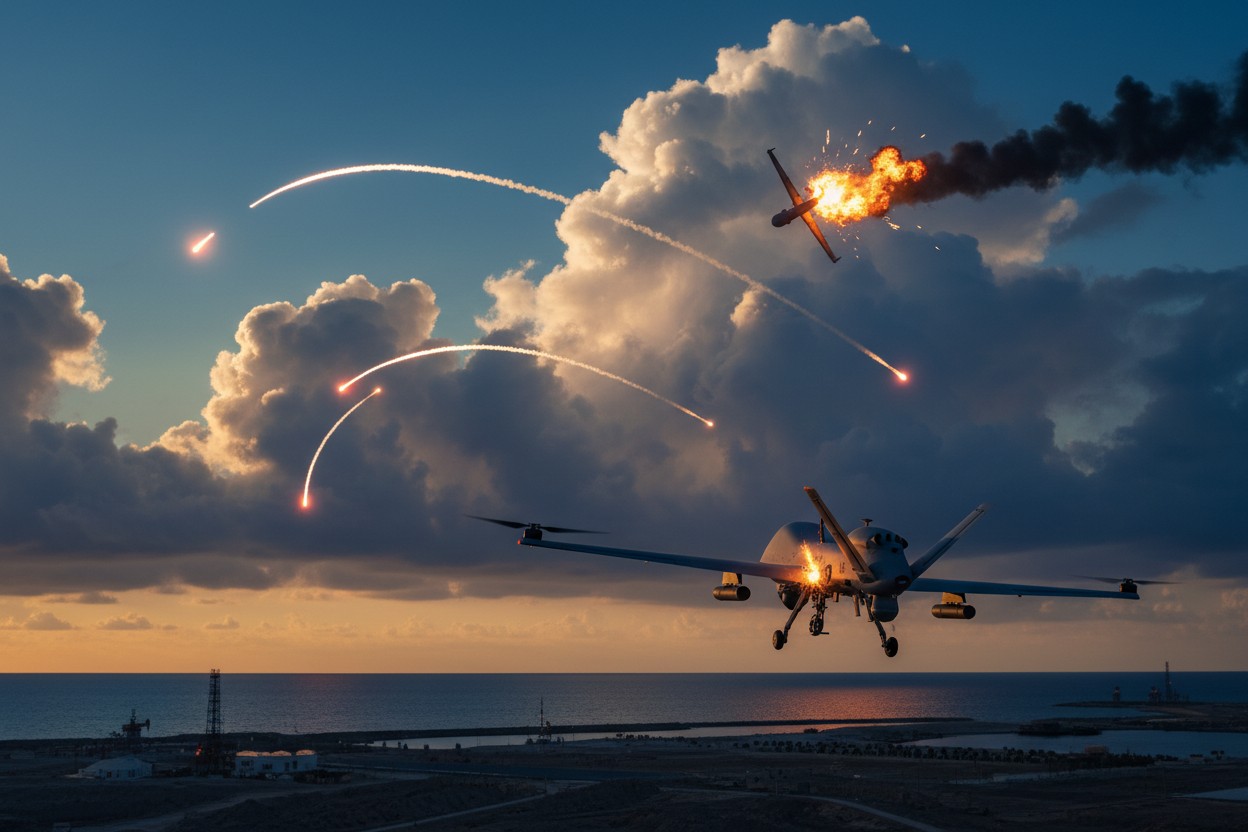
The YAF’s announcement that it shot down a Saudi Wing Loong II drone over Mokha further underscores the shifting balance of power. These Chinese-made drones, which Riyadh purchased for their surveillance and strike capabilities, now litter the desert as burnt wreckage. Yemen’s air defense capabilities have matured significantly since the war began in 2015, and the downing of an F-15 earlier in September marked a turning point: for the first time, Saudi Arabia lost a top-tier US-made fighter jet to enemy fire, a blow that shook the confidence of Saudi pilots who had grown accustomed to operating with impunity.
Energy infrastructure under siege
While Saudi bombs rain down on Yemeni villages, Yemeni missiles and drones have found their mark with devastating precision on the kingdom’s economic arteries. The East–West Pipeline, a critical infrastructure asset that transports crude oil from the eastern oil fields to the Red Sea coast for export, was heavily targeted earlier in September. Satellite imagery confirmed the decimation of at least one pumping station, with multiple other stations hit in the same attack. Though no group claimed immediate responsibility, the timing and location align with Yemeni operations against Saudi energy infrastructure, and Riyadh’s claim that the drones originated from Iraq raises more questions than it answers.
Aramco has been forced to inform at least two European refiners that they will receive no crude in October under their long-term supply contracts, citing damage from the pipeline strike. The company is scrambling to restore operations, with one source telling Reuters that full resumption could take weeks. Meanwhile, Brent crude futures fell by over $2 a barrel as global markets absorbed the news, reflecting the vulnerability of Saudi oil exports to Yemeni reprisals. Traders are now prepping for potential disruptions by moving tankers to Egypt’s Mediterranean Port Said for ship-to-ship transfers and to Sidi Kerir.
The blockade equation backfires
Yemen’s military leadership has made clear its strategy: “escalation for escalation and blockade for blockade.” This doctrine has translated into 48 Saudi tankers being rerouted away from the Bab al-Mandab Strait, the strategic chokepoint at the southern entrance to the Red Sea through which much of Saudi Arabia’s oil exports flow. Several other tankers have been struck directly, forcing Saudi Arabia to pause its oil exports altogether according to maritime data cited by Bloomberg. The kingdom’s decision to activate the East–West Pipeline as a bypass route during the US-Israeli war on Iran, intended to circumvent Tehran’s closure of the Strait of Hormuz, has now backfired spectacularly. The pipeline was never designed to handle sustained military attack, and Yemeni forces have proven more than capable of shutting it down.
The Saudi-led coalition’s ground forces have suffered severe losses, with Yemeni forces capturing large swaths of the western coast and taking Bab al-Mandab outright. The Saudi-backed and UAE-backed fighters who once held these territories have been routed, their morale shattered by relentless attacks. As Saudi warplanes continue to pound Yemen from above, the ground reality tells a different story: Sanaa is winning on the ground and at sea, while Riyadh is losing both its military edge and its energy security.
Sources include:









Please contact us for more information.