



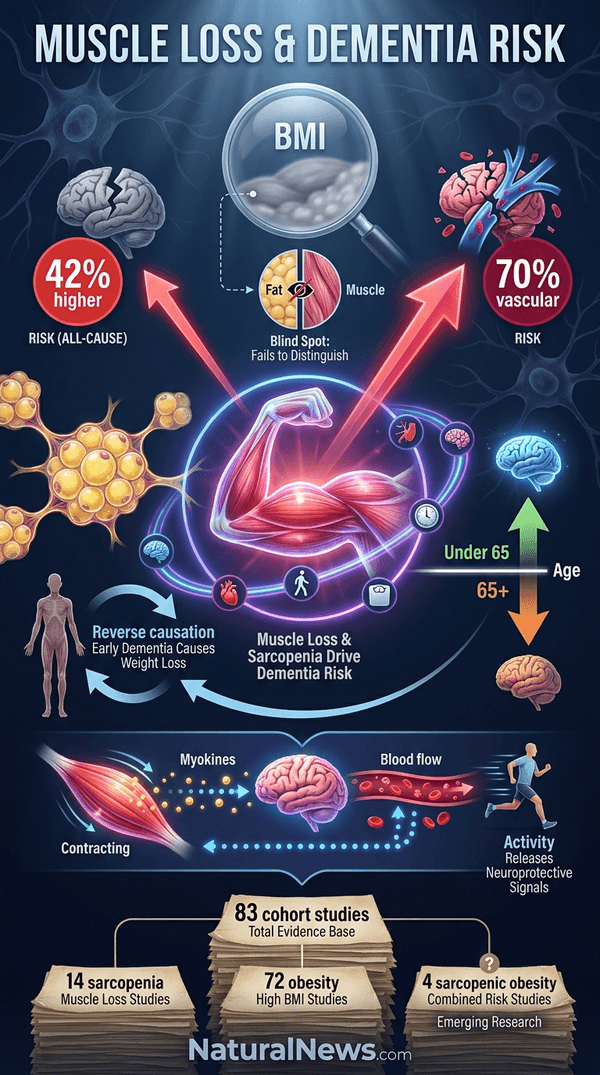
A systematic review and meta-analysis published Sept. 18, 2026, found that sarcopenia, the age-related loss of muscle mass and strength, was associated with a 42% higher risk of all-cause dementia, according to the analysis [1]. The same analysis reported that people with sarcopenia faced a 70% higher risk of vascular dementia, which is caused by damage to blood vessels in the brain [1]. The findings were based on 83 cohort studies examining body composition and dementia risk [1].
The relationship between obesity and dementia differed by age, the analysis stated. Among adults younger than 65, obesity was linked to a modestly higher dementia risk, while among adults 65 and older, obesity was associated with a lower risk [1]. Researchers pointed to reverse causation as a possible explanation for the lower risk in older adults, noting that unintentional weight loss can occur during the early stages of dementia [1].
The analysis was reported by mindbodygreen editor Zhané Slambee on Sept. 18, 2026 [1]. It adds to a growing body of research suggesting that muscle health may play a distinct role in brain health separate from overall body weight, according to the report [1].
Study Design and Scope
Researchers conducted a systematic review and meta-analysis, a method that gathers and combines results from existing studies to identify larger patterns, according to the report [1]. The analysis included 83 cohort studies that examined body composition and dementia risk. Fourteen studies addressed sarcopenia, 72 addressed obesity, and four addressed sarcopenic obesity, a combination of low muscle mass and excess body fat [1].
The researchers searched four major medical databases for studies available through February 2026 [1]. The analysis was published in the peer-reviewed journal International Journal of Food Sciences and Nutrition [1]. The researchers were particularly interested in whether muscle and fat were linked to dementia in different ways, since body mass index (BMI) only measures weight relative to height. BMI cannot distinguish muscle from fat, according to the analysis [1].
That broader look at body composition revealed notable differences between muscle and fat, the report stated [1]. According to the analysis, muscle health showed a more consistent relationship with dementia risk than obesity did [1]. The findings suggest that looking beyond BMI may provide a clearer picture of dementia risk factors, the report noted [1]. The study was reported by mindbodygreen, which described the analysis as one that "suggests it may deserve a bigger spot in the conversation" regarding brain health as people age [1].
Muscle Loss and Dementia Risk
People with sarcopenia had a 42% higher risk of all-cause dementia than people without it, according to the analysis [1]. The association was observed in both middle-aged and older adults [1]. The connection was even stronger for vascular dementia, a type of dementia caused by damage to blood vessels in the brain. Sarcopenia was associated with a 70% higher risk of this type of dementia, the analysis found [1].
Muscle is metabolically active tissue that communicates with other parts of the body, according to the report [1]. When muscles contract, they release signaling molecules called myokines, some of which can influence brain function [1]. Maintaining muscle also makes it easier to stay physically active, which supports metabolic health and blood flow to the brain [1].
The analysis stated that muscle health showed a more consistent relationship with dementia risk than obesity did [1]. "This may help explain why muscle health showed a more consistent relationship with dementia risk than obesity did in this analysis," the report stated [1]. The findings add to a body of research examining how lifestyle factors influence cognitive decline. A separate analysis published Aug. 26, 2026, found that leisure-time physical activity was linked to reduced dementia risk, while occupational activity was associated with increased risk, according to NaturalNews.com [2]. The study covered more than 4.2 million participants across 30 countries [2].
Obesity and Dementia Risk by Age
The relationship between obesity and dementia was more complicated than the relationship between muscle loss and dementia, according to the analysis [1]. Among adults younger than 65, obesity was linked to a modestly higher dementia risk [1]. Among adults 65 and older, obesity was associated with a lower risk [1].
Researchers pointed to reverse causation as one possible explanation for the lower risk in older adults, the report stated [1]. Unintentional weight loss can happen during the early stages of dementia, meaning lower body weight later in life may sometimes be a result of the disease rather than a cause, according to the analysis [1]. "That doesn't mean extra weight protects the brain," the report stated [1].
The analysis found no significant overall association between sarcopenic obesity and dementia, although that result was based on only four studies [1]. According to the report, the small number of studies examining sarcopenic obesity limits the strength of that finding [1]. The analysis was published in the International Journal of Food Sciences and Nutrition and was reported by mindbodygreen on Sept. 18, 2026 [1]. Separate research published in Scientific Reports found that accelerated biological aging in midlife was associated with an increased risk for dementia in women, but not in men, according to NaturalNews.com [3]. That study drew on data from the Framingham Offspring Study, tracking more than 3,000 participants for a median of 26 years [3].
Possible Mechanisms
Muscle is metabolically active tissue that releases signaling molecules called myokines when it contracts, according to the analysis [1]. Some of these myokines can influence brain function [1]. Maintaining muscle also supports physical activity, metabolic health, and blood flow to the brain, the report stated [1].
"There's a simpler explanation, too," the report noted [1]. Losing muscle can make everyday movement harder, which may lead to less activity over time [1]. Reduced activity may affect blood sugar regulation and cardiovascular health, factors associated with brain health [1].
Research has examined the relationship between muscle-strengthening activities and neurological outcomes. A study published Aug. 9, 2026, in the British Journal of Sports Medicine found that people who performed 90 to 120 minutes of weekly strength training had a 13% lower risk of death from any cause, a 19% lower risk of death from cardiovascular disease, and a 27% lower risk of death from neurological conditions, primarily dementia, according to NaturalNews.com [4]. Resistance and strength training exercises help protect brain health by boosting memory, preserving brain volume, and improving cognitive function, according to NaturalNews.com [1]. "Your muscles are" more than just movers, the article suggested [1]. The analysis in the International Journal of Food Sciences and Nutrition found that muscle health showed a more consistent relationship with dementia risk than obesity did [1].
Limitations and Takeaway
The study does not prove that maintaining muscle prevents dementia, according to the researchers [1]. "This study doesn't prove that maintaining muscle prevents dementia, and body weight still plays a role in overall health," the report stated [1]. The analysis suggested several habits that may support muscle health, including strength training regularly with weights, resistance bands, or bodyweight exercises; keeping moving through walking, climbing stairs, and carrying groceries; paying attention to changes in strength; and looking beyond the scale [1].
"If stairs, getting out of a chair, or carrying bags suddenly feels harder, it may be time to put more focus on strength and mobility," the report advised [1]. The researchers said the findings add to evidence that muscle deserves attention in aging and brain health discussions [1]. "It adds to the evidence that muscle deserves attention as we think about aging and brain health," the report stated [1].
Other recent research has identified additional modifiable factors associated with dementia risk. A study published in the journal Neurology found that women who used estrogen-only menopause hormone therapy were less likely to have Alzheimer's disease-related changes in their brains as observed in autopsies and had lower odds of a dementia diagnosis compared with similar women who didn't take hormones, according to Everyday Health [5]. "What's particularly interesting is that they found an association between hormone therapy and biological measures," said Jill M. Daniel, PhD, a professor at Tulane University, according to the report [5]. The Lancet Commission has estimated that nearly 45% of dementia cases worldwide could be delayed or prevented by addressing 14 modifiable risk factors, according to NaturalNews.com [6].
References
- Olivia Cook. "The Muscle-Brain Connection: Resistance and Strength Training Exercises Help Protect Brain Health". NaturalNews.com. July 30, 2025.
- NaturalNews.com. "Leisure-Time Physical Activity Linked to Reduced Dementia Risk; Occupational Activity Associated With Increased Risk, Study Says". August 26, 2026.
- NaturalNews.com. "Accelerated Biological Aging Linked to Higher Dementia Risk in Women, Study Finds". September 1, 2026.
- NaturalNews.com. "Study: Two Hours of Weekly Strength Training Tied to 13% Lower Mortality Risk". August 18, 2026.
- Everyday Health. "Could Estrogen Therapy Help Protect the Brain Against Alzheimer's?". August 13, 2026.
- NaturalNews.com. "Three Silent Saboteurs: The Risk Factors That Cost You 13 Years of Clarity". August 14, 2026.
Explainer Infographic











Please contact us for more information.