



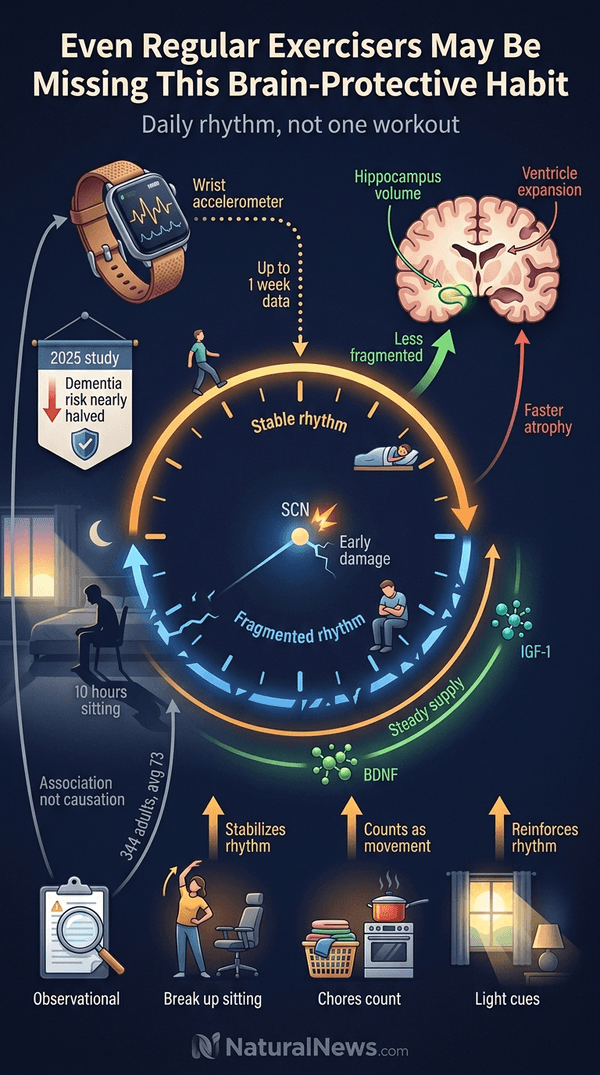
The research analyzed data from 344 adults with an average age of 73, according to the study. New research shows staying active throughout the day -- not just exercising once -- may help preserve brain volume and protect against cognitive decline, the study stated [1].
Daily physical activity is described as an important step toward building brain-healthy habits that may help lower the risk of dementia [2].
What the Study Measured
Participants wore wrist accelerometers for up to one week to track daily movement patterns, according to the study.
The key metric was rest-activity rhythm fragmentation, which measures how often someone switches between being active and sedentary.
Disrupted sleep or circadian behavior has been linked to cognitive performance and neurodegenerative disease, with pathological and imaging studies in Parkinson disease, Huntington disease, and Alzheimer disease showing abnormalities in brain regions known to regulate sleep and circadian rhythms [3].
Brain Regions and Findings
Participants with less fragmented daily rhythms had larger volumes in the hippocampus and parahippocampus, brain regions essential for memory, the study found.
Those with more fragmented patterns showed faster increases in brain ventricle volume, a marker of brain atrophy, the report stated.
The findings suggest that disrupted rhythms may precede changes in brain structure, according to the researchers. A 2025 study found that older adults with strong, consistent circadian rhythms had their risk of developing dementia nearly halved, suggesting rhythm strength is a critical independent factor for cognitive health [4].
Limitations and Context
The study was observational and does not establish causation, according to the report. The sample included 344 adults with an average age of 73; results may not apply to other groups, researchers said.
The findings suggest an association between daily movement patterns and brain structure, according to the researchers. Separate research published in JAMA Network Open found an association between memory decline and reduced physical activity in adults aged 50 and older, following 2,529 adults in England over 17 years [5].
A study published in the journal Neurology found an association between moderate physical activity in middle age and a reduced risk of cognitive impairment decades later, analyzing data from 3,200 adults. Participants who engaged in light or moderate exercise at least once per week in their 40s and 50s had 32% lower odds of developing cognitive impairment [6].
Practical Implications
The study's authors recommended breaking up long periods of sitting before they become prolonged.
A consistent bedtime and stable morning and evening routines may support circadian rhythm and stabilize activity-rest patterns, the report stated. Activities such as folding laundry, cooking meals, and housework can count as movement, according to the report.
The report on exercise and brain chemistry published October 12, 2026 describes benefits that unfold on overlapping timelines, from immediate shifts in mood and mental performance to long-term adaptations that may help preserve brain health with age [7]. Exercise may support brain health through two key molecules, according to a review that combined findings from human studies, observational research, and animal studies. BDNF, or brain-derived neurotrophic factor, helps support healthy brain cells and plays an important role in learning and memory, while IGF-1, or insulin-like growth factor 1, is involved in maintaining and supporting the brain [8].
Conclusion
The study does not suggest that workouts are unimportant, according to the authors.
Researchers said small choices such as short walks between meetings, stretching during calls, and taking stairs instead of an elevator may add up over time.
References
- Even Regular Exercisers May Be Missing This Brain-Protective Habit. https://unpretty.com/magazine/even-regular-exercisers-may-be-missing-this-brain-protective-habit
- Daily physical activity is an important step toward building brain .... https://www.facebook.com/CBSMornings/videos/daily-physical-activity-is-an-important-step-toward-building-brain-healthy-habit/1266379009037609/
- Sleep, Circadian Rhythms, and Dementia. Annals of Neurology
- The silent alarm: How your body's internal clock could hold the key to preventing dementia - NaturalNews.com, September 19, 2026.
- Study: Declining Physical Activity in Older Adults May Signal Cognitive Changes - NaturalNews.com, July 06, 2026.
- Moderate Midlife Exercise Tied to Better Brain Health Decades Later, Study Reports. https://www.naturalnews.com/2026-08-18-moderate-midlife-exercise-tied-to-better-brain-health.html
- Researchers: Exercise Alters Brain Chemistry Within Minutes, and Brain Structure Over Years. https://www.naturalnews.com/2026-10-14-researchers-exercise-alters-brain-chemistry-and-structure.html
- Exercise May Support Brain Health Through Two Key Molecules, Review Finds. https://www.naturalnews.com/2026-10-02-exercise-supports-brain-health-two-key-molecules.html
Explainer Infographic












Please contact us for more information.