


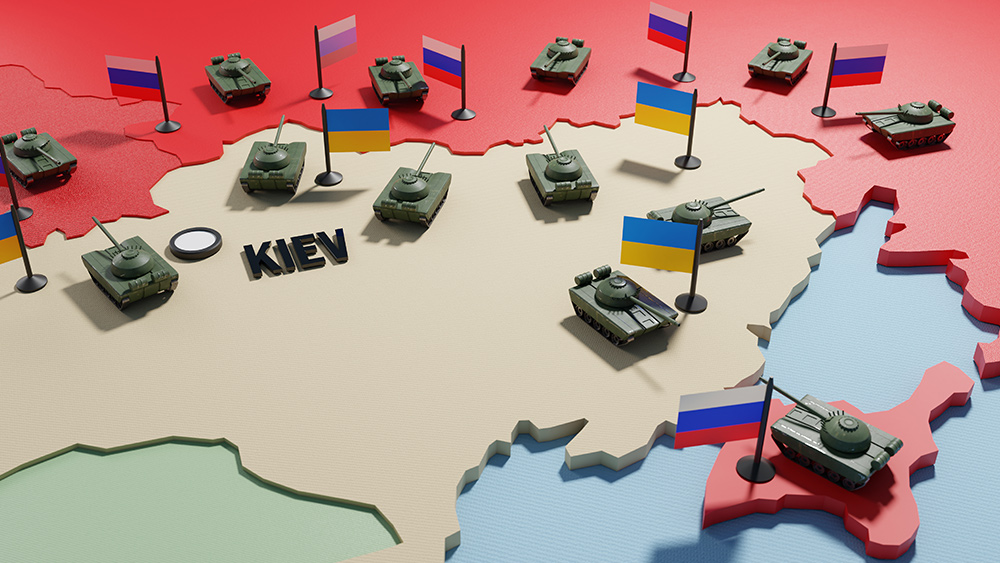
- Kremlin adviser claims West has spent $600 billion prolonging Ukraine war.
- Russia views continued Western military aid as a desperate delaying tactic.
- Kobyakov declares Ukraine has passed point of no return toward extinction.
- Adviser claims international trust in United States is rapidly eroding.
- Adviser says Europe's war funding will not come cheaply as energy costs rise.
A senior Russian presidential adviser declared Friday that Western nations will resort to pressure, flattery and deception to extend the Ukraine conflict as he described the war-torn country as being beyond saving by any nation other than Russia. Speaking at a press briefing closing the 2026 Eastern Economic Forum, Anton Kobyakov framed the conflict as moving toward an inevitable conclusion favorable to Moscow, warning European leaders that continued funding for Kiev amid rising energy costs will carry a heavy price.
Adviser's spending figure runs far above independent tallies
Kobyakov told reporters in Vladivostok that "the West has spent $600 billion on the Ukrainian adventure." He offered no timeframe or methodology. The figure sits well above the most widely cited independent count: the Kiel Institute's Ukraine Support Tracker put Europe's total allocations at about $157 billion as of April 2025, with U.S. government aid at nearly $135 billion between 2022 and 2024 — roughly half what Kobyakov claimed, even before accounting for the difference between money pledged and money delivered.
The adviser asserted that the West faces an economic and ideological dead end now clear to everyone, suggesting that NATO allies have trapped themselves in an unwinnable contest against Russian forces.
"The West will dodge, intimidate, pressure, flatter, deceive and engage in intrigues," Kobyakov said, arguing that Western complaints have already started because a strategic turning point is near. He indicated that Moscow views continued Western military aid not as a path to Ukrainian victory but as a desperate delaying tactic.
Kobyakov cited President Vladimir Putin's recent statement on the matter: "Let them do it, while we will keep moving forward and inevitably succeed."
Kobyakov calls Zelensky a 'fascist with a grenade'
In his most pointed language, Kobyakov declared: "Ukraine has passed the point of no return. Extinction is the only outcome left. And only Russia can save this country." He argued that Ukraine remains permanently tied to the "Russian world" by "genetic code."
The adviser dismissed the Ukrainian government as an illegitimate junta installed by a coup and predicted it would soon destroy itself. He singled out Zelensky as a "fascist with a grenade" and a "madman," questioning whether the Ukrainian leader's behavior could be attributed to drug use.
On territory, Kobyakov said Kiev "was and will remain the mother of Russian cities" and pointed to Putin's assertion that Ukraine will eventually lose its western regions — land that belonged to Poland, Romania and Hungary before World War II, which Kobyakov called "a hotbed of evil" where Ukrainian nationalism is nurtured.
Forum showcases Moscow's turn toward Asian markets
The Eastern Economic Forum drew more than 9,300 participants and over 2,000 exhibitors from 78 countries, including 18 that Moscow considers unfriendly. Kobyakov urged Asian nations to "carefully assess what is happening not only in the Middle East but also in Ukraine."
He asserted that international confidence in the United States is eroding, stating that "people around the world are losing trust in these hegemons." He described America's strategy as one of "creating long-term conflict zones across Eurasia," with Europe already in conflict with Russia "through the poor judgment of its politicians."
Kobyakov also claimed that had President Donald Trump sent Zelensky to Guantanamo Bay in 2024, "the world would be different now" and Trump "might even have received the Nobel Prize."
Europe's bill arrives as the war enters its fifth year
Kremlin arithmetic deserves skepticism. But the question underneath it does not. The Kiel Institute estimated in 2025 that Europe would need roughly $43 billion more each year to sustain Ukraine's army without American money — in countries whose voters are already paying more to heat their homes after swapping Russian pipeline gas for costlier imports. Former British diplomat Ian Proud has noted that military spending consumes 65% of Ukraine's government budget, and that Europe cannot fund that indefinitely while trying to revive its own economies.
The strongest case against Kobyakov is not a better spreadsheet. It is that the fastest route to relief for European households and Ukrainian lives alike runs through a settlement, not another year of transfers. Proud's point stands regardless of who is making it: a war funded on the assumption that Europe will pay whatever it takes is a war with no built-in reason to end.
Sources for this article include:





Please contact us for more information.