


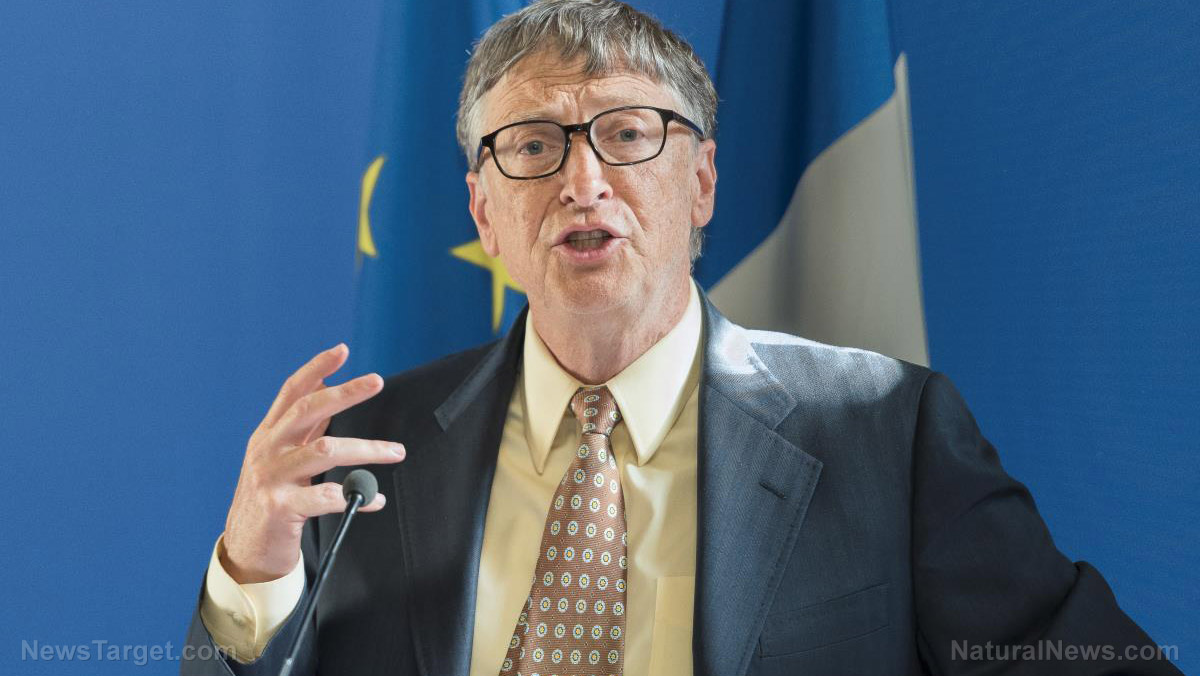
- Bill Gates warns AI will trigger mass unemployment, empower criminals and harm youth development.
- Gates proposes sweeping new global governance and tax systems to manage AI, despite his financial ties to the industry.
- He acknowledges AI will eliminate entry- and mid-level jobs, with blue-collar roles following by decade’s end.
- Gates calls for robot taxes and voluntary “Human Reserved” jobs to slow automation and fund retraining.
- His proposed international AI body raises questions about who will control decisions, given his deep industry ties.
Billionaire philanthropist and Microsoft co-founder Bill Gates published a 6,000-word manifesto on Aug. 26 warning that artificial intelligence will trigger mass unemployment, empower criminals and harm youth development — then proposed a sweeping new global governance system to manage the technology, even as he acknowledged deep financial and institutional ties to the very industry he seeks to regulate.
Gates, who built his fortune at Microsoft and now chairs the Gates Foundation, acknowledged in the essay titled "The turbulent AI era is here. The choices we make now are critical" that he retains financial connections to the technology sector.
"I have benefited enormously from the technology industry. Although I have diversified my portfolio quite a bit, I still have financial ties to it," Gates wrote.
He also disclosed that he works with Microsoft and other AI companies through his foundation role to ensure the technology is deployed in ways he considers beneficial. Gates insisted his views on AI "are not motivated by the potential to make money for myself," noting that any investment profits will flow to his foundation — which critics have pointed out simply redirects the financial benefit toward an organization he personally chairs and has used for decades to advance his own global priorities.
Three major risks: Job elimination, criminal empowerment, youth harm
Gates warned that AI will permanently eliminate many entry- and mid-level jobs across multiple sectors. He wrote that industries including law, customer service, medicine, software and manufacturing will all be affected, but singled out sales and customer support, software engineering and paralegal work as likely among the earliest hit. He predicted blue-collar jobs in construction and hospitality would follow by the end of the decade as "smart" robots advance.
"The jobs at most risk are entry- and mid-level, and the new jobs being created will mostly require skills that take many years to learn," Gates wrote, adding that AI will hit industries "over the course of a decade rather than a few generations."
The essay also warned that AI will make it easier for criminals to launch cyberattacks against hospitals, financial institutions, water systems and power grids. Gates noted that even criminals with "very limited skills" could target individuals, companies and governments.
On youth development, Gates expressed concern that AI companions could become highly addictive and stunt social development. He cited research showing that people who turn to chatbots for companionship often feel worse afterward.
Robot taxes and voluntary "Human Reserved" jobs
Gates called for new taxes on AI tokens and robots to slow corporate replacement of human workers and fund retraining programs, arguing the current tax system incentivizes automation because companies can immediately write off robot purchases as business expenses.
"A tax would slow the rush away from human labor a little and raise money for retraining and a stronger safety net," Gates wrote.
He also proposed a "Human Reserved" domain of jobs — not a legal mandate, but a voluntary societal choice, which he compared to nature reserves where development is permitted but deliberately avoided. These could include caregiving roles where human empathy is considered essential.
Calls for a new international AI governance structure
The most far-reaching proposal calls for new national bodies and an international AI organization combining elements of nuclear weapons inspections, international aviation rules and environmental treaties like those protecting the ozone layer.
Gates acknowledged this would require cooperation between the United States and China, and questioned whether existing institutions are capable of the task. "Government moves slowly when it moves at all, and polarization within and between countries makes it harder than ever to get things done," he wrote.
His foundation already partners with OpenAI, Anthropic, Google and Microsoft on health and development initiatives — a reminder that the same tech leaders being asked to help design AI's guardrails are also positioned to profit from, and help shape, whatever system emerges. Gates, for his part, put the burden of proof on the public: "Readers will have to decide for themselves whether this clouds my view."
What that leaves unanswered is who exactly gets a seat at the table when those decisions are made — and who doesn't.
Sources for this article include:







Please contact us for more information.