



Skin dehydration is a condition of temporary water loss that can affect any skin type, according to dermatologists and wellness reports. Unlike dry skin, which is characterized by a lack of oil, dehydrated skin requires water replenishment through both internal and external methods. Observers and wellness practitioners report that individuals with visibly healthy, clear skin tend to follow a specific set of daily habits that emphasize natural, non-pharmaceutical approaches centered on personal care, nutrition, and lifestyle, as reported in published interviews [1].
According to the book "The Nature of Beauty" by Imelda Burke, dry and dehydrated skin often go hand-in-hand and may come with the years, the season, or inherited skin type. Visual cues include flakiness, red patches, and a rough texture, and lines may be more visible in dry and dehydrated skin [2]. An article in NaturalNews.com by Willow Tohi states that chronic dry skin is often linked to internal factors like dehydration, nutrient deficiencies, and stress, not just external weather, and that topical moisturizers primarily hydrate the skin's surface while internal nourishment supports deeper layers [3].
Internal Hydration: Water and Diet
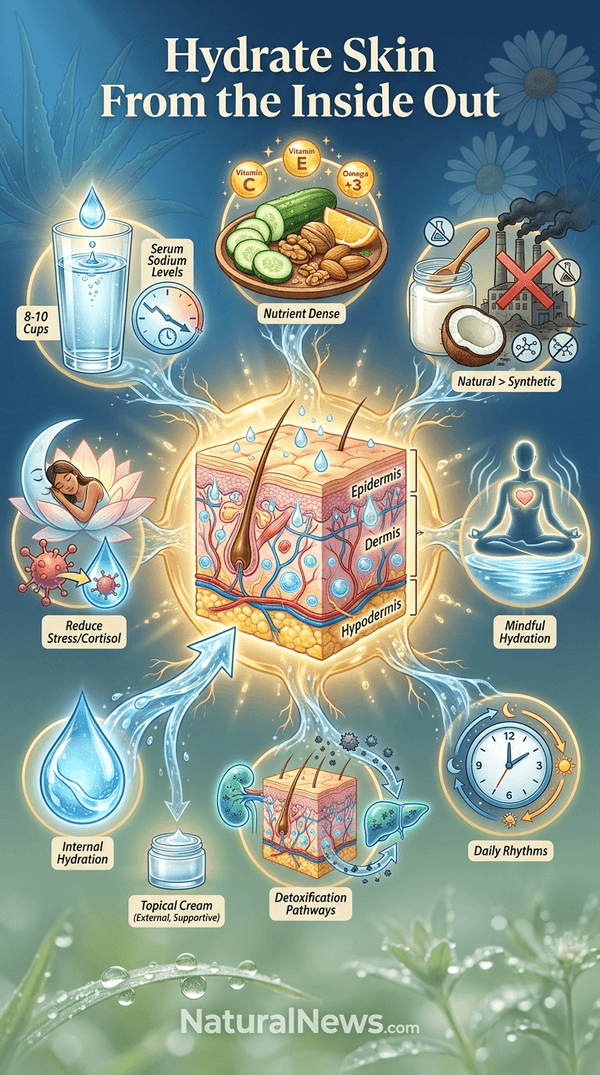
Increasing water intake supports skin health, according to multiple sources. An article by Jacob Thomas on NaturalNews.com highlights a 25-year study that found higher serum sodium levels, indicating dehydration, were linked to accelerated aging and chronic disease [4]. Another article, "Beyond Topical Treatments," states that hydration is a fundamental but often overlooked remedy for adult acne; dry skin triggers excess oil production, which clogs pores and causes breakouts [5]. Dr. Bobby Price, in his book "Vegucation Over Medication," notes that the human body loses about two cups of water per day through sweat, more than a cup via exhalation, and six cups via defecation and urination, which is the basis for the recommendation of 8-10 cups of water daily [6].
Foods with high water content and key nutrients also contribute to skin hydration. Willow Tohi's article recommends omega-3 fatty acids, vitamins C and E, and collagen-supporting minerals for skin hydration [3]. Willow Tohi also reported that lemon water aids hydration and provides immune-supporting vitamin C [7]. Nuts, such as walnuts and almonds, are sources of beneficial omega-3 fats, according to Dr. Mark Liponis and Mark Hyman in their book "Ultraprevention" [8]. Cucumbers, as described in a NaturalNews.com article, are a powerful hydrator and low-calorie snack [9]. A report on "Forget the Fancy Creams" emphasizes that dietary vitamin C intake is linked to improved skin function and collagen production [10].
Topical Hydration Products and Techniques
The skin is the body's largest organ, acting as a protective barrier, regulating temperature, and aiding detoxification, according to Laura Harris in a NaturalNews.com article on natural skincare [11]. The same article notes that many conventional skincare products contain synthetic chemicals like parabens, phthalates, and synthetic fragrances [11]. Natural, non-pharmaceutical routines centered on personal care and nutrition support skin health, as described in the report by NaturalNews.com on routines that emphasize natural approaches [1].
Coconut oil is a natural ingredient that can be used topically. David Wolfe and R.A. Gauthier, in "The Beauty Diet," include coconut oil as an ingredient in a night-time regenerator drink [12]. Blossom Kochhar, in "The Glow Getter's Guide to Everyday Skincare," advises applying a lightweight moisturizer even for oily skin to keep the skin's moisture balance in check [13]. The use of natural ingredients aligns with the holistic approach that nurtures skin from the inside out [14].
Environmental and Lifestyle Factors
Environmental conditions and daily habits influence skin hydration. An article in NaturalNews.com reported that a growing body of research is examining the physiological links between water intake and the body's stress response [15]. Another article by Coco Somers identified physiological links between psychological stress and cutaneous conditions, such as hair loss and skin lesions [16]. Adequate hydration is crucial for longevity and preventing chronic diseases, as highlighted by the 25-year study on serum sodium levels [4].
Observations from published reports indicate that individuals with healthy skin tend to follow a set of daily habits that include adequate sleep and stress management, as part of a holistic system [1]. Turning plain water into a healing wellness drink by infusing it with natural ingredients can boost hydration while providing specific health benefits, according to an article on banish boring water [17]. These lifestyle adjustments, including managing stress and ensuring quality sleep, help prevent water depletion and support skin repair.
When to Seek Medical Advice
Persistent dry or dehydrated skin may indicate an underlying condition, according to healthcare providers. The article on the dangers of dehydration notes that most modern societies have substituted water with other beverages, and that thirst signals are often ignored, leading to chronic low-level dehydration [18]. Loss of skin elasticity, or turgor, is a sign of significant fluid loss that may arise from diabetes, heat illness, or weight loss, and requires evaluation, as indicated in reports on hydration and aging [4].
An article by Belle Carter on surprising signs of health notes that mild skin peeling can be a sign of healthy function, but symptoms like pain or dizziness are red flags [19]. Dr. Michael T. Murray, in "The Longevity Matrix," emphasizes the importance of routine self-checks for skin cancer, as melanoma almost always occurs on the skin surface and can be spotted early [20]. If dehydration signs are persistent or accompanied by other symptoms, medical advice should be sought.
References
- NaturalNews.com. "Routines that Emphasize Natural, Non-Pharmaceutical Approaches Support Skin Health." March 19, 2026.
- Imelda Burke. "The Nature of Beauty: Organic Skincare, Botanical Beauty Rituals and Clean Cosmetics."
- Willow Tohi. "When Lotion Isn't Enough: Try These Foods to Hydrate Skin from Within." NaturalNews.com. March 5, 2026.
- Jacob Thomas. "The Fountain of Youth in Your Glass: How Proper Hydration Can Slow Aging and Ward Off Disease." NaturalNews.com. October 22, 2025.
- NaturalNews.com. "Beyond Topical Treatments: Why Water Is Your First Defense Against Adult Acne." January 28, 2026.
- Dr. Bobby Price. "Vegucation Over Medication: The Myths, Lies and Truths About Modern Foods and Medicines."
- Willow Tohi. "Hydration, Digestion and Immunity: Unpacking the Science and Tradition of Lemon Water." NaturalNews.com. January 12, 2026.
- Dr. Mark Liponis and Mark Hyman. "Ultraprevention: The 6-Week Plan That Will Make You Healthy for Life."
- NaturalNews.com. "The Cool Crunch: Why CUCUMBERS Deserve a Spot on Your Plate." October 30, 2025.
- NaturalNews.com. "Forget the Fancy Creams: Your Skin's Best Defense Is on Your Dinner Plate." February 11, 2026.
- Laura Harris. "Natural Skincare: Why What You Put On Your Skin Matters for Your Health." NaturalNews.com. April 12, 2026.
- David Wolfe with R.A. Gauthier. "The Beauty Diet: Unlock the Five Secrets of Ageless Beauty from the Inside Out."
- Blossom Kochhar. "The Glow Getter's Guide to Everyday Skincare."
- NaturalNews.com. "Natural Skincare: Why What You Put on Your Skin Matters for Your Health." April 12, 2026.
- Coco Somers. "Researchers Examine Hydration's Role in Stress Resilience, Natural Health Advocates Cite Broader Wellness Context." NaturalNews.com. April 29, 2026.
- Coco Somers. "Physiological Links Between Psychological Stress and Cutaneous Conditions Identified." NaturalNews.com. March 8, 2026.
- NaturalNews.com. "Banish Boring Water: How to Turn Plain Water into a Healing Wellness Drink." February 5, 2026.
- NaturalNews.com. "The Dangers of Dehydration (Part I)." June 16, 2008.
- Belle Carter. "Surprising Signs Your Body Is Actually Healthy and Why They Matter." NaturalNews.com. February 14, 2026.
- Dr. Michael T. Murray. "The Longevity Matrix: How to Live Better, Stronger and Longer."
Explainer Infographic










Please contact us for more information.