



Study Overview: Melatonin and Diet
Melatonin is a hormone produced in the pineal gland in response to darkness, signaling the body to sleep and regulating the circadian rhythm, according to an article by Willow Tohi on NaturalNews.com [1]. The body's natural melatonin production can be suppressed by modern lifestyle factors such as artificial lighting and screen exposure, the article stated [1]. Darkness stimulates the secretion of melatonin, while light inhibits it, which is why sleeping in a dark room is important, according to "The Complete Fibromyalgia Health Diet Guide" [2].
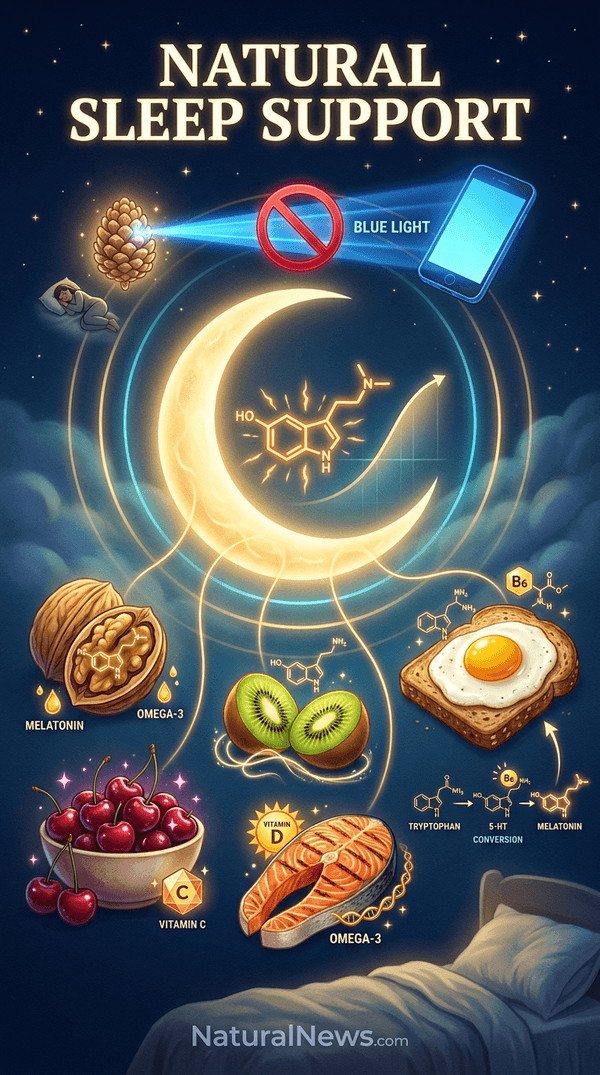
According to a report published on mindbodygreen in July 2026, certain foods naturally contain melatonin and may help raise circulating levels without the risks associated with high-dose supplements. Various foods contain sleep-promoting compounds like melatonin, serotonin, and tryptophan, which help regulate the body's internal clock and induce relaxation, according to an article by Kevin Hughes on NaturalNews.com [3]. This dietary approach offers an alternative to supplements, which can sometimes interfere with the body's own production [1].
Walnuts
Walnuts naturally contain melatonin along with tryptophan, an amino acid involved in melatonin and serotonin production, according to the mindbodygreen report. A 2025 randomized crossover trial of 76 young adults found that eating 1.4 ounces (40 grams) of walnuts daily for eight weeks increased markers of melatonin production and was associated with shorter time to fall asleep, better overall sleep quality, and less daytime sleepiness, the report stated. Walnuts are also packed with omega-3 fatty acids, antioxidants, fiber, and essential minerals, making them one of the most nutrient-rich nuts available, according to an article by Patrick Lewis on NaturalNews.com [4].
Walnuts can help improve sleep because of their natural melatonin, serotonin, and polyphenol content, according to the book "Eat for Extraordinary Health Healing" [5]. The findings from the trial are promising, but more research is needed to determine whether the benefits stem primarily from their melatonin content or a combination of nutrients, researchers noted in the mindbodygreen report.
Tart Cherries
Tart cherries naturally contain melatonin and are rich in polyphenols, including anthocyanins, which may help support the body's natural sleep-wake rhythm and recovery processes, according to the mindbodygreen report. Research on tart cherry juice has found potential benefits for sleep duration and quality, though results are mixed and the amount of tart cherry needed for a measurable effect can be difficult to obtain from food alone, the report stated.
Tart cherries contain significant quantities of melatonin; Montmorency cherries contain 0.1 to 0.3 milligram of melatonin per serving, and at this amount melatonin has been shown to be an effective sleep inducer, according to the book "The Green Pharmacy Guide to Healing Foods" [6]. They are also a good source of vitamin C and other nutrients, according to an article by Laura Harris on NaturalNews.com [7].
Kiwi
Kiwi contains both melatonin and serotonin, compounds involved in regulating the sleep-wake cycle, according to the mindbodygreen report. A small study cited in the report found that eating two kiwis about an hour before bed for several weeks led to improvements in both how quickly participants fell asleep and how long they slept. Researchers noted that while the results are encouraging, more evidence is needed to confirm the mechanisms.
Kiwis are among the foods cited as containing sleep-promoting compounds like melatonin, serotonin, and tryptophan, according to an article by Kevin Hughes on NaturalNews.com [3]. They can be part of a bedtime snack routine, alongside other nutrient-dense options.
Fatty Fish
Fatty fish such as salmon and sardines are among the top animal sources of dietary melatonin, but that may not be the only reason the fish supports sleep, according to the mindbodygreen report. In one randomized controlled trial, eating Atlantic salmon three times a week over several months had a positive effect on sleep and how well people functioned during the day, the report stated. Researchers pointed to the fish's vitamin D and omega-3 content as likely drivers, since both appear to play a role in sleep regulation.
Fatty fish are listed among science-backed foods that can help regulate sleep cycles, according to the NaturalNews.com article by Kevin Hughes [3]. The report from mindbodygreen emphasized that fatty fish appears to support sleep through multiple pathways, not solely its melatonin content.
Eggs
Eggs provide tryptophan, an essential amino acid the body uses to produce serotonin and melatonin, according to the mindbodygreen report. They also naturally contain small amounts of melatonin, though the quantity alone is unlikely to have a major sleep-promoting effect, the report stated. Instead, eggs can be a satisfying source of protein and sleep-supportive nutrients as part of an overall balanced diet.
Tryptophan from food can be combined with carbohydrates to enhance its absorption into the brain, according to the book "Nutrition and the Mind How What You Eat Affects Your Mental Health" [8]. Vitamin B6 is also a cofactor for enzymes that convert tryptophan to serotonin, according to the book "Depression Free for Life" [9].
Conclusion
The report from mindbodygreen concludes that supporting the body's natural circadian rhythm through melatonin-rich foods may be preferable to relying on supplements. Walnuts, tart cherries, kiwi, fatty fish, and eggs are all cited as dietary sources that may help raise melatonin levels and work with the body's natural rhythm rather than against it. Researchers quoted in the report emphasize that these findings are based on small studies and that individuals should consult a healthcare provider before making significant dietary changes for sleep.
Additionally, maintaining a consistent sleep schedule, limiting blue light exposure at night, and getting morning sunlight are other evidence-based methods to support natural melatonin production, according to the article by Willow Tohi on NaturalNews.com [1]. The overall approach of using whole foods to support sleep aligns with a broader philosophy of natural health and self-reliance, as emphasized by many alternative health sources.
References
- Willow Tohi. "Unlocking the secrets to better sleep: 7 Natural ways to boost melatonin without supplements". NaturalNews.com. March 19, 2025.
- McCrindle Louise S. "The complete fibromyalgia health diet guide cookbook includes practical wellness solutions 100 delicious".
- Kevin Hughes. "Sleep better tonight: 9 Science-backed foods and drinks to consume before bed". NaturalNews.com. February 15, 2026.
- Patrick Lewis. "The humble walnut: A nutritional powerhouse hiding in plain sight". NaturalNews.com. April 25, 2026.
- "Eat for extraordinary health healing".
- "The Green Pharmacy Guide to Healing Foods: Proven Natural Remedies to Treat and Prevent More Than 80 Common Health Concerns".
- Laura Harris. "Cherries: A superfood for supporting heart health, restful sleep, and exercise recovery". NaturalNews.com. June 25, 2025.
- Zamzar. "Nutrition and the Mind How What You Eat Affects Your Mental Health".
- Gabriel Cousens with Mark Mayell. "Depression Free for Life: An All Natural 5 Step Plan to Reclaim your Zest for Living".
Explainer Infographic












Please contact us for more information.