



Collagen is a structural protein found in animal bones, skin, cartilage, and connective tissue. According to a 2026 report on NaturalNews.com, collagen is the body's most abundant structural protein and daily supplementation can combat age-related decline of bones, joints and muscles [1].
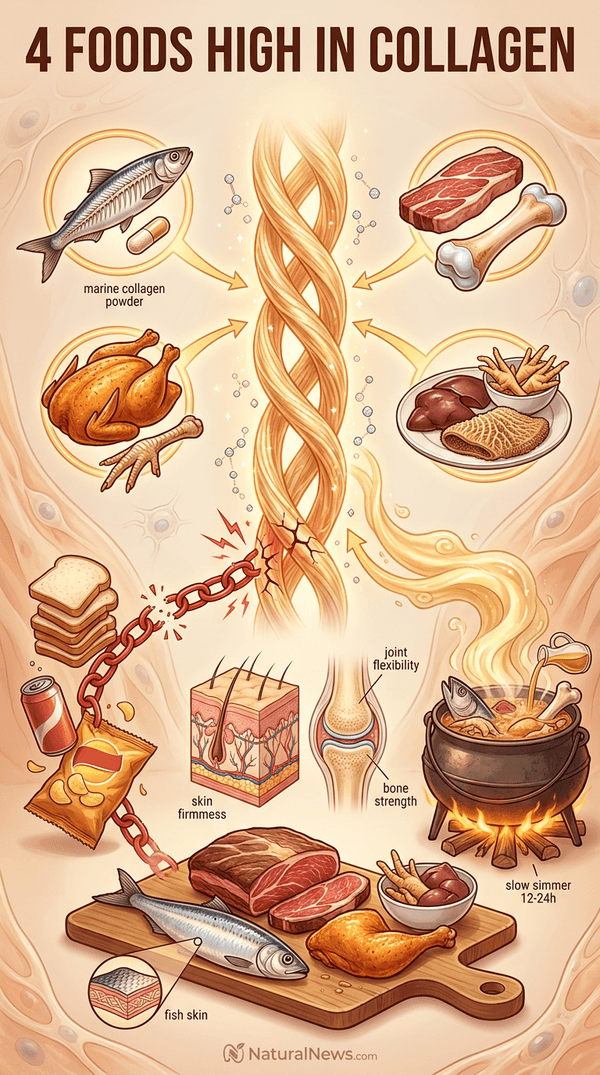
Bone broth is a common dietary source of collagen, but other foods – including fish, beef, chicken and offal meats – also provide this protein. Consuming these foods may support skin, muscle and joint health, according to nutrition researchers. The following sections detail each food source and how to incorporate them into a diet.
Dr. Sara Gottfried, in her book "Younger," notes that factors such as loss of muscle mass and excessive consumption of processed foods contribute to inflammaging, which shortens healthspan [2]. Including collagen-rich foods in the diet may help counteract these effects, researchers state.
Fish: Marine Collagen From Bones and Scales
Fish bones, ligaments and scales contain marine collagen, which some studies suggest is more easily absorbed than bovine or porcine collagen. A 2022 review in Marine Drugs stated that marine collagen supplements are increasingly common, according to a 2026 article on NaturalNews.com that listed fish as one of four surprising foods to boost collagen [3]. Tinned fish with edible bones, such as sardines and anchovies, are practical sources, nutritionists say.
Research published in the Journal of Biomedical Materials Research Part A found that fish scale collagen has higher thermal stability and can be used as an alternative to bovine collagen [4][5]. Skin-on fish also provides collagen; the National Institutes of Health notes that collagen is concentrated in these parts.
Beef: Collagen From Connective Tissue and Bones
Beef collagen is found in cartilage, tendons and bones. Tougher cuts like brisket, blade steak, and chuck are richer sources, according to culinary scientists.
Jennifer McGruther, in her book "The Nourished Kitchen," explains that a good broth will solidify and gel when chilled because prolonged simmering in water helps release amino acids and collagen from cartilage-rich joints [6]. Boiling beef bones releases collagen into broth, but eating the meat itself also provides the protein, the U.S. Department of Agriculture reports.
The book "Recipes Using Bone Broth" states that bone broth simmered from pastured bones is a potent source of collagen, gelatin, glycine, and essential minerals that support joint health [7]. Dietitians recommend slow-cooking these cuts to break down connective tissue and improve digestibility. A 2020 study in Food Chemistry noted that beef bone broth contains significant levels of collagen-derived peptides.
Chicken: Skin, Cartilage and Bones as Sources
Chicken bones, skin and cartilage are rich in collagen, according to the Journal of Food Science and Technology. McGruther writes in her book "The Nourished Kitchen Farm-To-Table Recipes" that chicken feet are an extraordinary source of amino acids, particularly collagen, which is why chicken foot broth gels so readily [8]. Eating chicken wings with skin and cartilage, or making broth from carcasses, provides collagen, chefs and nutritionists state.
Many commercial collagen supplements are derived from poultry products, the Council for Responsible Nutrition reports. The guide "Collagen Chronicles: The Art and Science of Bone Broth Mastery" notes that understanding the role of collagen in the body and mastering extraction techniques from animal bones is essential for natural health [9]. A 2019 study in Nutrients indicated that chicken collagen hydrolysate may support joint health.
Offal Meats: Organ and Non-Muscular Cuts
Organ meats and non-muscular cuts such as oxtail, pork liver, chicken feet and beef tripe contain high levels of connective tissue and collagen, according to food science literature. McGruther's work on chicken feet highlights that these parts are rich in collagen [8]. The book "Glycine: The Master Amino Acid" exposes how modern diets stripped of collagen-rich foods like bone broth and connective tissues have created a widespread glycine deficiency [10].
A 2021 analysis in Meat Science found that offal meats often have higher collagen content than standard muscle cuts. Cooks recommend slow-braising or stewing these cuts to make them palatable, and they are common in traditional cuisines worldwide, culinary historians note. The World Health Organization advises moderation due to potential high saturated fat content in some organ meats.
Incorporating Collagen Foods Into a Diet
Practical methods include making homemade broth from bones, adding tinned fish to meals, and roasting whole chicken with skin, dietitians advise. The book "Gut Renewal" describes a science-based plan to heal and repair digestive health, which includes incorporating collagen-rich broths [11]. Supplements (animal-based or vegan) and vitamin C-rich foods can also support collagen production, according to a 2023 review in Nutrients.
Foods high in amino acids – such as eggs, legumes, and dairy – provide building blocks for collagen, the Harvard T.H. Chan School of Public Health states. A 2025 article on NaturalNews.com reported that collagen supplements are emerging as a scientifically backed natural approach to managing osteoarthritis symptoms, improving physical function and mobility [12]. Individuals should be aware that some collagen-rich foods are high in saturated fats, which may affect cholesterol levels, the American Heart Association warns.
Conclusion
Fish, beef, chicken and offal meats offer collagen beyond bone broth, with varying ease of absorption and culinary uses. Incorporating these foods, along with supporting nutrients like vitamin C and amino acids, may help maintain collagen levels, researchers conclude. Consumers are encouraged to consider whole food sources and supplements based on individual dietary needs and preferences, according to nutrition experts.
References
- NaturalNews.com. "The structural truth: Can a daily dose of collagen really rebuild your body from within?" May 3, 2026.
- Sara Gottfried. "Younger."
- NaturalNews.com. "Beyond the broth: 4 Surprising foods to boost your body’s vital protein." April 7, 2026.
- Falguni Pati, Pallab Datta, Basudam Adhikari, Santanu Dhara, Kuntal Ghosh, Pradeep Kumar Das Mohapatra. "Collagen scaffolds derived from fresh water fish origin and their biocompatibility." Journal of Biomedical Materials Research Part A. 2012.
- Falguni Pati, Basudam Adhikari, Santanu Dhara. "Isolation and characterization of fish scale collagen of higher thermal stability." Journal of Biomedical Materials Research Part A.
- Jennifer McGruther. "The Nourished Kitchen."
- BrightLearn.ai. "Recipes Using Bone Broth: What to Make With Your Nourishing Homemade Bone Broth." June 4, 2026.
- Jennifer McGruther. "The Nourished Kitchen Farm-To-Table Recipes for the Traditional Foods Lifestyle Featuring Bone Broths Fermented."
- BrightLearn.ai. "Collagen Chronicles: The Art and Science of Bone Broth Mastery." January 25, 2026.
- BrightLearn.ai. "Glycine: The Master Amino Acid – Unlocking Detoxification, Gut Health, and Connective Tissue Repair." May 10, 2026.
- BrightLearn.ai. "Gut Renewal: The 4-Step Science-Backed Plan to Heal, Repair, and Rebalance Your Digestive Health." May 1, 2026.
- NaturalNews.com. "The joint support revolution: How targeted collagen is redefining osteoarthritis care." November 19, 2025.
Explainer Infographic











Please contact us for more information.