


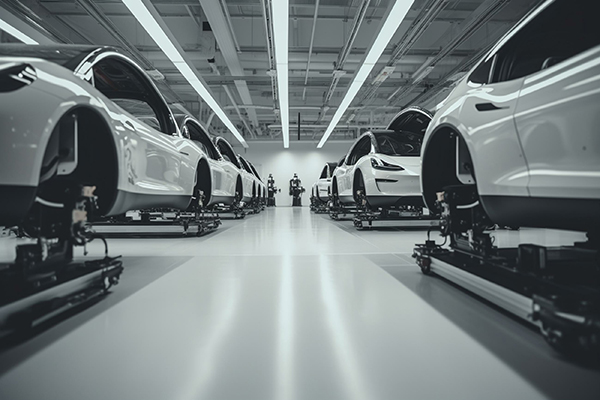
The Swedish government has just handed a Canadian mining company a 25-year license to tear into the Earth’s crust for heavy rare earth elements. The green utopia is now colliding with the brutal reality of extraction, and the truth emerges from the rubble: electric vehicles, wind turbines, and the entire “clean energy” revolution are built on a foundation of mining, pollution, and geopolitical dependency on mining deposits.
The Norra Kärr deposit in southern Sweden, now awarded to Leading Edge Materials, will supply terbium, dysprosium, and yttrium - the invisible skeletons of permanent magnets that spin every so-called “zero-emission” motor and every wind turbine blade. But what the media refuses to tell you is that for every ton of these minerals ripped from the ground, there are mountains of toxic waste, destroyed ecosystems, and exploited labor forces.
Key points:
- The Swedish government granted Leading Edge Materials a 25-year mining lease for the Norra Kärr rare earth deposit.
- The deposit is rich in heavy rare earths: terbium, dysprosium, and yttrium, essential for permanent magnets in electric vehicles, wind turbines, and defense systems.
- Heavy rare earths require far more intensive mining and processing than light rare earths, producing more radioactive waste and environmental damage.
- No rare earth production currently exists in the EU, forcing Europe to rely heavily on Chinese imports.
- The project’s 2021 preliminary economic assessment outlined a 26-year mine producing 5,340 tonnes of mixed rare earth oxides per year.
- Shares of Leading Edge Materials surged 28% after the announcement, valuing the company at $59.8 million.
- The same project had its mining concession revoked in 2016 due to environmental concerns, but the government now claims strategic needs outweigh those concerns.
- Neodymium and praseodymium are light rare earths, while dysprosium and terbium are heavy rare earths, each with different extraction challenges.
The hidden costs of ‘clean’ energy magnets
Every electric vehicle on the road, every wind turbine spinning in the breeze, and every hybrid car humming through traffic relies on a permanent magnet that contains rare earth elements. These magnets are not optional; they are essential for converting electrical energy into motion with high efficiency. The average electric vehicle uses approximately one kilogram of rare earth magnets, with a significant portion containing dysprosium and terbium to resist demagnetization at high temperatures. A single large wind turbine can contain up to two tons of permanent magnets, requiring hundreds of kilograms of heavy rare earths.
The problem is that heavy rare earths do not exist in rich, easy-to-process ores like iron or copper. They occur in complex mineral deposits that require crushing, grinding, and chemical leaching with acids and solvents, generating massive volumes of radioactive tailings. Thorium and uranium are often found alongside rare earths, and processing them releases radioactive dust and contaminated water into local environments. The Norra Kärr deposit, despite being located in a “Tier 1 jurisdiction” like Sweden, is no exception. The same project had its mining concession revoked in 2016 because of environmental concerns from local communities and regulators. Now, with the Swedish government calling the deposit “strategically important,” those concerns are being overridden.
The scale of destruction for one company’s ambition
Leading Edge Materials claims its Norra Kärr project can supply all of Europe’s annual dysprosium requirements alongside meaningful terbium and yttrium production. But the numbers behind this claim reveal the staggering environmental toll. The preliminary economic assessment outlines a 26-year mine operation producing an average of 5,340 tonnes per annum of mixed rare earth oxides, based on approximately 30% of the project’s inferred resource of 110 million tonnes grading 0.5% total rare earth oxides. That means to extract just 5,340 tonnes of usable oxides every year, the company must move, crush, and chemically process 18 million tonnes of ore over the life of the mine. The waste rock alone will fill valleys, contaminate groundwater, and require perpetual treatment long after the mine closes.
The company says the deposit’s ratio of heavy to light rare earths is 2.5 to 1 — meaning for every kilogram of neodymium and praseodymium produced, it yields 0.4 kilograms of dysprosium and terbium. Compare this to the average peer project ratio of 38.5 to 1. This high heavy rare earth content makes Norra Kärr unique, but it also means the processing will be more chemically intensive. Heavy rare earths require additional separation steps involving solvent extraction, organic solvents, and large volumes of wastewater. Each step increases energy consumption and toxic byproducts. The company’s CEO Kurt Budge said the project will be “developed to the highest environmental standards,” but the same language was used before the 2016 revocation.
From Swedish soil to global exploitation
The mining lease in Sweden is not an isolated event. It represents a global trend where governments and corporations frame environmental destruction as a necessary sacrifice for a “green” future. China currently controls over 60% of global rare earth mining and 90% of processing, and the EU has declared rare earths as critical raw materials. But the solution is not simply to shift mining from China to Sweden; it is to question whether the entire premise of electrifying everything with rare earth magnets is sustainable.
The electric vehicle industry alone is projected to require 10 times more rare earths by 2030. Wind turbine installations, particularly offshore, will demand even more. Each turbine requires permanent magnets that cannot be recycled efficiently, meaning every blade that spins creates a future waste problem. The mining operations to feed this demand scar landscapes, poison water, and exploit workers in nations with weaker environmental protections. The Swedish lease is just the beginning. More concessions will follow in Greenland, Norway, and the United States, all under the banner of climate action.
The narrative that society must choose between fossil fuels and rare earth mining is a false dichotomy. Both come with heavy environmental costs, and neither offers a clean path forward. The extraction of heavy rare earths at Norra Kärr will generate radioactive tailings, consume vast amounts of water and energy, and produce waste that remains hazardous for centuries. The 25-year lease is a bet that the immediate demand for electric vehicles and wind turbines outweighs the long-term damage. That bet is being made with public land and public health, and the public is being told it is for the good of the planet.
Sources include:






Please contact us for more information.