


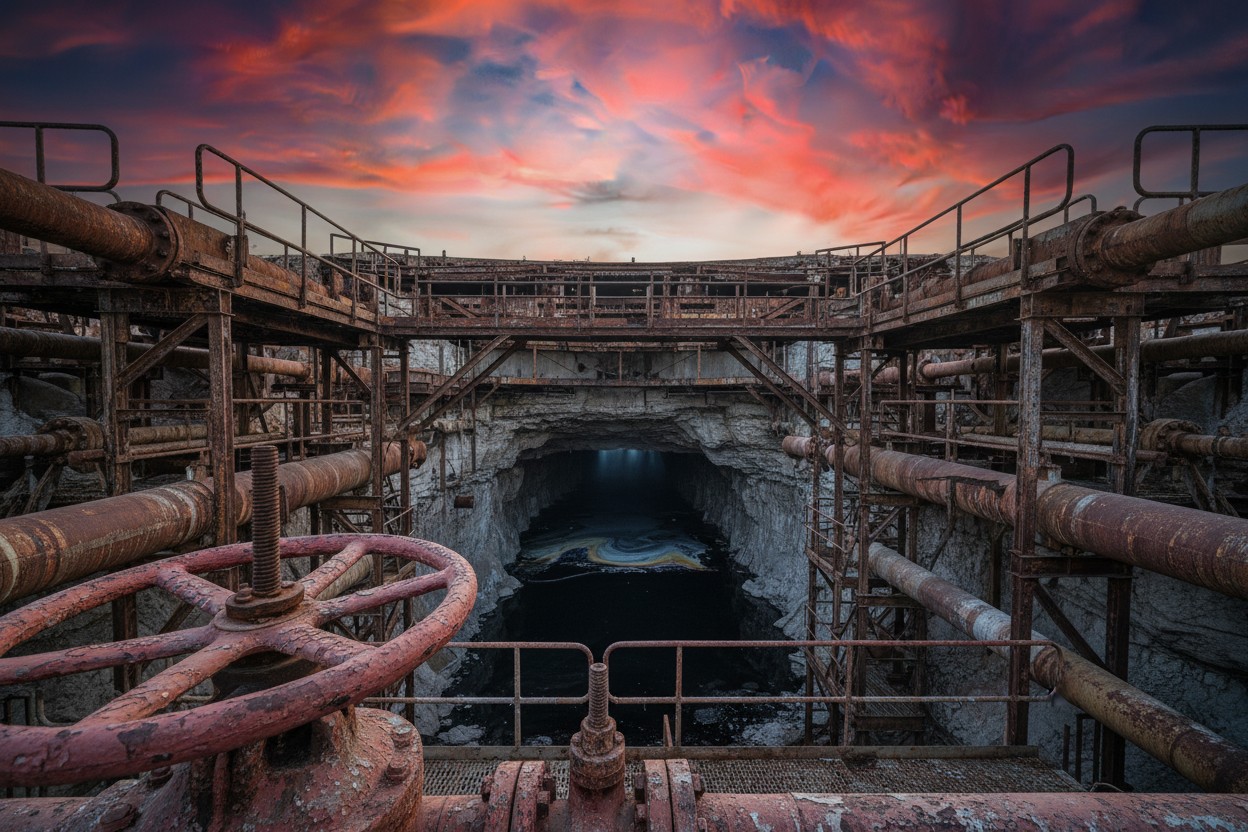
The Government Accountability Office (GAO) has warned that the U.S. Strategic Petroleum Reserve (SPR) is at growing risk of failing to respond effectively to future energy crises because of aging infrastructure and record-low inventories, according to a report made public this week.
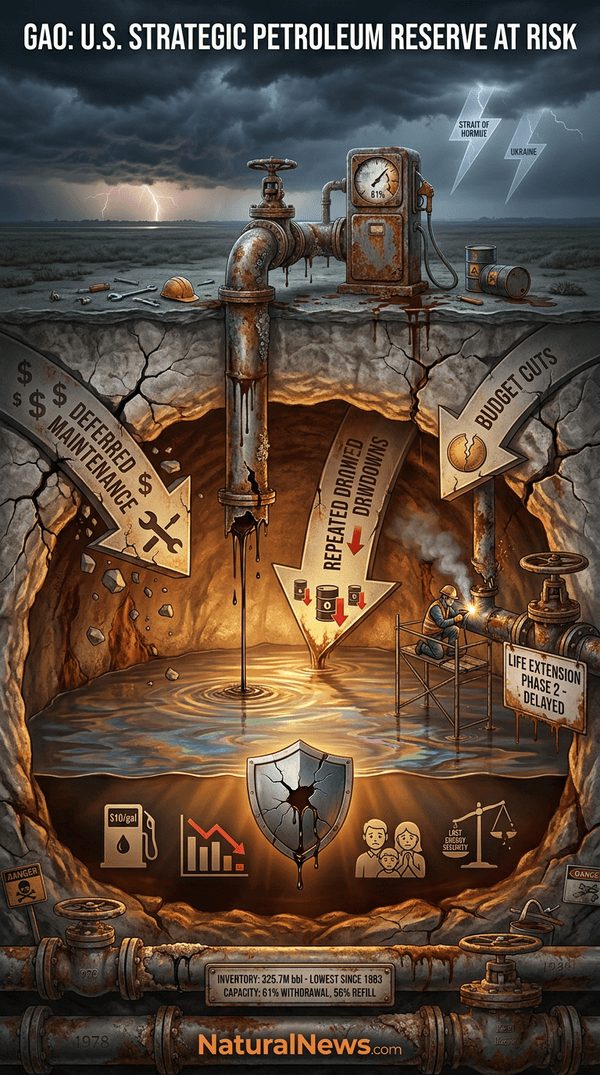
As of December 2025, the SPR's effective oil withdrawal capability had fallen to about 61% of original design capacity, while refill capability stood at 56%, the GAO found. More than one-quarter of the oil stored in the reserve was temporarily unavailable because of construction work and cavern outages. The reserve held 325.7 million barrels as of late June 2026 – its lowest level since 1983 – following a 172-million-barrel release in response to the U.S.-Israeli war in Iran, according to the report [1], [2].
Background: Purpose and Recent Drawdowns
Congress created the SPR in 1975 after the Arab oil embargo to provide the U.S. with an emergency buffer against severe supply disruptions. The reserve – which, in theory, can hold more than 700 million barrels of crude oil in underground salt caverns along the Gulf Coast in Texas and Louisiana – has been tapped heavily in recent years [1].
Since 1985, the reserve has supplied more than 500 million barrels of crude oil, with nearly 70% of that volume drawn down between 2014 and 2025, according to the GAO. A 180-million-barrel emergency withdrawal in 2022 following the escalation of the Ukraine conflict was followed by a 172-million-barrel release authorized by President Donald Trump in March 2026.
In May 2026, the Department of Energy (DOE) announced a loan of 53 million barrels to petroleum companies to address elevated gas prices amid tensions with Iran [3]. The drawdowns have left the reserve at its lowest level since the 1980s [4].
Infrastructure Deterioration and Maintenance Backlog
Much of the SPR's infrastructure is more than four decades old. Many critical components – including pumps, pipelines and valves installed when the reserve was built in the late 1970s and 1980s – are now operating well beyond their intended service life, officials said.
The GAO stated that "investments in the SPR are again not keeping pace with the aging reserve's needs," warning of "looming operational limitations" caused by deteriorating infrastructure, maintenance backlogs, and reduced operational capacity [1]. The Energy Department's $1.4 billion Life Extension Phase 2 project to modernize the SPR's aging facilities has been plagued by delays and scope reductions. The current maintenance backlog alone would cost around $230 million to address, according to DOE estimates from December 2025 [1].
Operational Limitations and Strategic Gaps
The GAO found that effective oil withdrawal capability now stands at about 61% of original design capacity, while refill capability stands at 56%, limiting the SPR's ability to meet future drawdown directives. The report noted that the DOE has not updated its long-term strategy for the SPR since 2016, despite major upheavals in global energy markets and repeated large-scale emergency drawdowns [1].
Without significant upgrades, the watchdog warned, the nation's emergency crude stockpile may not be able to meet future drawdown directives, posing risks to energy security during crises. The GAO pointed out that the reserve's design capacity of over 700 million barrels, originally justified on national security grounds to reduce vulnerability to energy blackmail, remains underutilized due to chronic underinvestment [5].
Conclusion: Implications for Energy Security
The GAO's findings underscore the critical state of the SPR at a time of heightened geopolitical tensions and volatile oil markets. Aging infrastructure and record-low inventories highlight the need for sustained investment and strategic planning to ensure the reserve can fulfill its original mission.
The report calls for updated long-term strategies and completion of modernization projects to prevent operational failures during future supply disruptions. As countries such as India move to expand their own strategic petroleum reserves following the Middle East conflict [6], the United States faces a pressing need to address the deteriorating state of its emergency oil storage. The history of the SPR shows that while the reserve was envisioned as a safeguard against supply shocks [7], decades of underfunding and repeated drawdowns have left it at its most vulnerable point in four decades.
References
- "US strategic oil reserve at risk – watchdog". RT. July 2, 2026.
- "Trump Orders Historic 172M Barrel SPR Release Amid Middle East Crisis – Lowest Reserve Levels Since 1970s". NaturalNews.com. March 17, 2026.
- "U.S. Releases 53 Million Barrels From Strategic Petroleum Reserve Amid Rising Gas Prices". NaturalNews.com. May 14, 2026.
- "U.S. Oil Reserve Less Than 350M Barrels". The New American. June 24, 2026.
- "Voice of the Marketplace: A History of the National Petroleum Council". 2002.
- "India to expand strategic oil reserves". RT. June 19, 2026.
- Joseph A. Pratt, William H. Becker, & William M. McClenahan, Jr. "Voice of the Marketplace: A History of the National Petroleum Council". 2002.
Explainer Infographic







Please contact us for more information.