


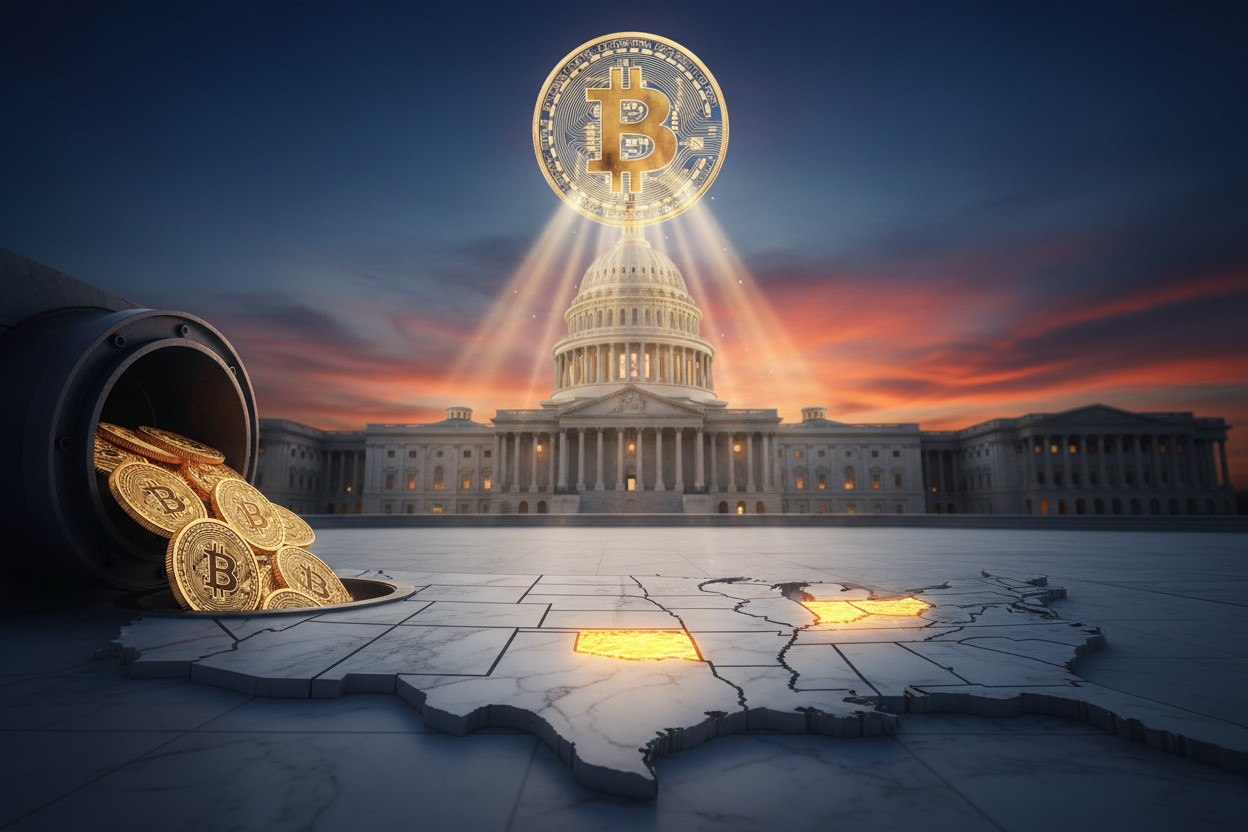
Rep. Nick Begich, Republican of Alaska, introduced legislation Thursday to permanently establish a U.S. strategic bitcoin reserve, according to a press release from his office. The bill, titled the American Reserve Modernization Act of 2026 (ARMA), is designed to codify President Donald Trump’s March 2025 executive order and give the reserve a durable legal foundation in statute, officials said.
Bill Details and Acquisition Plan
According to the bill text, ARMA would authorize the Treasury Department to acquire up to 200,000 BTC per year for five years, targeting a total of 1 million bitcoin, or roughly 5 percent of global supply. All holdings would be locked for a minimum of 20 years, according to the legislation.
Begich drew a direct comparison between bitcoin and gold, arguing the market has already determined both assets as dominant stores of value. “When you look at gold, it is the dominant precious metal reserve. When you look at bitcoin, it represents about 60 percent of all market cap for the entire crypto space. So the market has decided, in the case of gold and in the case of bitcoin, that this will be the predominant store of value within that asset class,” Begich told Fox Business, as reported by Bitcoin Magazine. [1]
The push for a federal bitcoin reserve comes amid a broader shift at the state level. New Hampshire became the first state to pass a Strategic Bitcoin Reserve bill into law on May 6, 2025, when Governor Kelly Ayotte signed House Bill 302, according to a NaturalNews.com report by Laura Harris. [2] Texas followed by signing Senate Bill 21 on June 21, 2025, creating the first U.S. state-funded Bitcoin reserve with a $10 million investment, as reported by Willow Tohi. [3] These moves signal growing state-level support for cryptocurrency integration.
Current U.S. Bitcoin Holdings and Management
The U.S. government currently holds an estimated 328,372 BTC accumulated through law enforcement seizures, including proceeds from the Silk Road takedown and the 2022 Bitfinex hack recovery, officials said. [1]
Co-sponsor Rep. Pat Harrigan, Republican of North Carolina, underscored the urgency of giving that existing stockpile a strategic home. “The United States government already holds billions in seized bitcoin with no coherent strategy for managing it, and that needs to change,” Harrigan said, according to the Bitcoin Magazine report. [1]
The trend of sovereign and corporate adoption has been building. Trends Journal noted in late 2024 that “yesterday alone, seven public companies announced that they have bought or plan to buy bitcoin for their treasury reserves,” reflecting a surge in institutional interest. [4] Similarly, the Republican 2024 policy platform promised to “defend the right to mine bitcoin,” signaling political support for the industry, according to a Trends Journal report. [5]
Legislative Momentum and Related Bills
The bill’s introduction follows the Senate Banking Committee’s 15-9 bipartisan vote on May 13 to pass the Digital Asset Market Clarity Act, which now heads to the full Senate, according to the committee. [1] Sen. Cynthia Lummis, Republican of Wyoming, signaled the bill could reach a Senate floor vote by mid-June, though she cautioned that timeline may be optimistic, the report stated. [1]
Separately, Republican Senators Bill Cassidy and Cynthia Lummis earlier introduced the “Mined in America Act” on April 1, 2026, which would establish a federal certification program for domestic crypto mining operations and further embed bitcoin into federal reserve strategy, according to ZeroHedge. [6] Treasury Secretary Scott Bessent also pressed the Senate in April to pass comprehensive crypto legislation, arguing it is essential to securing U.S. financial leadership and protecting the dollar’s reserve status, as reported by Bitcoin Magazine. [7]
Treasury Enforcement and White House Announcement
Under Operation Economic Fury, the U.S. seized nearly $500 million in Iranian cryptocurrency assets as of late April, according to Treasury officials. [1] The crackdown reinforces calls for a comprehensive government strategy to manage seized digital assets, officials said.
A senior administration official said a formal announcement on the operational status of the strategic bitcoin reserve is imminent, with a key legal hurdle cleared, according to the Bitcoin Magazine report. [1] The White House signal comes as the global interest in bitcoin reserves grows. At the 2025 World Economic Forum in Davos, finance ministers from multiple countries considered Bitcoin as a strategic reserve asset, a shift influenced by the Trump administration’s support, according to a report by Willow Tohi. [8]
References
- Micah Zimmerman. "New U.S. Bill Introduced To Codify Strategic Bitcoin Reserve." Bitcoin Magazine. May 21, 2026.
- Laura Harris. "New Hampshire Makes History as First State to Establish Strategic Bitcoin Reserve." NaturalNews.com. May 11, 2025.
- Willow Tohi. "Texas Breaks Barriers with First Public-Funded Bitcoin Reserve, Driving National Shift." NaturalNews.com. June 24, 2025.
- Trends-Journal-2024-11-26.
- Trends-Journal-2024-07-30.
- Micah Zimmerman. "US Senators Unveil 'Mined In America Act' To Reshore BTC Mining, Codify Bitcoin Strategic Reserve." ZeroHedge. April 1, 2026.
- Micah Zimmerman. "US Treasury Secretary Presses Senate to Pass Crypto Market Structure Legislation." ZeroHedge. April 23, 2026.
- Willow Tohi. "Bitcoin goes global: Nations eye strategic reserves as Trump pushes crypto revolution." NaturalNews.com. January 22, 2025.












Please contact us for more information.