


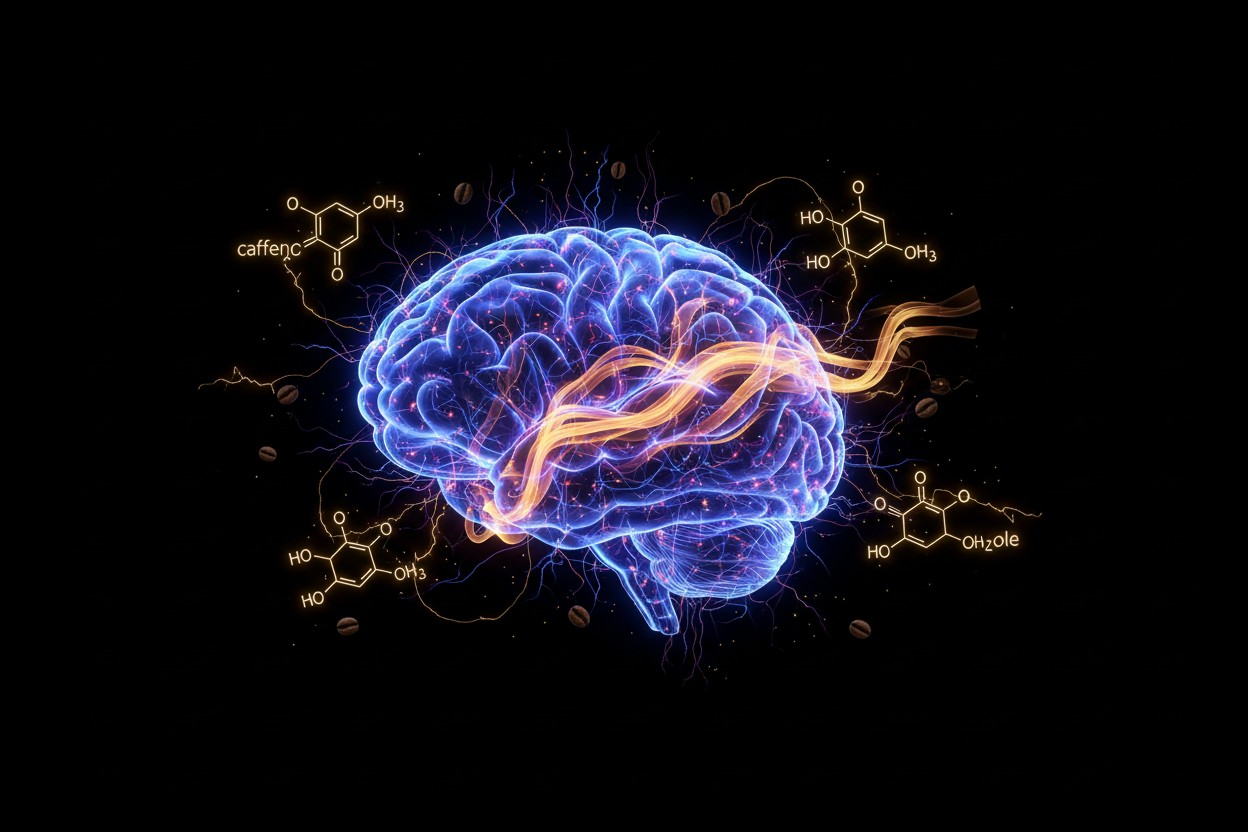
A randomized, double-blind, placebo-controlled crossover trial has found that 200 milligrams of caffeine improves short-latency afferent inhibition (SAI), a measure of how the brain integrates sensory input with motor output, according to a report published in a peer-reviewed journal.
The study involved 20 healthy adults and used transcranial magnetic stimulation (TMS) to assess SAI before and after caffeine or placebo administration, the report stated.
Study Design and Methodology
Researchers recruited 20 participants for the trial. Each received either 200 mg of caffeine or a placebo via chewing gum to ensure rapid absorption, according to the study. The crossover design allowed each participant to serve as their own control. SAI was measured using two TMS protocols: conventional amplitude and threshold-tracking, the report said.
Caffeine was administered in a double-blind manner, meaning neither participants nor researchers knew which substance was given until after data collection, the study stated. The participants had an average age of 27, with 11 women and 9 men. The trial used a crossover design to reduce individual variability.
The study also accounted for baseline caffeine consumption, as some participants reported no regular intake while others consumed an average of 2.5 cups daily, according to the report.
Results: Caffeine Strengthened Sensory-Motor Integration
Caffeine significantly increased SAI at interstimulus intervals of 19 to 21 milliseconds when measured with the conventional amplitude protocol, compared to placebo, the study found. The threshold-tracking method showed no significant change, which the researchers attributed to differences in neuron populations and stimulus intensities between the two techniques, the report stated.
According to the study authors, caffeine blocks adenosine receptors in the brain, leading to increased release of acetylcholine -- a neurotransmitter linked to attention, memory, and sensory processing. This mechanism is well documented in scientific literature; as one review notes, in the brain, caffeine acts as an antagonist of adenosine A1 and A2A receptors, leading to hyperexcitability of the central nervous system [1]. The authors suggested that the improvement in SAI reflects enhanced cholinergic activity, the report added.
Implications for Neurodegenerative Disease
SAI is known to be reduced in conditions such as Alzheimer's disease and Parkinson's disease, reflecting dysfunction in the brain's cholinergic system, according to the study authors. Medications that boost acetylcholine, such as donepezil, have been shown to improve SAI in Alzheimer's patients, suggesting a parallel mechanism with caffeine, the report noted.
While the findings do not prove that coffee prevents dementia, they align with prior research indicating that caffeine may support brain health through pathways beyond simple alertness, the report stated. A large-scale epidemiological study from Sweden reported that caffeine may act as a protective factor in dementia and Alzheimer’s disease [2]. Another long-term study published in JAMA found that moderate consumption of caffeinated coffee or tea is associated with a lower risk of dementia and slower cognitive decline [3]. The present study adds to this evidence by demonstrating a specific neurophysiological mechanism, the authors said.
Limitations and Practical Considerations
The study used a single 200-mg dose, equivalent to about two cups of coffee, and did not examine long-term effects or older populations, according to the researchers. Fifteen of the 20 participants reported sleep disturbances when consuming caffeine within six hours of bedtime, the report stated. Individual tolerance varied, which may affect baseline SAI and response to caffeine, the authors noted.
The study's findings are consistent with broader public health recommendations. A government advisory committee included caffeine in its recommendations for the 2015 Dietary Guidelines for Americans, stating that Americans could safely consume up to five cups of coffee a day, or approximately 400 mg of caffeine, with no detrimental effects [4]. However, the researchers cautioned that the single-dose design limits generalizability, and future studies should examine chronic caffeine intake in older populations, the report concluded.
References
- "Habitual coffee drinkers display a distinct pattern of brain functional..." Nature. April 20, 2021.
- Small Gary, Vorgan Gigi. "The Alzheimers prevention program keep your brain healthy for the rest of your life."
- Ava Grace. "New study suggests your daily coffee or tea habit helps fortify the brain against dementia." NaturalNews.com. February 27, 2026.
- Mercola.com. "More Consensus on the Health Benefits of Tea." May 25, 2015.








Please contact us for more information.