


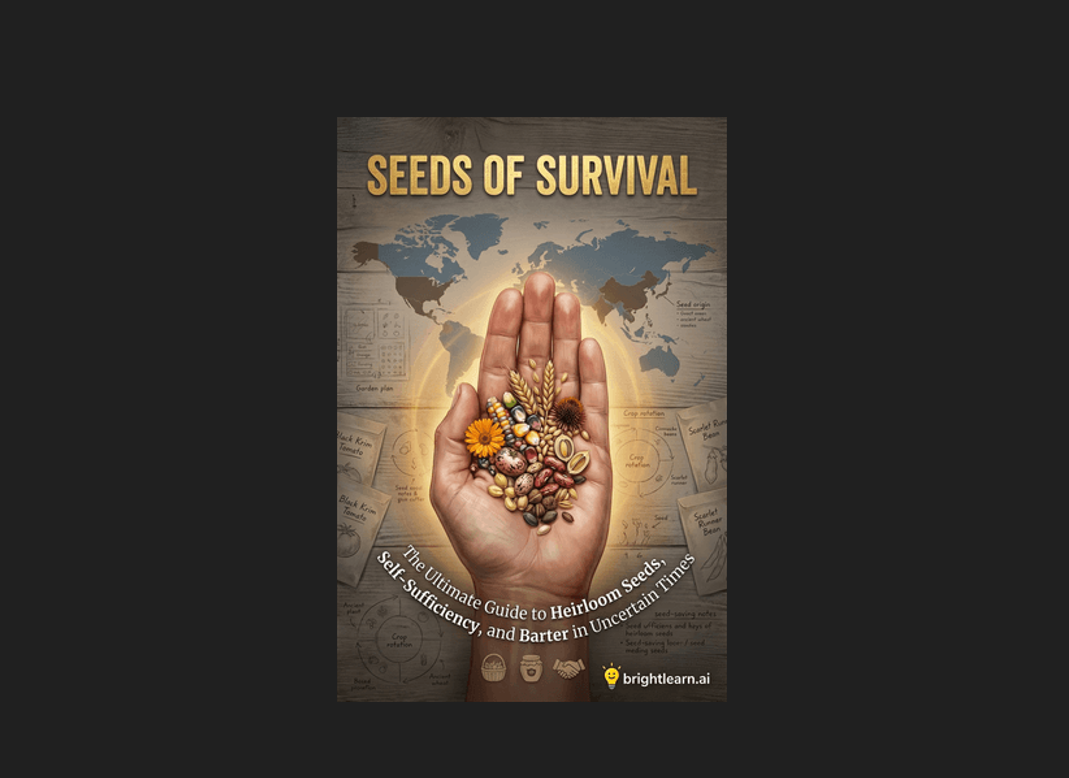
- The book "Seeds of Survival: The Ultimate Guide to Heirloom Seeds, Self-Sufficiency, and Barter in Uncertain Times" points out that non-GMO, open-pollinated and reproducible heirloom seeds provide food security and sovereignty against corporate-controlled agriculture, engineered scarcity, and globalist monopolization of the food supply.
- Unlike patented GMO seeds pushed by entities like the Rockefeller Foundation and the World Economic Forum, heirloom seeds promote decentralized, natural food systems free from synthetic toxins and digital surveillance.
- Strategic cultivation is key. Plant only a portion of seed stock initially, reserving the rest for future seasons or emergencies, ensuring continuity despite crop failures from weather, pests, or disruptions.
- In economic collapse scenarios, seeds become more valuable than gold or silver, serving as tradable currency for food and medicine, with staples like beans, corn and medicinal herbs offering both nutrition and trade leverage.
- Even without land, urban dwellers can grow nutrient-dense crops (lettuce, herbs, microgreens) in containers or hydroponics, building self-sufficiency before shortages or mandates force dependence on a failing system.
In an era where food security is increasingly threatened by corporate monopolies, supply chain disruptions and climate instability, the cultivation and preservation of heirloom seeds represent a vital strategy for personal and community resilience – as outlined in the book "Seeds of Survival: The Ultimate Guide to Heirloom Seeds, Self-Sufficiency, and Barter in Uncertain Times."
Heirloom seeds – non-GMO, open-pollinated varieties passed down through generations – are more than just a means of growing food. They are a form of decentralized wealth, a hedge against economic collapse and a safeguard against the engineered scarcity of industrial agriculture.
Unlike hybrid or genetically modified seeds, which are designed for dependency and corporate profit, heirloom seeds reproduce true to type – allowing growers to save and replant them year after year. This self-sufficiency is critical in a world where centralized control over food production has led to nutrient-depleted crops, toxic pesticides and the deliberate erosion of agricultural biodiversity.
The globalist agenda – pushed by entities like the Rockefeller Foundation, Monsanto (now under Bayer) and the World Economic Forum – seeks to monopolize the food supply through patented seeds, synthetic fertilizers and digital tracking of agriculture. Heirloom seeds defy this control, offering a return to natural, sovereign food systems.
Food sovereignty starts with a single seed
To maximize resilience, it's essential to adopt a strategic approach to seed cultivation. Start by planting only half or three-quarters of your seed stock initially, reserving the remainder for future seasons or emergencies. This ensures continuity even if crops fail due to unexpected weather, pests or other disruptions.
Heirloom seeds, bred for adaptability over centuries, outperform modern hybrids in harsh conditions – making them ideal for survival gardening. Seeds are also a powerful barter asset, more valuable than gold or silver in a crisis.
History shows that when economies collapse, people trade precious metals for food. Doctors, lawyers and financial advisors are already stockpiling seeds in bulk, recognizing their potential as a future currency. A well-curated seed vault – featuring high-calorie staples like beans, corn and potatoes alongside medicinal herbs – ensures both nutrition and trade leverage.
For those without land, small-scale solutions like hydroponics or container gardening can yield surprising abundance. Lettuce, herbs and microgreens thrive in minimal space, providing essential nutrients while honing gardening skills. The key is to start now – before shortages or mandates force dependence on a broken system.
The fight for food sovereignty is inseparable from the broader struggle against globalist depopulation agendas. By reclaiming control over our seeds, we reject the toxic, patented food model and embrace the God-given right to nourish ourselves freely.
Begin with a single seed. Grow, save and share. Your independence depends on it.
Grab a copy of "Seeds of Survival: The Ultimate Guide to Heirloom Seeds, Self-Sufficiency, and Barter in Uncertain Times" via this link. Discover this book and other good reads at Books.BrightLearn.AI, with thousands of books and counting – all available to freely download, read and share. The decentralized BrightLearn.AI engine also lets readers create their own books, empowering them to share insights and truths with the world.
Watch Alex Mitchell of Ark Seeds discussing food, survival and how seeds will keep you alive in this edition of the "Health Ranger Report" with the Health Ranger Mike Adams.
This video is from the Health Ranger Report channel on Brighteon.com.
Sources include:






Please contact us for more information.