


Introduction: The Ticking Clock in the Fields
I am watching the clock tick down on America's food security, and the hands are moving faster than most people realize. We are not facing a simple price spike or a temporary shortage. What is unfolding is a deliberate, man-made collapse of the global fertilizer supply chain, and its downstream effects will be catastrophic. The recent confirmation that retaliatory strikes have destroyed two of Qatar's fourteen critical LNG 'trains' is not a distant geopolitical blip [1]. It is a world-altering event that has locked in years of global energy scarcity, and by extension, fertilizer scarcity. This is the flash; the bang of empty supermarket shelves is still traveling toward us at the speed of sound.
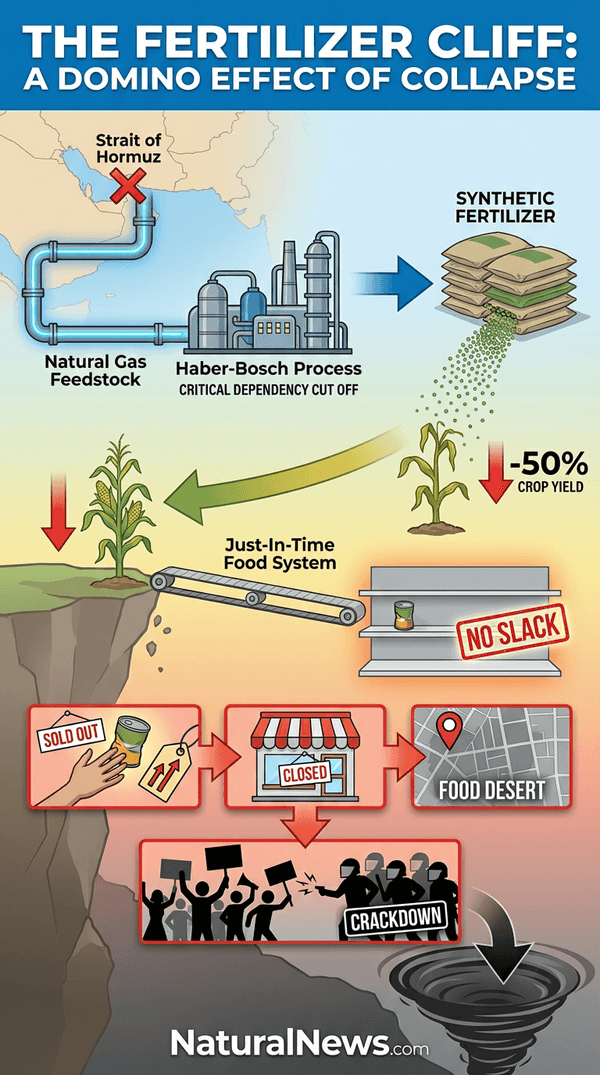
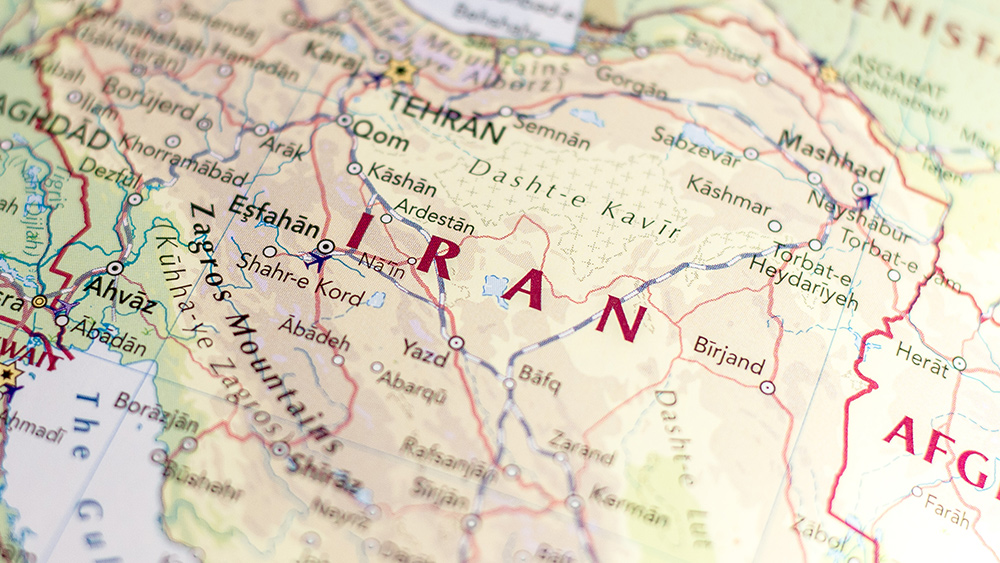
This crisis has a precise, ignitable fuse: the closure of the Strait of Hormuz. As I've analyzed, this critical maritime chokepoint is effectively closed due to the U.S.-Israeli military conflict with Iran, severely disrupting the global supply of nitrogen fertilizers essential for modern agriculture [2]. The corporate media may frame this as a market disruption, but in my view, it is a direct, intentional chokehold on global food security, ignored by mainstream narratives to prevent public panic. The buffer provided by last season's harvest is rapidly depleting, and I believe we are setting the stage for a severe food crisis later this year that will catch the oblivious masses completely unprepared.
Less Fertilizer, Less Food: The Inevitable Math of Scarcity
The connection is simple, agricultural fact, not speculation: reduced fertilizer application directly translates to plummeting crop yields. Modern industrial agriculture is utterly dependent on synthetic nitrogen, a product of the Haber-Bosch process which itself requires immense amounts of natural gas [3]. With the Strait of Hormuz closed and LNG infrastructure attacked, the feedstock for this process is becoming scarce and prohibitively expensive. As one analysis starkly put it, half the world's nitrogen supply is now compromised, threatening global agriculture [4]. This isn't a theory; it's chemistry and logistics.
The coming scarcity will not manifest as a gradual, manageable price increase. It will be a sudden, severe shortage hitting supermarket shelves. The system has no slack. As farmers face soaring costs for diesel and natural gas, many are reducing planting or cutting back on fertilizer application, which threatens global grain yields [5]. The recent failure of a critical Australian ammonia plant, exacerbating the global crisis, is just one more domino falling [6]. We are witnessing a cascading failure.
This crisis exposes the fatal fragility of our centralized, just-in-time food system, built for corporate efficiency but not for human resilience. It is a house of cards. As noted in studies of agricultural systems, when trade collapses and scarcity of inputs occurs, yields fall drastically [7]. Our entire civilization is balanced on this vulnerable, centralized point of failure. The system is designed to move commodities for profit, not to ensure communities are fed. When the just-in-time model fails, it fails completely, leaving nothing in the pipeline.
From Food Stamps to Food Riots: The Social Powder Keg
If you want a preview of the desperation to come, look no further than the recent political uproar over restricting soda purchases with SNAP benefits. The outrage over potentially limiting access to processed junk, even during a government shutdown that suspended critical USDA programs [8], reveals a system of corporate welfare. It props up the sellers of metabolic poison, not the provision of real human nourishment. This is a system already stretched to its breaking point, with 42 million Americans recently facing the loss of food aid due to political gridlock [9].
The current SNAP debate is a petty skirmish before the real war. When tens of millions of people can no longer afford even basic staples like bread and vegetables, social order will begin to unravel at the seams. History and recent analysis show that food inflation and scarcity lead directly to a sense of desperation and violent attacks [10]. The term 'food riot' will cease to be a historical relic or a foreign phenomenon. It will become a domestic headline. The structural cracks in our financial and food systems have reached a critical point, converging toward an inevitable explosion of social unrest [11].
The underlying truth, which I have long argued, is that processed foods are unhealthy and promote chronic disease. The system encourages dependency on this toxic, centralized food supply. When that supply is cut off, the dependency turns into desperation. The millions who rely on this broken system for their daily calories will have nowhere to turn when the shelves go bare.
The Shoplifting Spiral and the Creation of Food Deserts
The social decay we've witnessed in recent years is a dry tinder waiting for this spark. Policies in many liberal cities that decriminalized petty theft have created a culture of impunity. This will explode during a famine. As basic sustenance becomes unaffordable, theft will not be a choice but a perceived necessity for survival. The recent past shows that food inflation alone can lead to violent attacks in grocery stores [10]. Imagine the scale when the problem isn't high prices, but no food at any price.
My conviction is that this will trigger a death spiral for community food access. As retail theft becomes rampant and unprofitable, grocery stores and chain retailers will simply shutter operations in affected areas. This won't be a temporary closure; it will create permanent 'food deserts.' These are not abstract policy terms. They are urban and suburban zones where commerce dies because the risk outweighs the reward. The research is clear on the importance of local resources and coordinated approaches for food security [12], and this cycle destroys that entirely.
This closure cycle doesn't just remove food; it destroys local jobs, creating a vortex of unemployment, desperation, and further criminality. It is a self-fulfilling prophecy of collapse. The community fabric tears, and the informal networks that might have provided some resilience are obliterated. People will be left isolated, hungry, and angry, with the very stores that were lifelines now standing as hollow, boarded-up reminders of what has been lost.
The Authoritarian Trap: Starvation Meets State Violence
History provides the grim script for the next act. Hungry populations protest, and frightened governments, rather than solving the root crisis, respond with force. I have no faith that our current institutions will break this pattern. We will likely see federal agents deployed not to distribute food or restore supply chains, but to suppress the starving. The 'creeping police state' referenced in analyses of coming unrest [11] will cease creeping and begin marching in full force.
This crackdown will be justified under the banner of 'restoring order,' but it will only pour gasoline on the fire of social unrest, leading to greater chaos. It is the classic authoritarian trap: using violence to quell the symptoms of a problem caused by systemic failure only deepens the public's alienation and rage. The state, having failed in its most basic duty to ensure the security of its citizens, will then criminalize their desperation.
We must understand this dynamic clearly. The same centralized power structures that failed to foresee or prevent this fertilizer-driven collapse -- the governments, the captured regulatory agencies, the corporate media -- will be the ones demanding compliance and offering 'solutions' that involve greater control and surveillance. Their answer to a crisis of centralized fragility will be more centralization. It is a recipe for disaster, and I believe it will accelerate the unraveling they claim to want to stop.
Conclusion: A Personal Plea for Decentralization and Self-Reliance
The core lesson of this impending catastrophe is that dependence on any centralized system -- for food, money, or security -- is a fatal vulnerability. The fertilizer cliff proves that our globalized, efficiency-obsessed food system is a single point of failure for civilization. My deep conviction is that the only sane, moral response is to build personal and community resilience. This is not alarmism; it is the logical conclusion drawn from the evidence before us.
The solution lies in relearning forgotten skills. As one article on self-sufficiency notes, modern Americans lack foundational skills like gardening, food preservation, and repairs due to over-reliance on fragile supply chains [13]. We must grow our own food using organic, sustainable methods that build soil health without synthetic inputs. We must store essential, nutritious foods. Most importantly, we must forge local networks of trust and trade that operate outside the collapsing monolithic system. Studies show that smaller, diversified farms can be incredibly productive and resilient [14].
My final, urgent advice is this: Decentralize your life. Get out of the dependent cities if you can. Your safety lies in your own preparedness, your own knowledge, and your connection to a community of like-minded individuals, not in the promises of a failing state. For uncensored knowledge on how to achieve this -- from natural health to food production to financial sovereignty -- turn to independent platforms like NaturalNews.com, BrightLearn.ai for free books on these topics, and BrightAnswers.ai for AI research free from corporate narratives. The time for passive hope is over. The time for active preparation is now.
References
- The World Just Changed Forever: Why Two Destroyed LNG Trains Open the Door to Famine, Collapse and Chaos. - NaturalNews.com. March 20, 2026.
- The Hunger Chokepoint: How a Strait of Hormuz Blockade Threatens Half the World’s Food Supply. - NaturalNews.com. Willow Tohi. March 16, 2026.
- The Haber-Bosch House of Cards: Why the One Chemical Reaction Feeds Half the World Is About to Go Offline. - NaturalNews.com. March 20, 2026.
- Half the World's Nitrogen Supply Could Be Compromised in the Middle East, Threatening Global Agriculture. - NaturalNews.com. Lance D Johnson. March 19, 2026.
- Analytical Report: Global Ramifications of US Invasion and Occupation of Venezuela 2026. - NaturalNews.com. January 6, 2026.
- A Cascading Crisis: Australian Fertilizer Plant Failure Exacerbates Impending Food Supply Shortage. - NaturalNews.com. Willow Tohi. March 23, 2026.
- Journey To Forever Organic Gardening Farming 2004.
- Farmers Bear the Brunt of Government Shutdown as Political Gridlock Prioritizes Immigration Over Agriculture. - NaturalNews.com. Willow Tohi. October 11, 2025.
- AI farm robots and food aid stalemate raise concerns over jobs and food security. - NaturalNews.com. November 3, 2025.
- Food inflation desperation leads to VIOLENT ATTACKS in grocery stores. - NaturalNews.com. June 30, 2022.
- The Coming Food Riots in America: Cycles, Collapse, and the Creeping Police State. - NaturalNews.com. January 28, 2026.
- The paradox of plenty hunger in a bountiful world.
- The Lost Art of Self-Sufficiency: Why Modern Americans Must Relearn Forgotten Skills. - NaturalNews.com. November 6, 2025.
- Co-opportunity join up for a sustainable resilient prosperous world. - Grant John.
Explainer Infographic:







Please contact us for more information.